Garage Doors in Richmond Hill, OntarioQuiet doorsfor early risers.
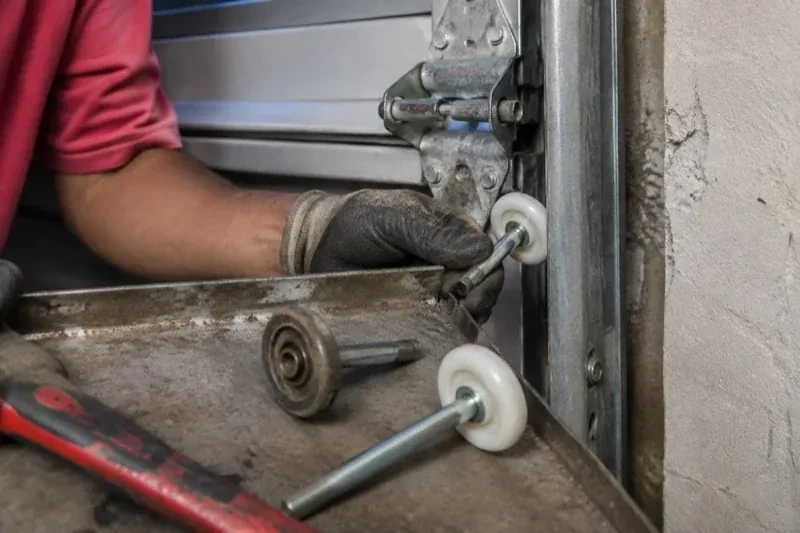
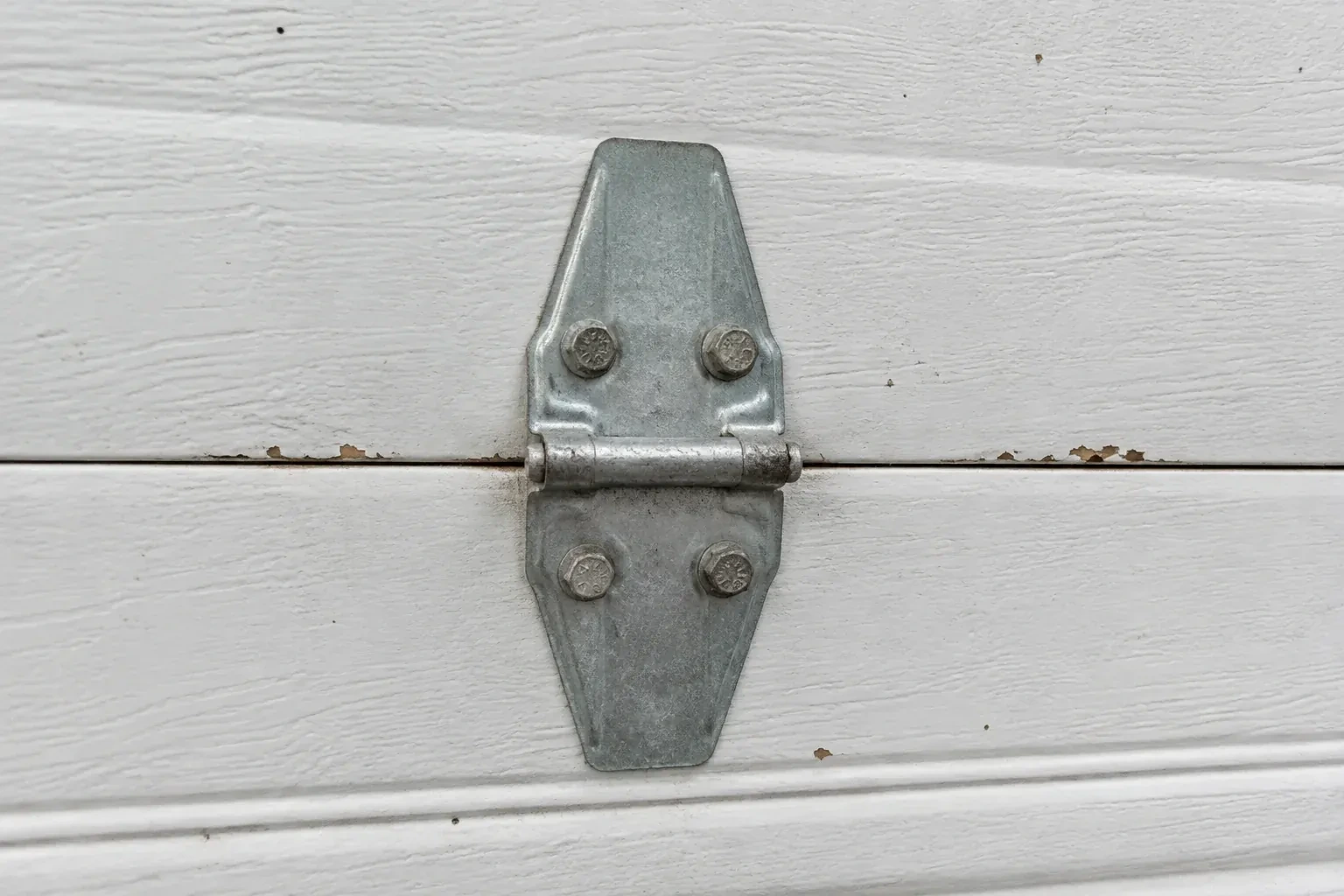
When the bedroom sits above the garage, every rattle at six in the morning is personal. For households in Richmond Hill we track each sound to its source: dry rollers, a loose hinge, a chain that has stretched, an opener rail rubbing the ceiling. Fix those and the door becomes something you stop noticing.
When the bedroom sits above the garage, every rattle at six in the morning is personal. For households in Richmond Hill we track each sound to its source: dry rollers, a loose hinge, a chain that has stretched, an opener rail rubbing the ceiling. Fix those and the door becomes something you stop noticing.
Bringing older doors up to date.
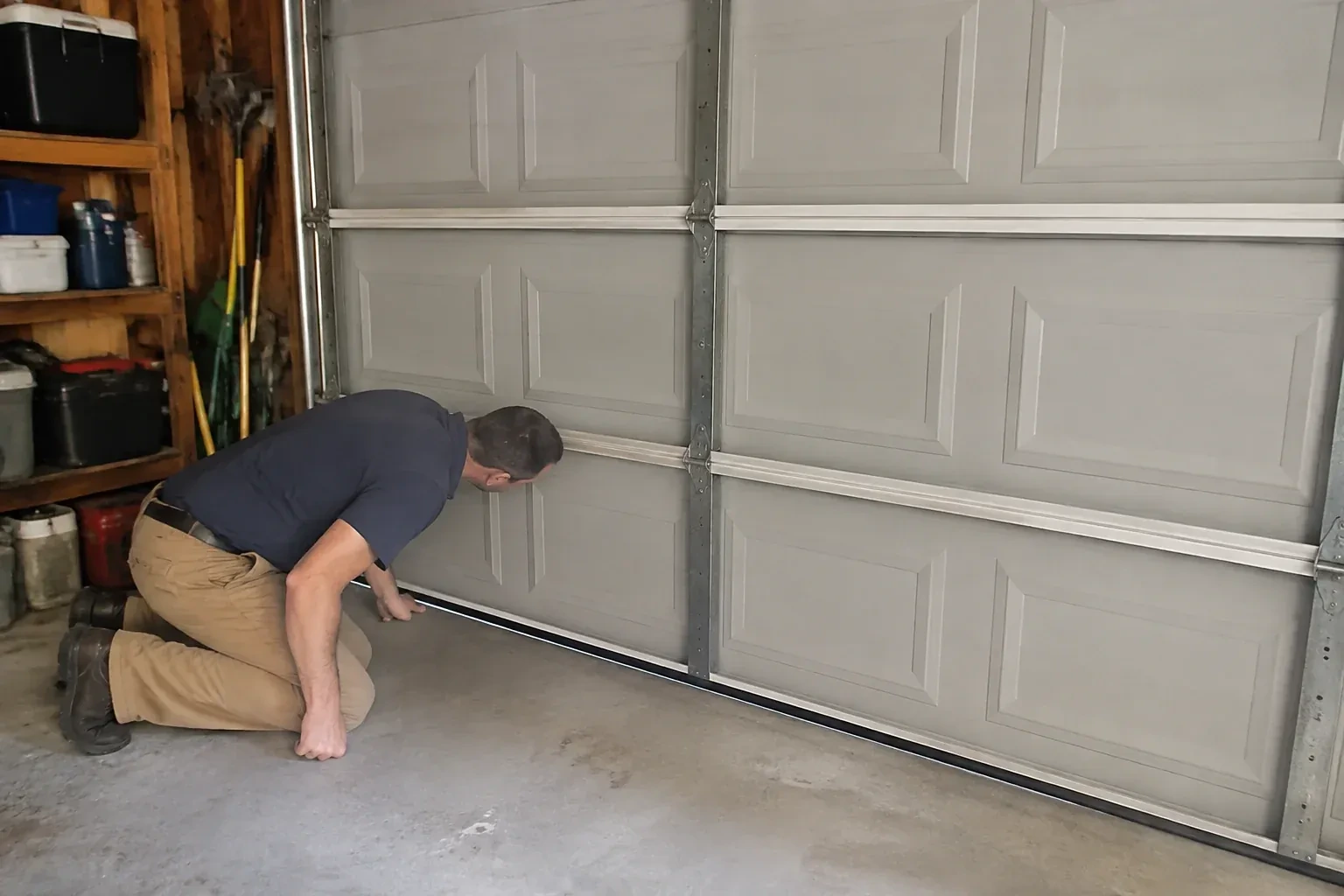
For homeowners in Richmond Hill, the visit begins with questions rather than tools: when did the door change, what does it sound like, does the wall button behave differently from the remote? Those answers point the technician to the right part, and the assessment that follows confirms it before any price is discussed.
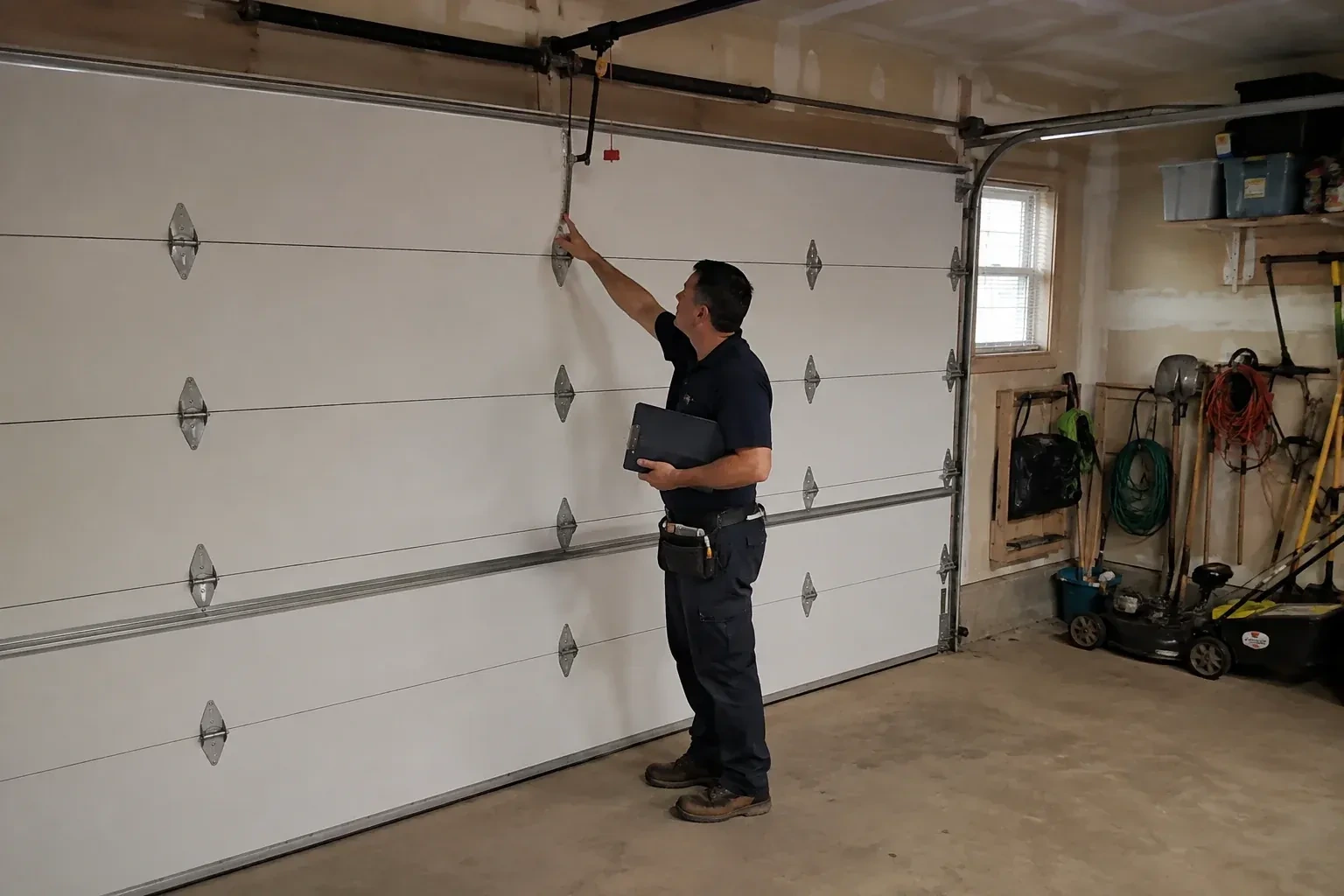
For families in Richmond Hill, a garage door is about getting in and out of the house without fuss and about children and pets being safe around it. We pay attention to both. Every visit checks the balance, the photo eyes and the reversing force along with the repair itself, and the technician explains how the safety features work and how to test them yourself.
17years in business
24/7open every day
Nothing hidden. Every part we replace, you can see. Every adjustment, we explain. If we find something unexpected, we stop and tell you before continuing.
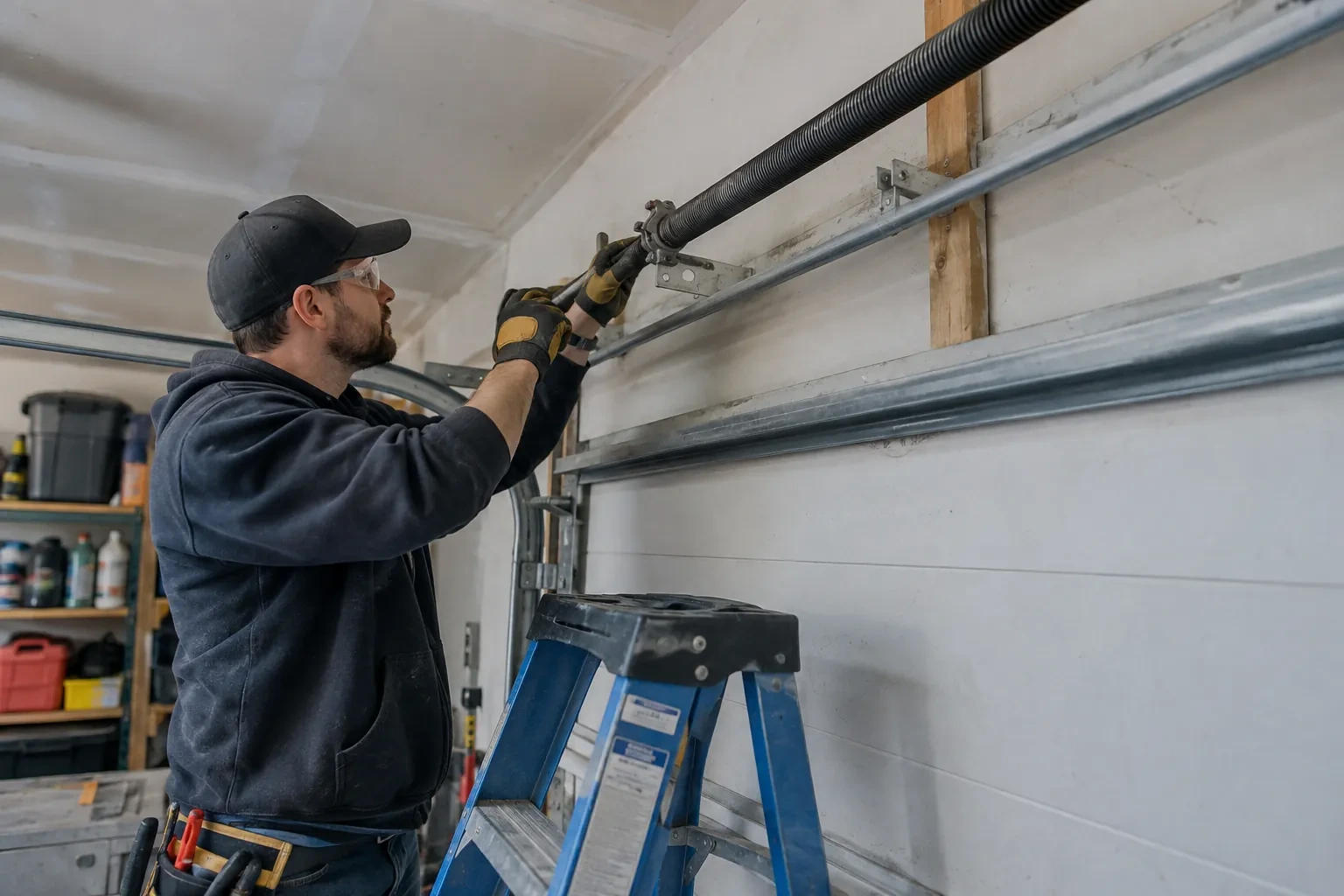
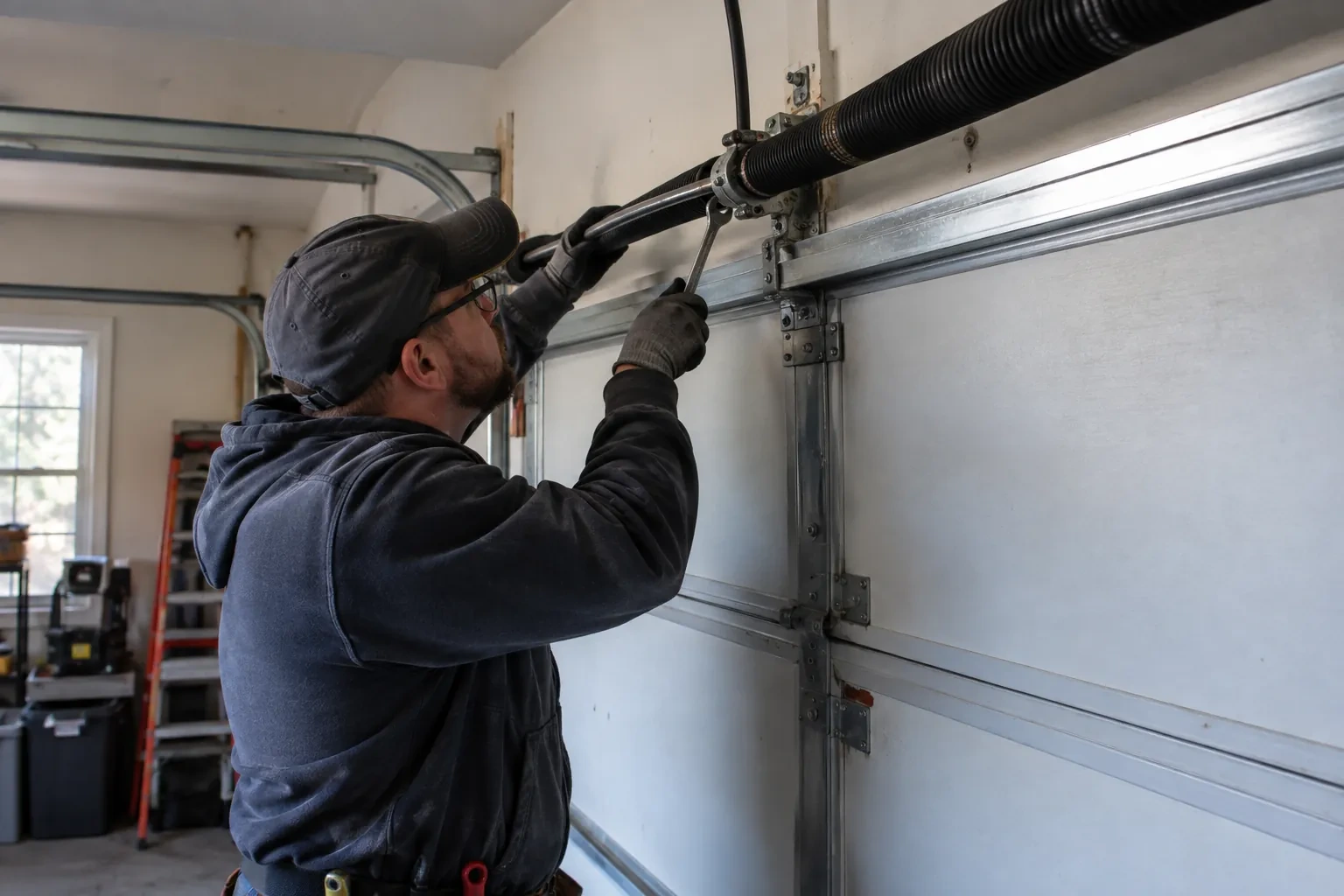
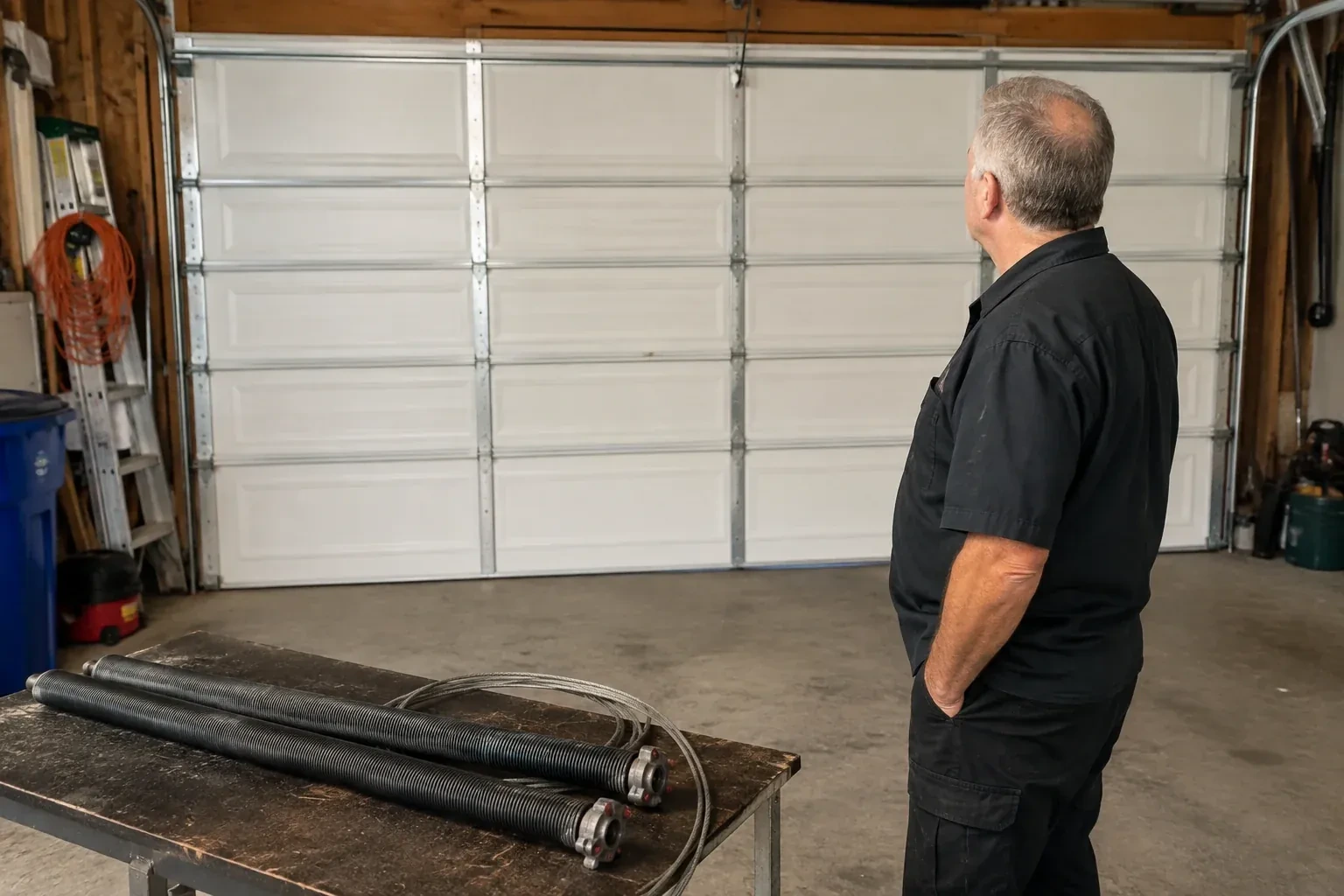
Care with heavy parts. Springs and cables are handled with the right tools and a steady method, and the door is secured before any tension is released.
Clear about what comes next. Before we leave, you know what was done, what to watch for, and when the door might want attention again.
Request a visit for a stuck or noisy door in Richmond Hill.
Every garage door service we offer in Richmond Hill is described the same way: what you might have noticed, what the technician checks first, how the work is done and what you have afterwards. Start with the symptom you are seeing and the right service will be easy to find.
About 15% of homes in Richmond Hill were built in 1980 or earlier, according to the 2021 Census.
Newer homes
Newer doors are built to tighter tolerances, so a small bend in a track or a loose bracket shows up sooner as a rub or a shudder. Regular tune-ups keep everything aligned and catch the wear on rollers and hinges before it affects the panels.
Single-detached houses make up about 57% of homes in Richmond Hill (2021 Census).
In mixed neighbourhoods, noise matters differently from one address to the next. A detached house with a bedroom above the garage and a townhouse with a neighbour through the wall both benefit from a belt-drive opener and nylon rollers, and we explain the difference either way.
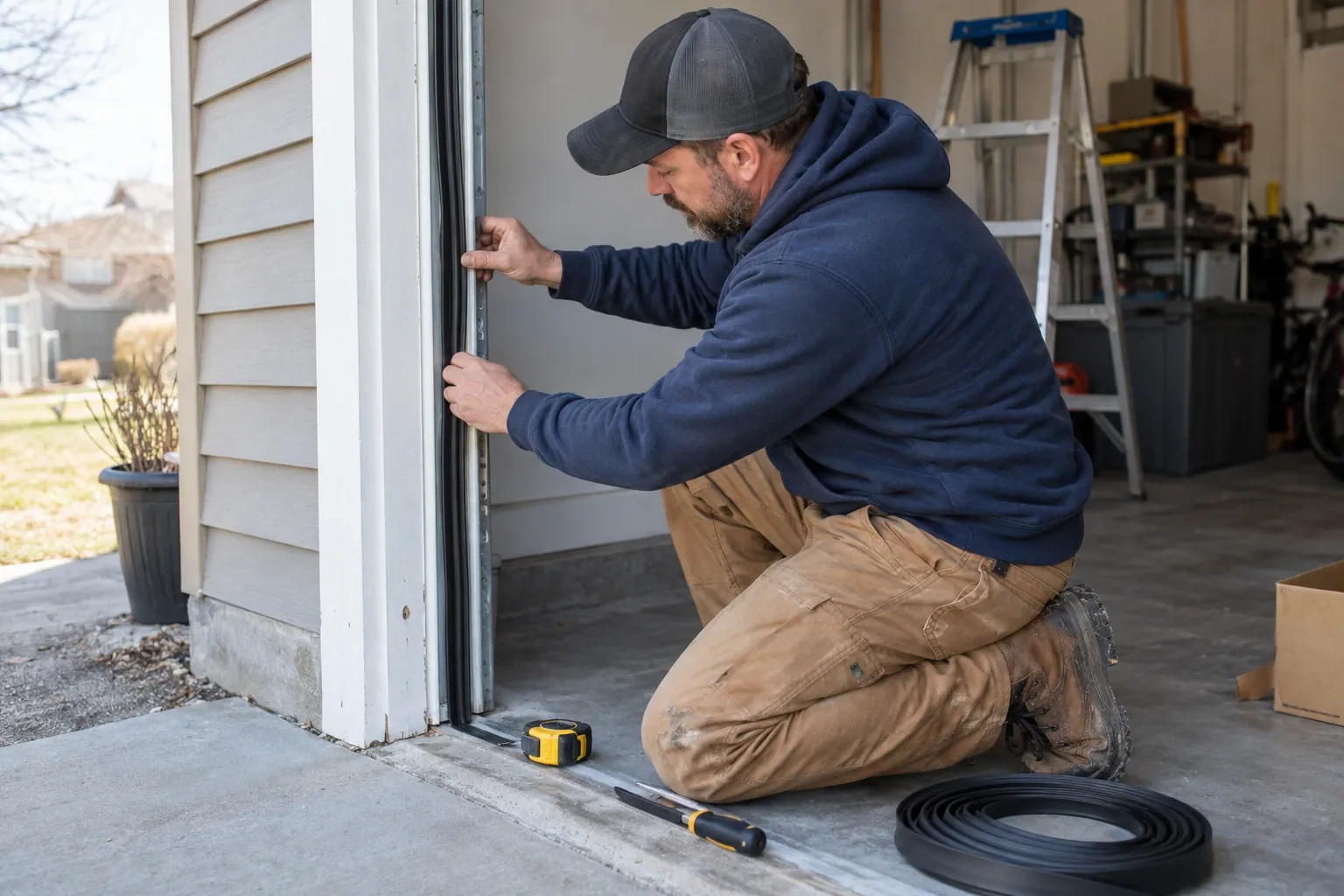
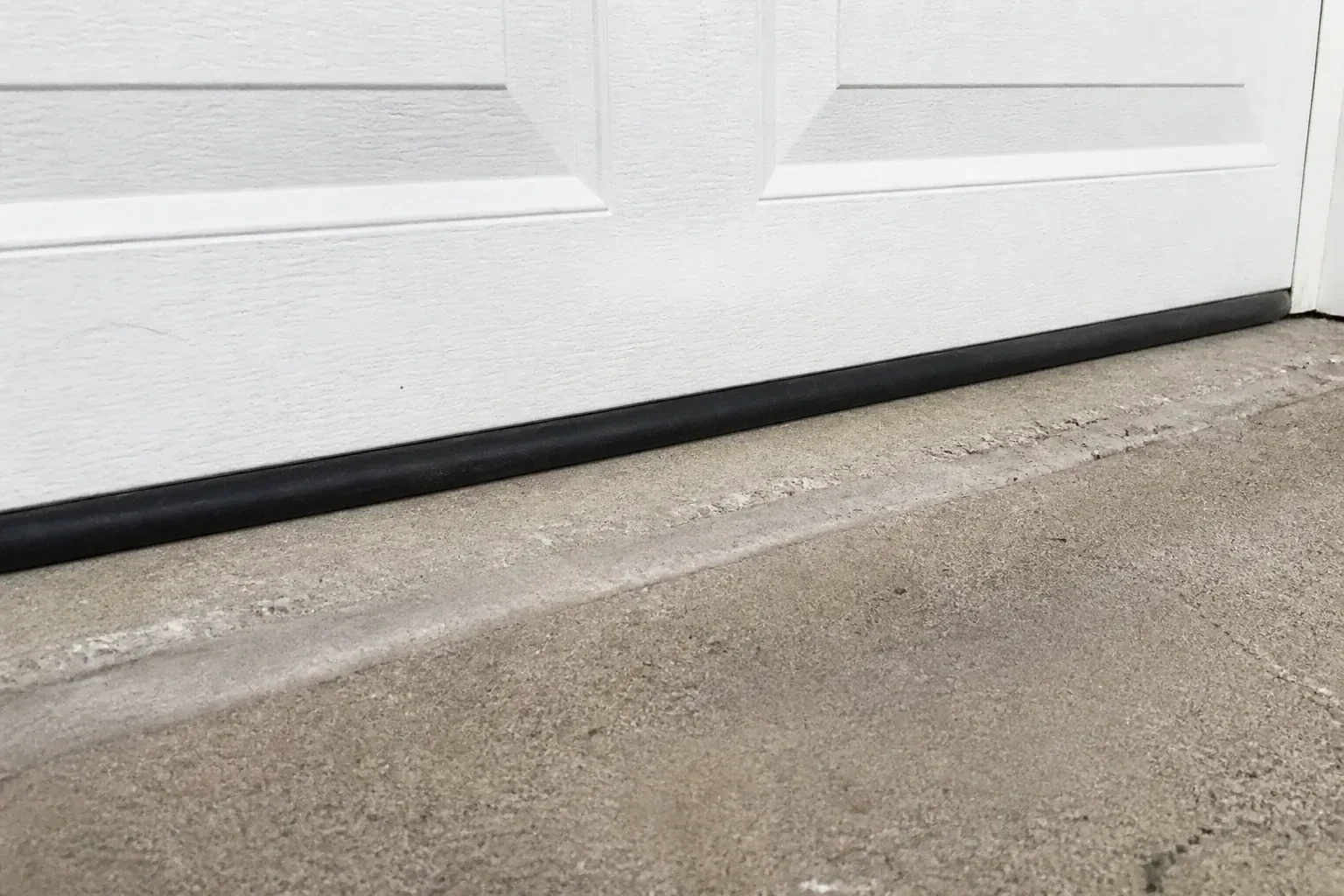
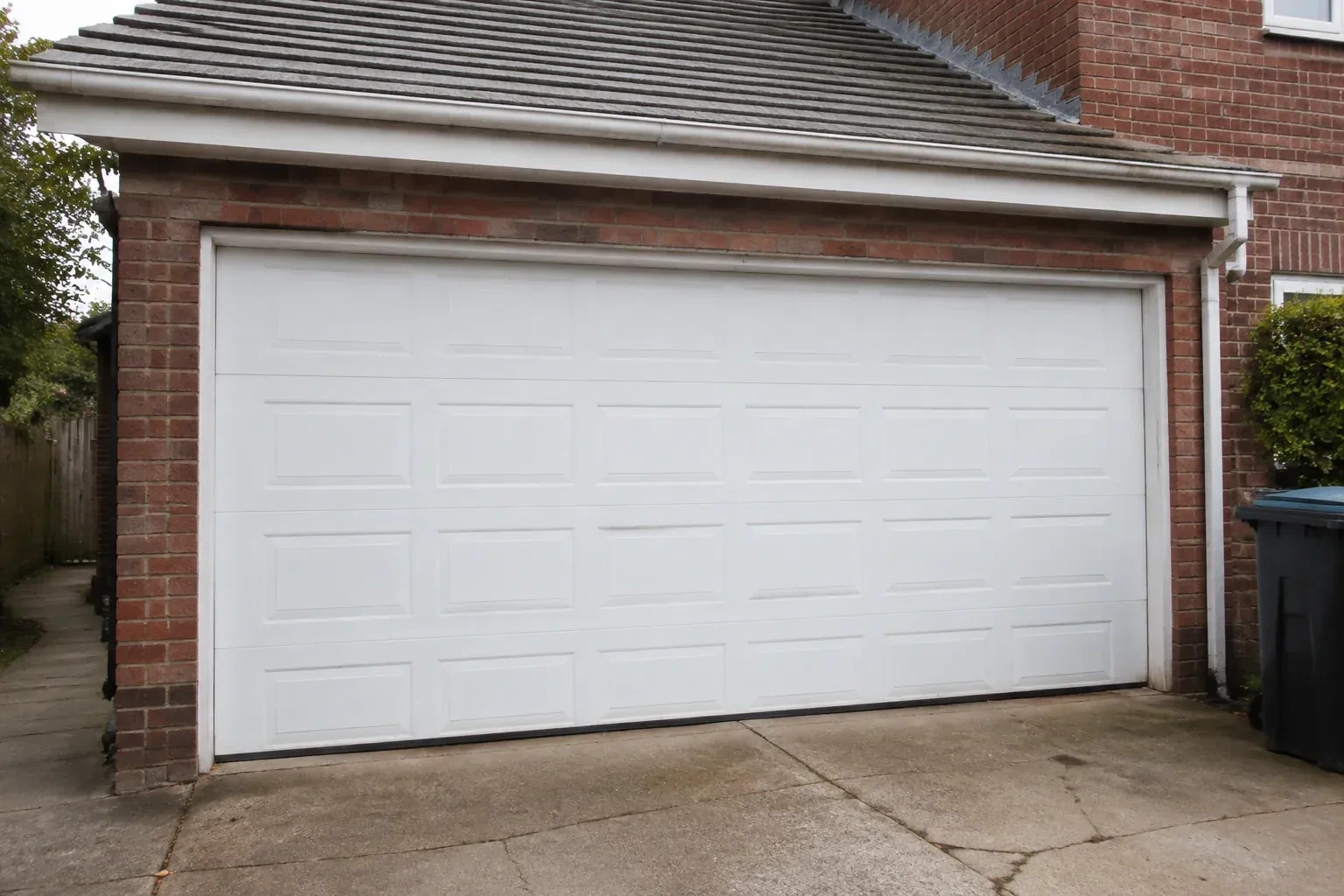
On windy nights the door rattles in its frame, there is a line of daylight along one side, and the bottom seal has gone hard and flat. Leaves and fine snow drift in underneath and the garage never seems to hold its temperature.
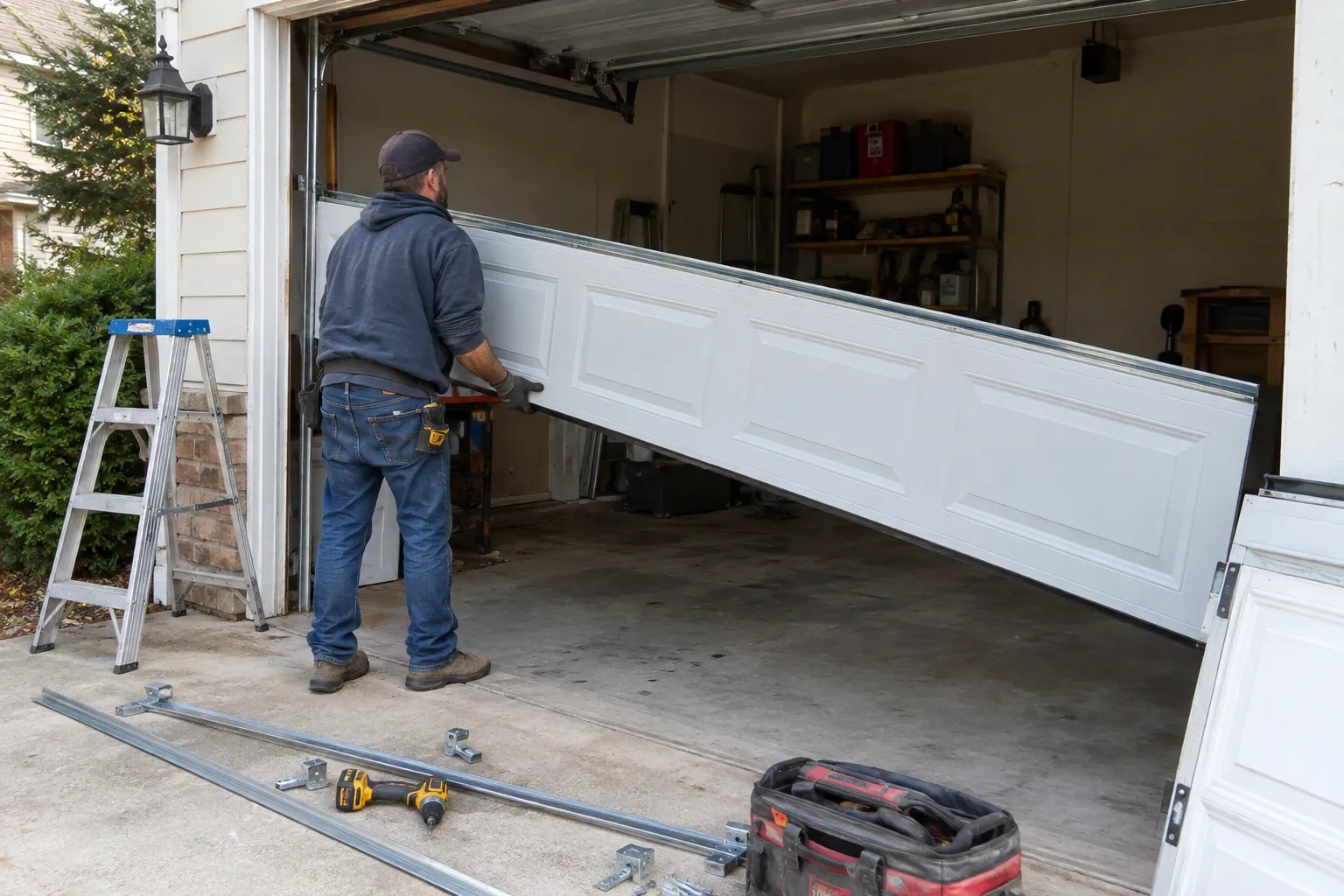
A stray ball went through one of the window panes in the top section. The glass is gone, the frame around it is cracked, and the steel beside the opening is pushed in, so the whole section is in question rather than one pane.
The outside handle wobbles in your hand and the inside knob spins round and round with nothing attached. The screws that held the lock through the door skin have pulled loose, leaving oval holes, and the whole thing hangs on by little more than paint.
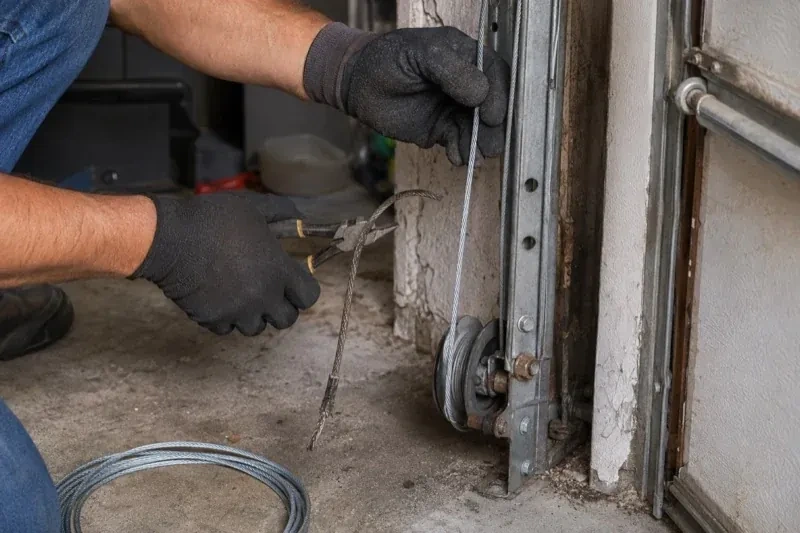
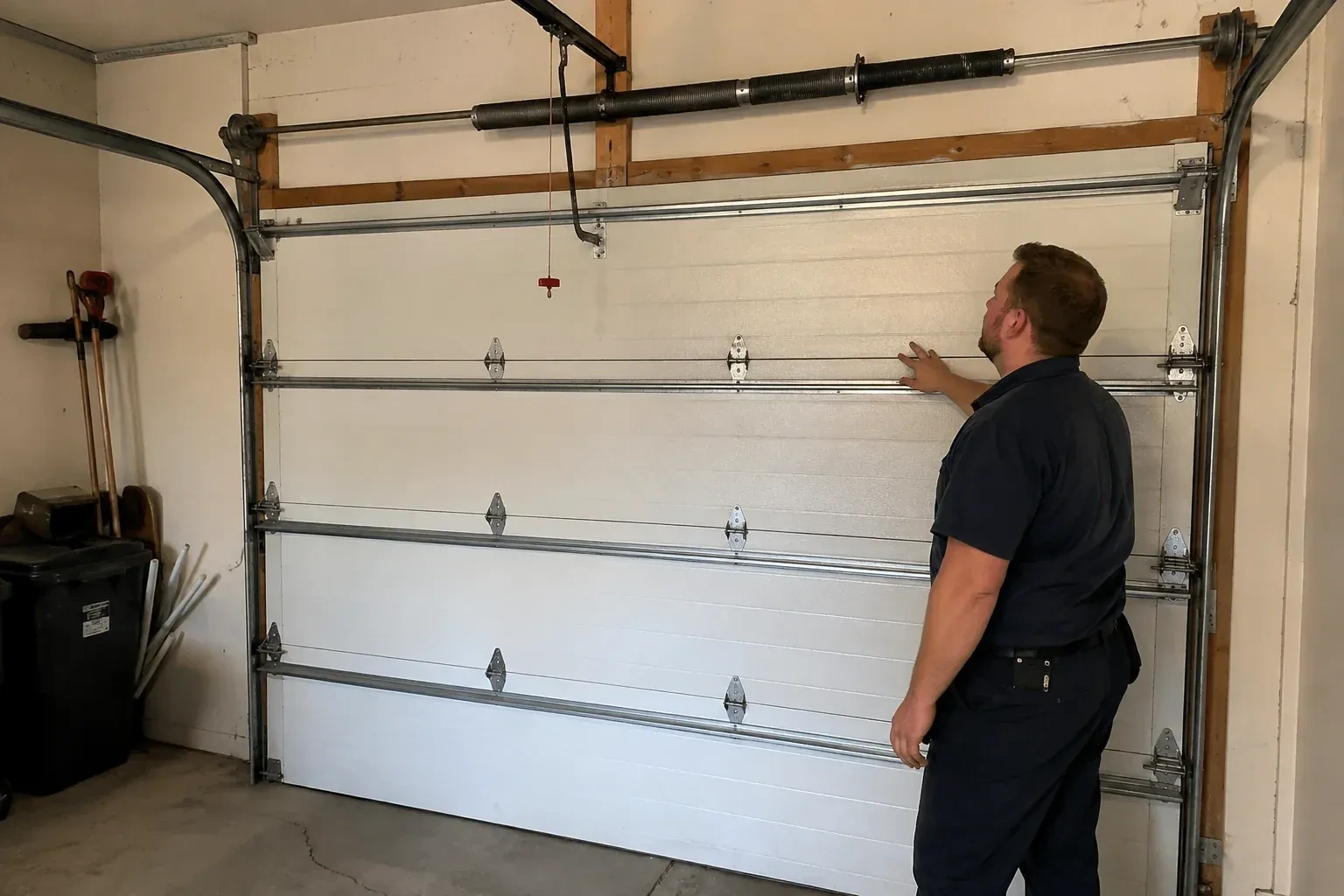
Your older door has springs along the tracks, and one cable has slipped off its pulley and dangles slack. The door lifts crooked and needs a shoulder to close, when it used to glide.
One of the springs beside the track is hanging loose at the front end, its pulley dangling, and a length of cable lies slack along the top of the door. The door sits slightly crooked and the opener reverses whenever it tries to close.
The door has grown heavy so gradually you stopped noticing, until a visitor tried to lift it and could not. The opener still manages, but it sounds strained, the chain slaps on the way up, and the wall button gets pressed twice most mornings.
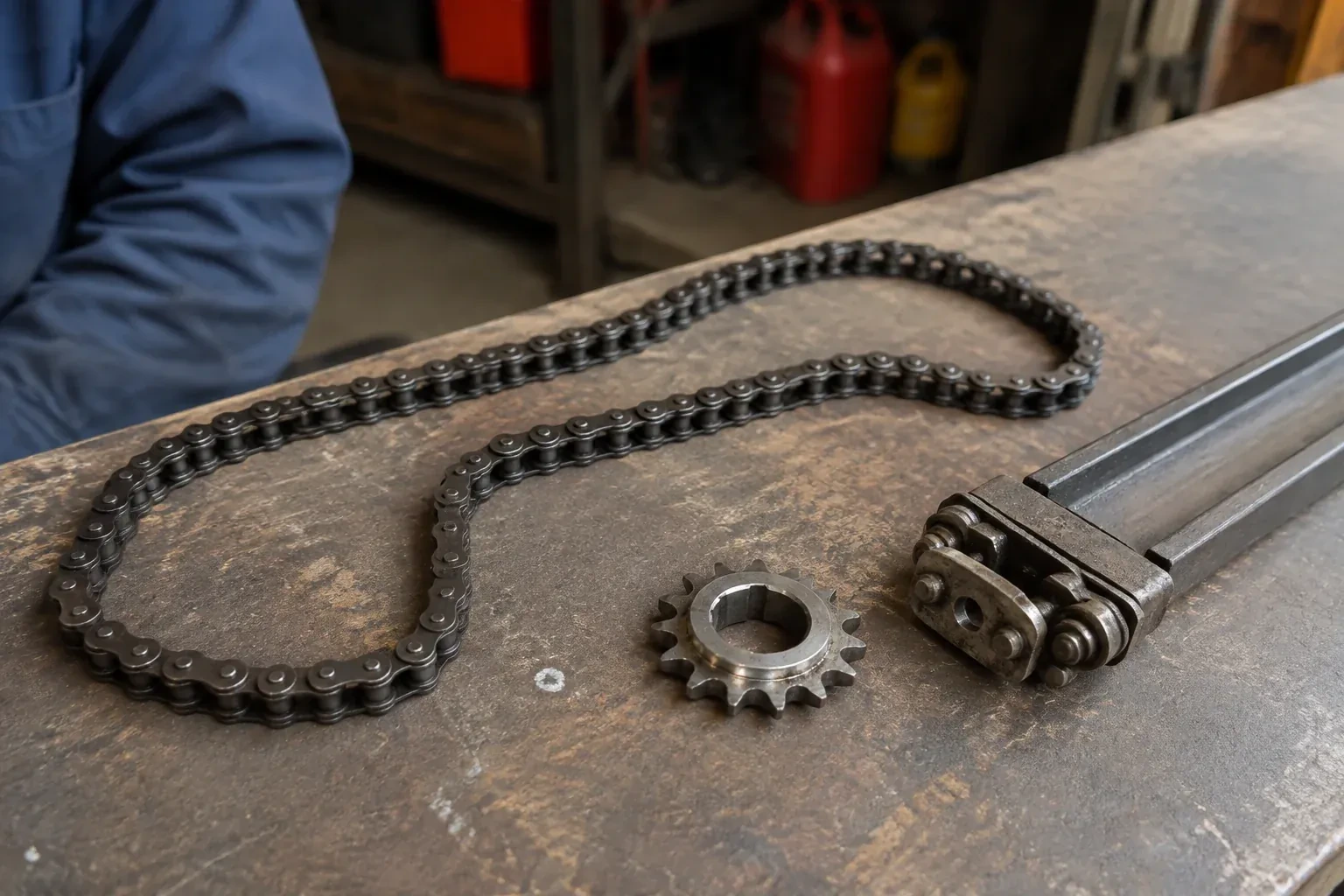
The chain in the detached garage went orange with rust over the winter, the links are stiff, and the opener strains and groans to pull the door up. By afternoon, once the garage warms, it behaves almost normally.
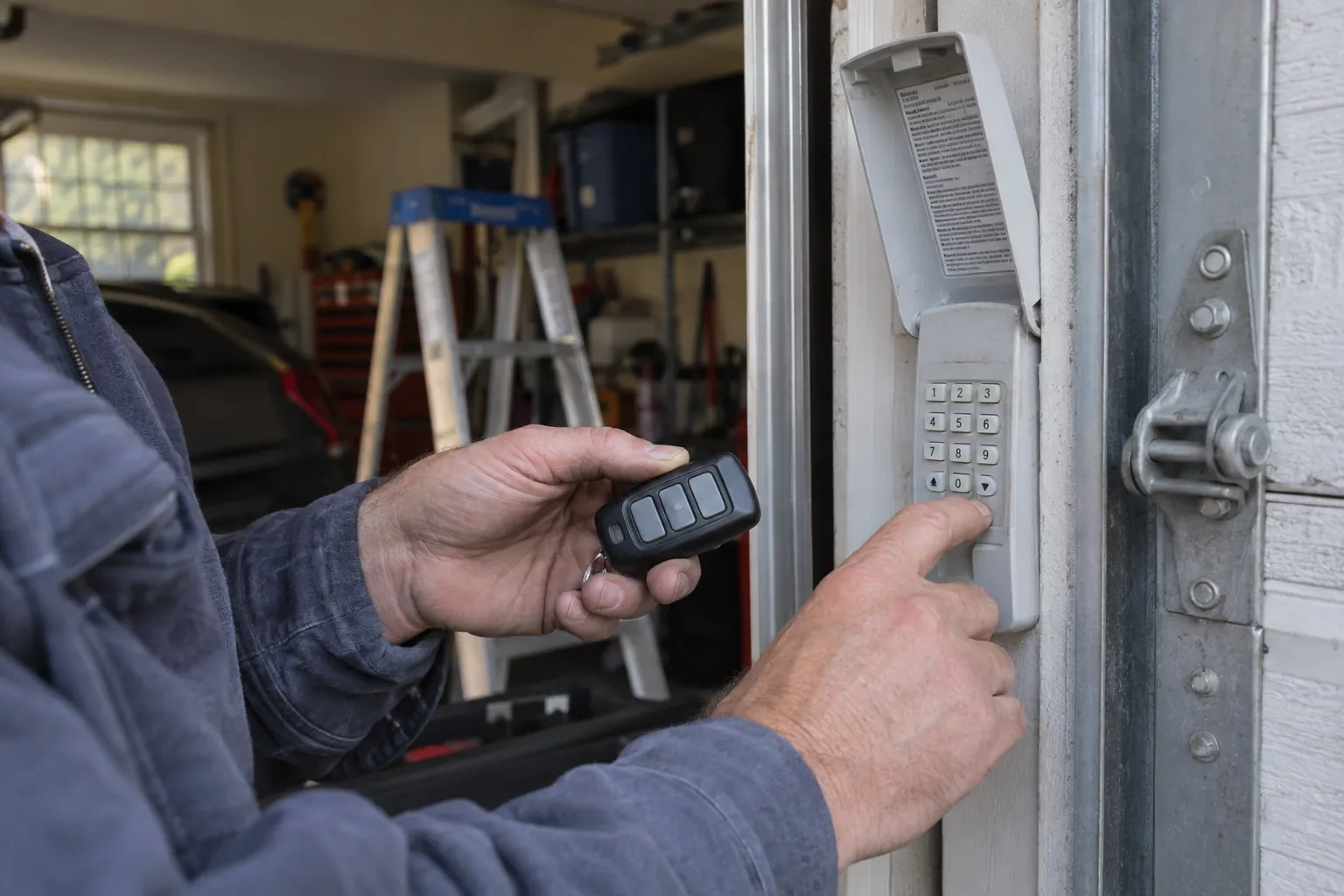
A contractor is coming to work in the garage on Thursday while you are away. Handing over a remote means chasing it back afterwards, and the keypad code is the one your whole family uses. What you want is access that ends when the job does.
Framing, siding, flooring and electrical crews are working from the same schedule. The garage door is ready for its place in that sequence once the opening, anchor points, floor height and power are confirmed.
Workshop equipment is moving in, and the present opener rail and door sections occupy the same overhead zone planned for lighting and clear working space. A different travel path could organize that ceiling area more effectively.
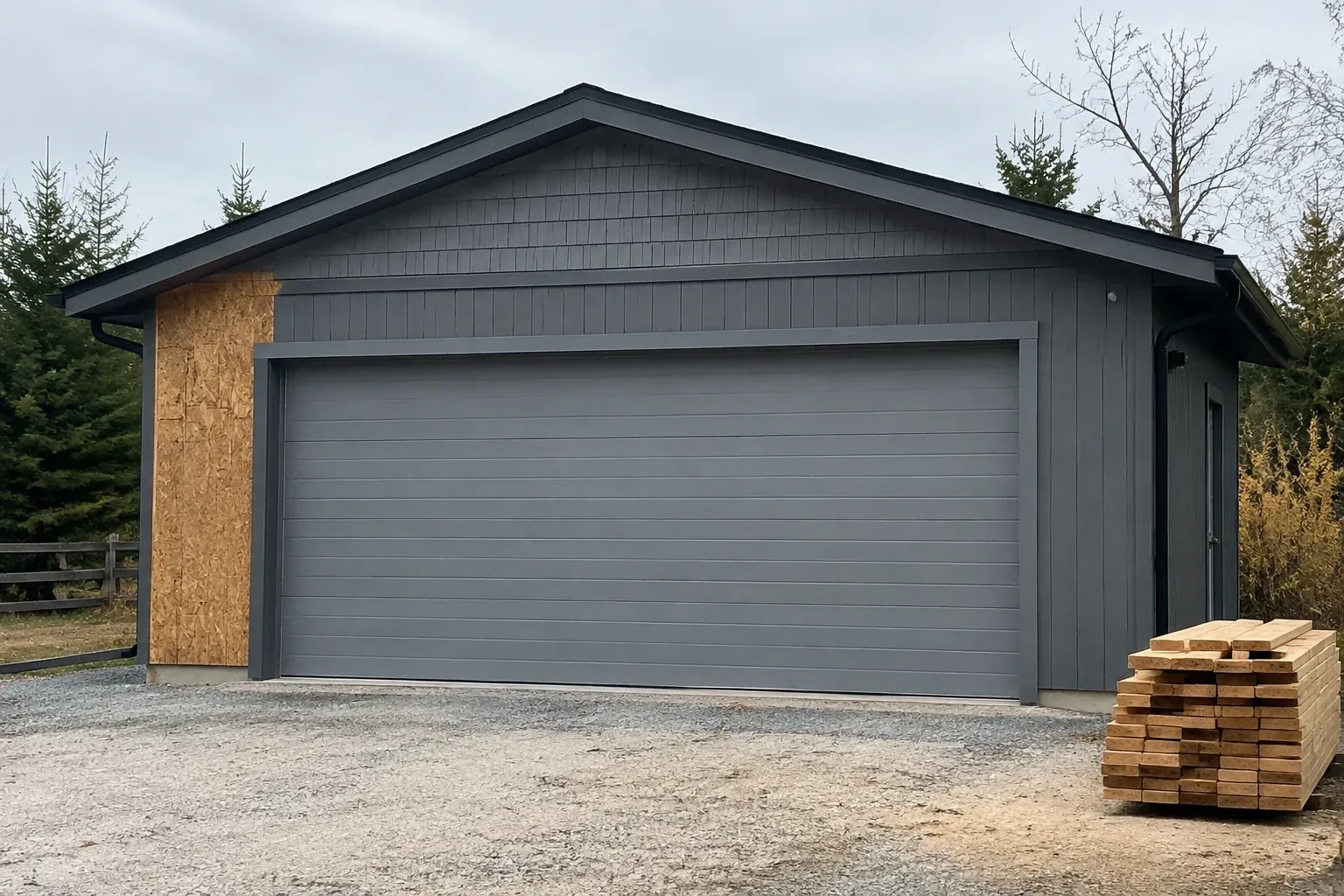
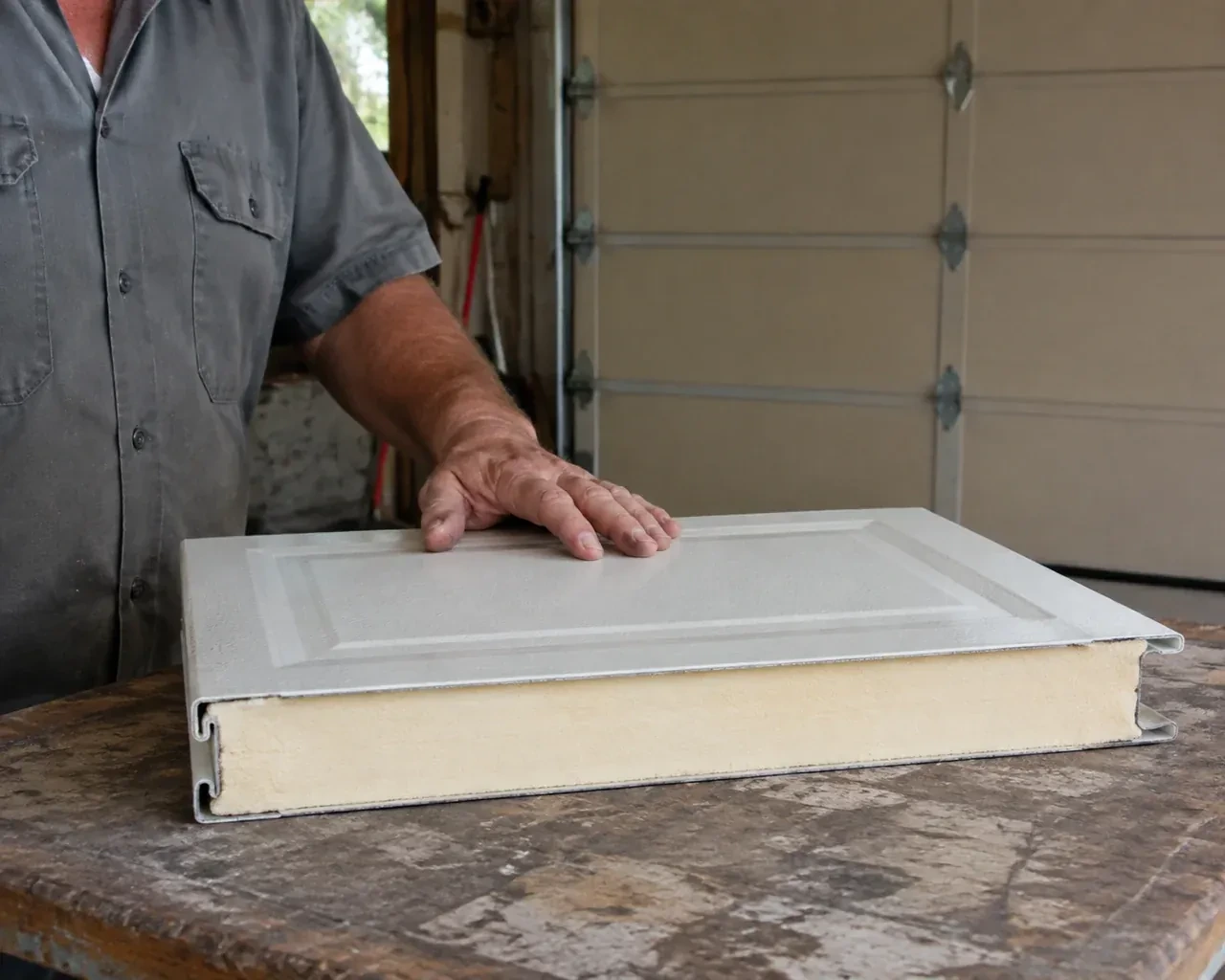
Modern doors are quieter than the ones they replace: nylon rollers, insulated sections that do not drum in the wind and belt-drive openers all contribute. Many people notice the silence before they notice the look.
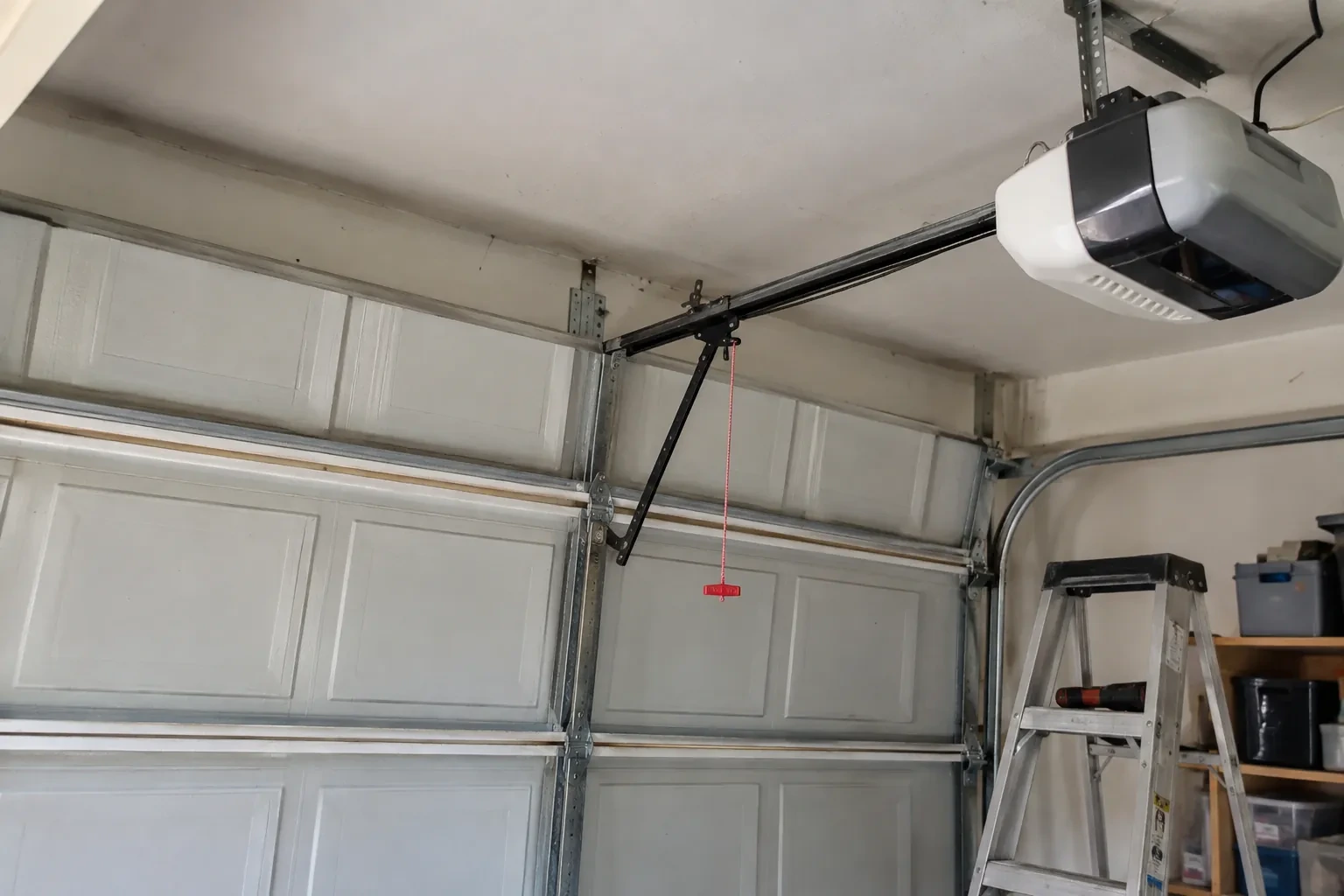
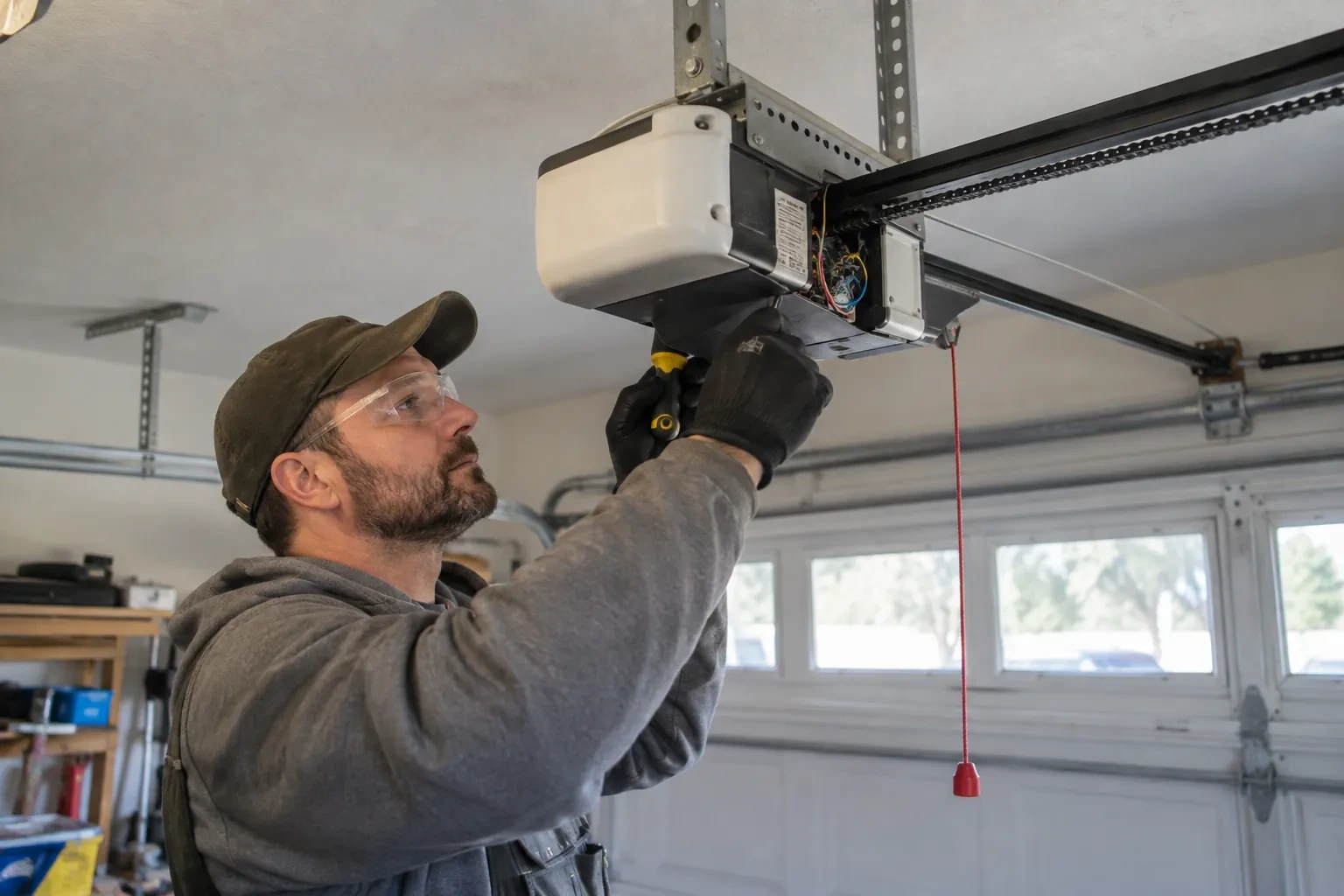
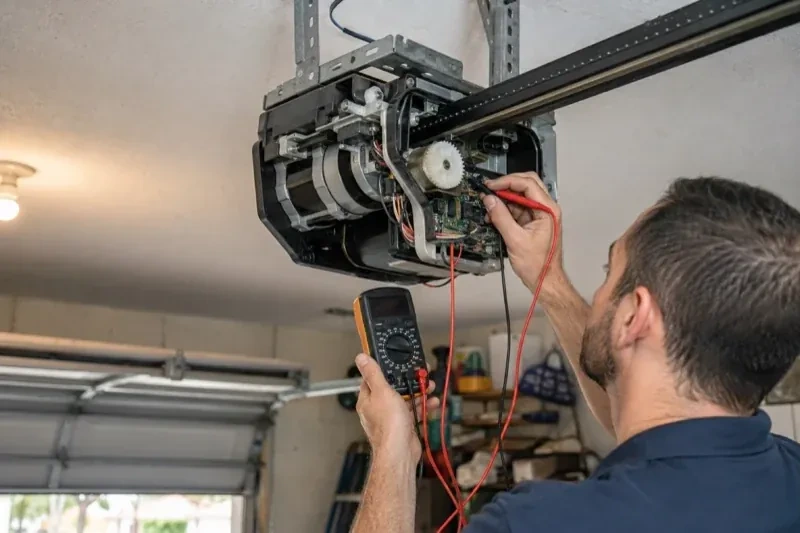
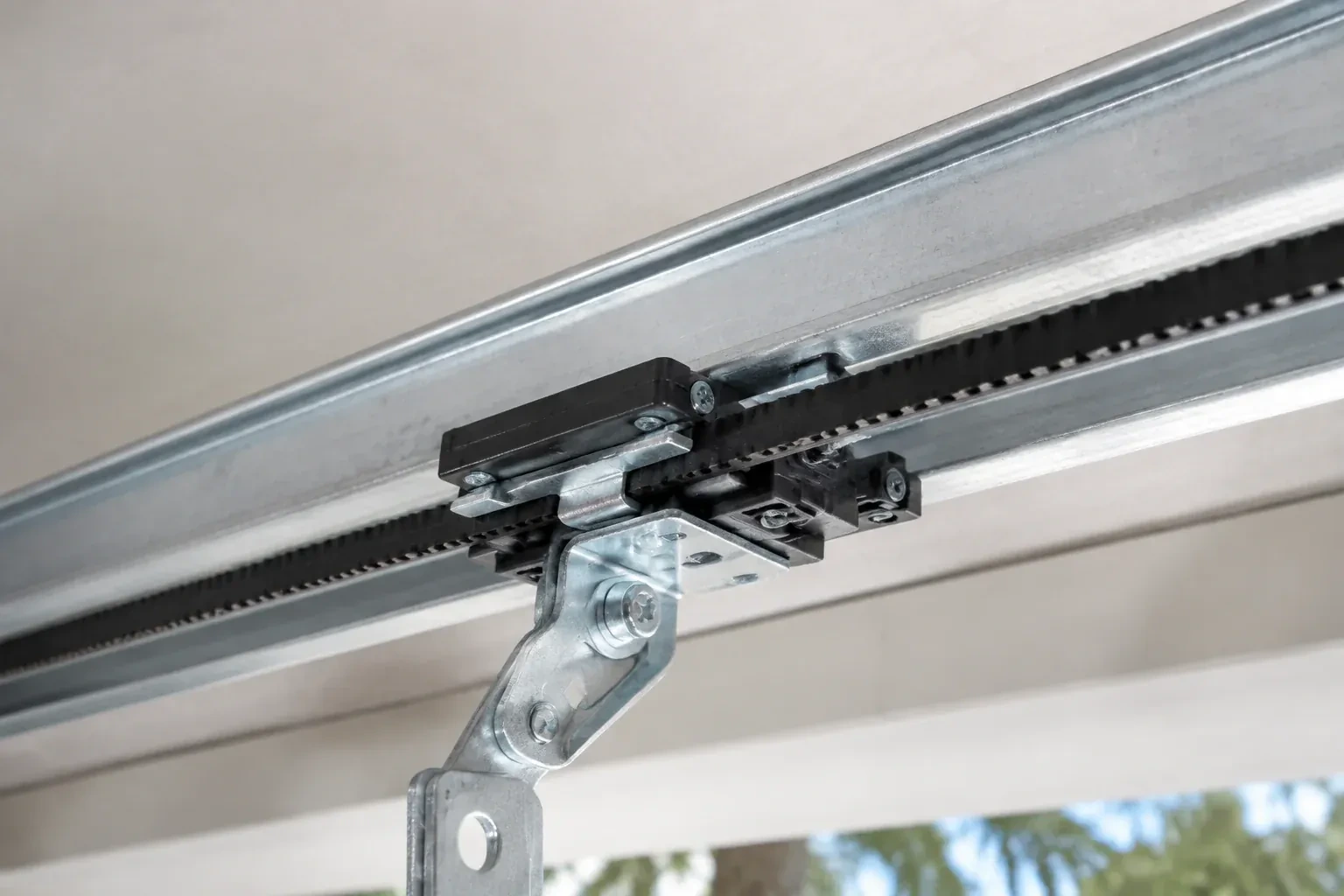
The rail shakes when the door runs. The steel straps holding it to the ceiling have worked loose, the chain rattles the length of the garage, and a bolt has already dropped onto the hood of the car.
It is minus twenty in the detached garage and the door climbs in jerks, the belt stiff as a board. By the afternoon, when the sun has been on the door, it runs almost normally again.
You want the ceiling back. A storage loft, a vehicle lift or kayak racks would fit if the long rail and motor box were not hanging in the middle of the garage, and the low ceiling of an older house leaves little room for the standard rail anyway.
Your daughter gets home from school an hour before anyone else. She has lost two house keys this year, and the garage keypad code has been shared with half her class.
Someone pulled the cord last spring to get a car out during an outage, and the door has never properly rejoined the opener. Press the button and the trolley glides along the rail by itself while the door stays exactly where it is.
Which fix fits?
On windy nights the door rattles in its frame, there is a line of daylight along one side, and the bottom seal has gone hard and flat.
WhyWhich counterbalance your door has shapes the job.
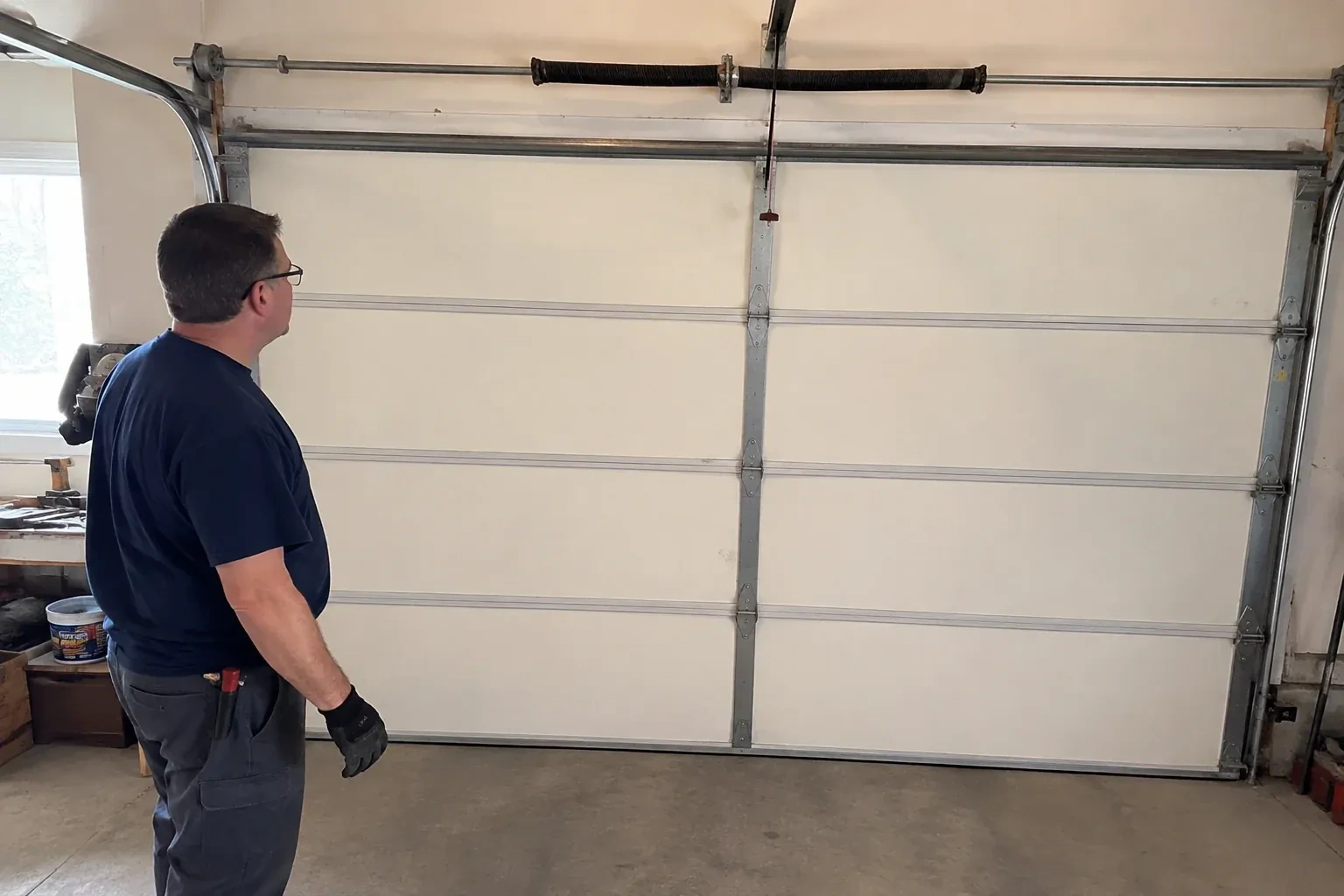
One of the springs beside the track is hanging loose at the front end, its pulley dangling, and a length of cable lies slack along the top of the door.
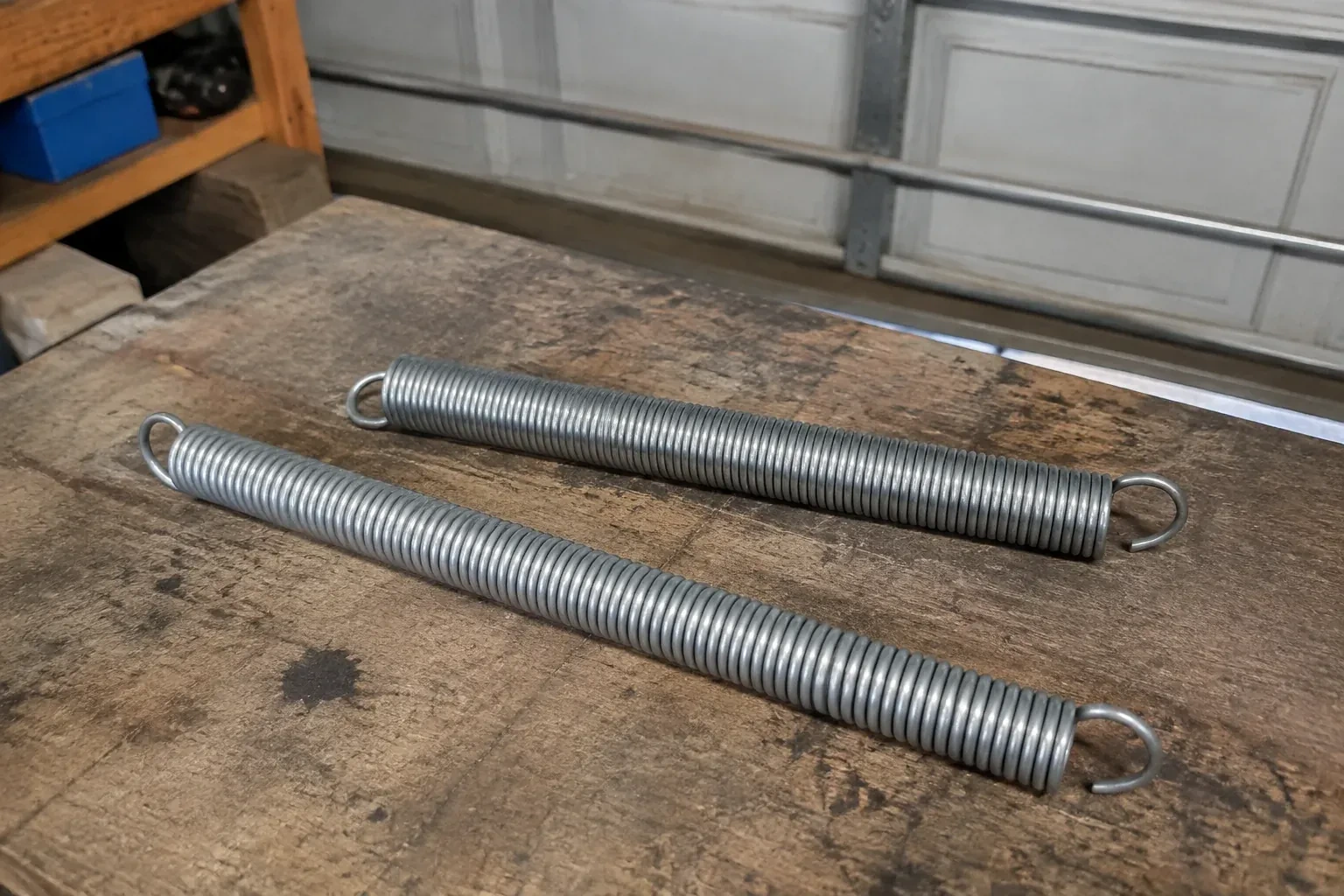
WhyGarage doors are balanced by one of two spring systems, and the extension kind is the one you find on many single-car doors and older detached garages.
The door has grown heavy so gradually you stopped noticing, until a visitor tried to lift it and could not.
WhyThe practical goal is a garage door that feels manageable even though the assembly is large and heavy.
Workshop equipment is moving in, and the present opener rail and door sections occupy the same overhead zone planned for lighting and clear working space.
Residential sectional doors of every common construction: steel, insulated steel, aluminum and glass, wood and composite, single and double width, with torsion springs above the header or extension springs beside the horizontal tracks. Openers of all the usual types are covered too, including chain drive, belt drive, screw drive and wall-mounted jackshaft units. If the door is a one-piece tilt-up or a commercial rolling door, mention that when booking so the right hardware comes along.
Will the new section match the colour of the rest of the door?
It will match the factory colour your door was made in, which is not quite the colour your door is today, because paint fades in sun and weather. A fresh section can look noticeably brighter than its neighbours, and that difference may not go away with time. If the contrast bothers you, the whole door can be painted with an exterior product suited to the finish. Ask to see the current colour chip against your door first.
What happens during the visit?
The opener is disconnected and the door lowered by hand and checked for level. The lock is identified and examined: handle, spindle, centre body, bars, guides, cylinder, fixings and track slots. Adjustments come first, then any worn parts are renewed, and the lock is worked from both sides with the door shut. The opener is reconnected and run, and you are shown how the lock and opener are to be used together.
Can I use the door as soon as the work is finished?
Yes. The visit ends with the door balanced by hand, run through full cycles and the opener reconnected and tested, so it is ready for normal use the moment the technician packs up. There is no settling period for cables. It is a good idea to watch the first few openings yourself to get a sense of how a level, balanced door sounds, so you notice any change later.
How do you know which springs my door needs?
By weight. Extension springs are rated for the weight they lift, so the technician releases the opener and weighs the door on a scale, then matches that figure and the door's height to a spring rating and stretch length. The old springs are measured as a check on wire size, coil diameter and length. Where the two disagree, the scale decides, since doors gain weight from added insulation or panels.
Why does my door sink or slam down when released?
Not enough spring tension for the door's weight. Springs lose a little pull as they age through thousands of cycles, and a door gains weight when insulation, windows or a heavier seal are added. Either way the door outweighs its springs. Adding tension in measured quarter turns restores the hold, provided the springs are sound; if they are near the end of their life, new ones are the right answer.
Is a chain drive supposed to be this noisy?
A chain drive has a steady mechanical sound that a belt drive lacks, and that much is normal. What is not normal is change: a slap along the rail from a loose chain, a clack at one spot from a worn sprocket tooth, grinding from the head as a gear wears, or a rattle from hangers or a header bracket that have loosened. Each of those has a fix, and a repaired chain drive should sound the way it did when it was new.
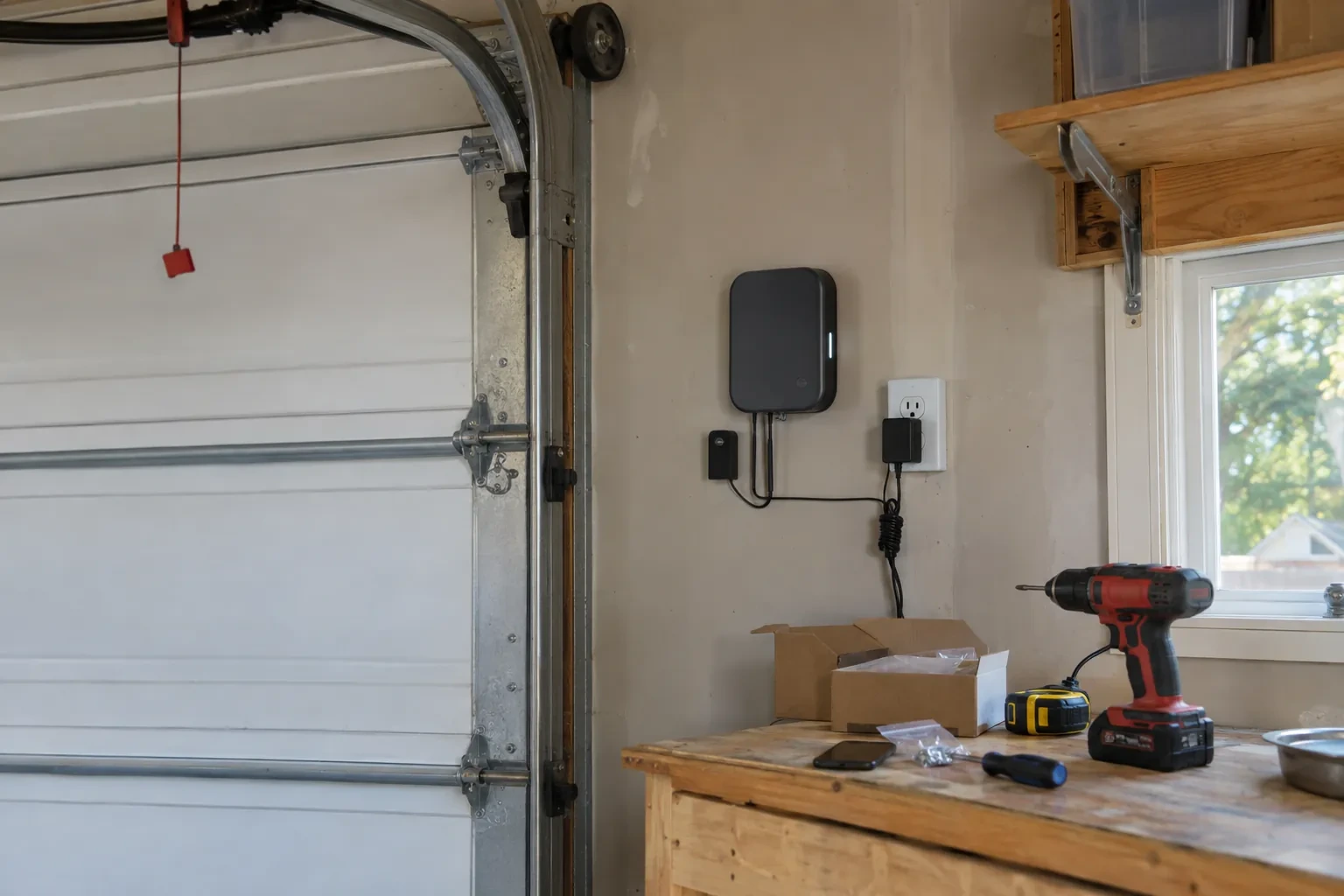
My opener already has a wireless symbol on it. Do I still need a hub?
Probably not. An opener with a built-in radio needs only to be put into pairing mode, joined to your network and registered to your account; it reports door position from its own travel sensing, so no separate sensor is required either. The visit becomes configuration and testing rather than installation. The technician also checks that the unit has not been left tied to a previous owner and that its firmware is current.
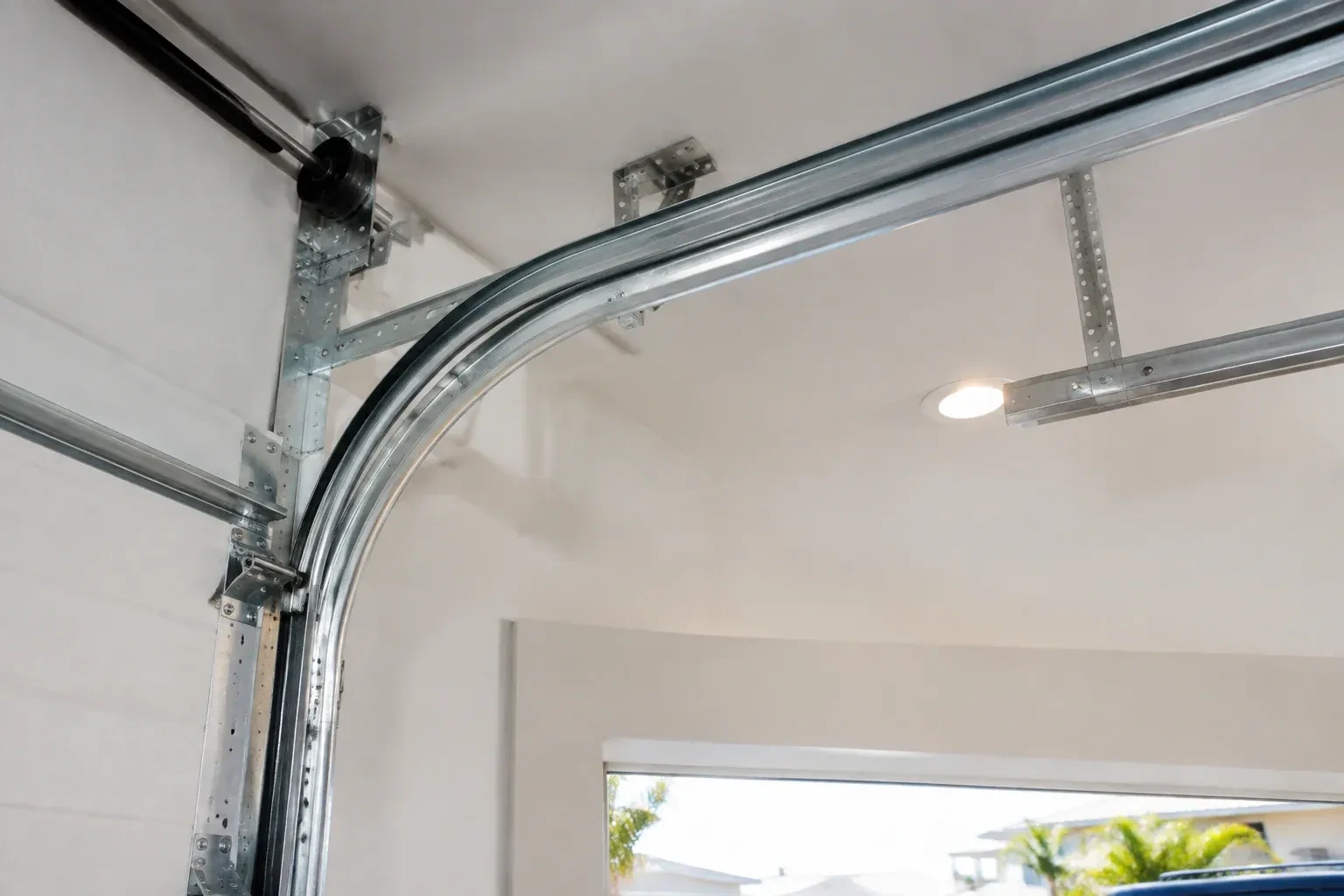
When would a high-lift track arrangement be considered?
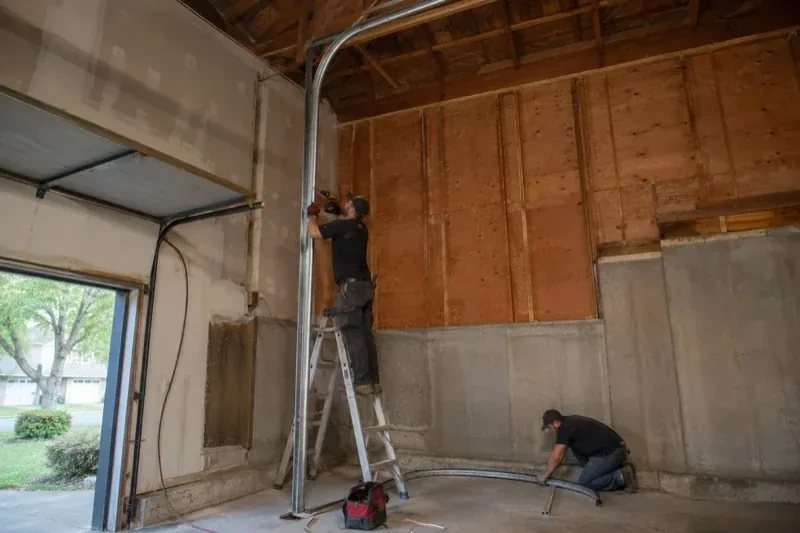
High-lift hardware extends the vertical track farther up the wall before the horizontal run begins, which preserves overhead clearance and can follow a taller ceiling. It may suit garages planned for vehicle lifts or other overhead uses. The decision depends on available height, roof structure, door weight, spring arrangement and operator selection. Measuring all obstructions and future equipment is essential before the track geometry is specified.
Can I keep my existing garage door sections?
Sound sectional panels can often remain, subject to inspection. Their construction, reinforcement, hinges, rollers, top fixtures, weight and condition are reviewed for the new travel path. Reusing the door does not automatically mean reusing its track or counterbalance parts, since those components are selected for the changed geometry. The assessment identifies retained and replaced items separately.
Request a visit
For homeowners in Richmond Hill, the visit begins with questions rather than tools: when did the door change, what does it sound like, does the wall button behave differently from the remote? Those answers point the technician to the right part, and the assessment that follows confirms it before any price is discussed.