Springs · Richmond Hill
Torsion Spring Replacement
On a cold morning the remote does nothing useful: the light comes on, the motor turns briefly, the door stays shut.
In plain words
The finished result is a door that behaves the way a good garage door should: it lifts by hand with light effort, stays where you leave it at mid-height, closes softly and lets the opener run with little strain. Reaching that point involves measuring the door, choosing a matched spring, winding it to the correct turns and testing the balance through the full travel. The technician then runs the opener's reversal test and lubricates the moving parts. You are left with a record of the spring installed, so future service starts from known specifications.
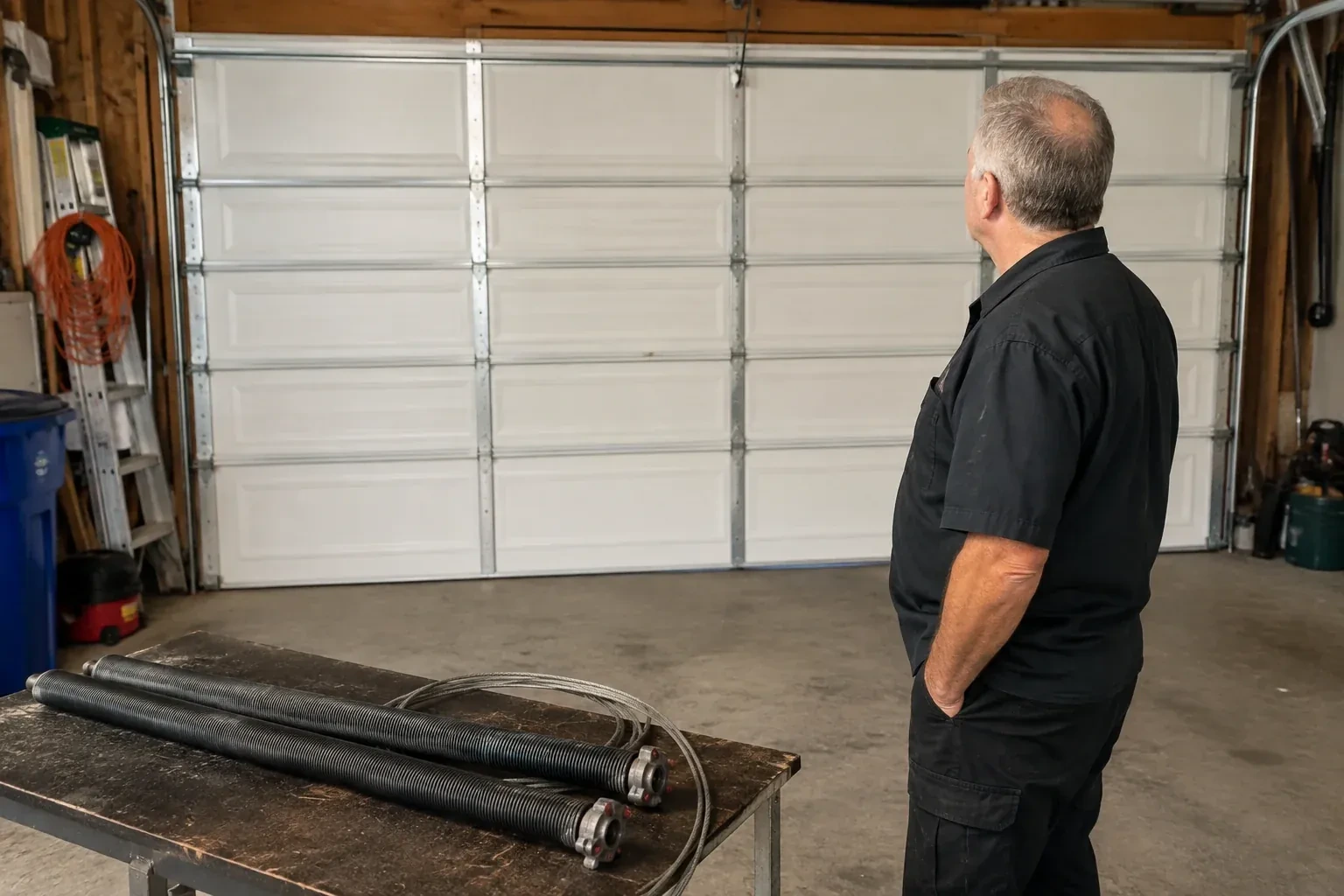
How the visit goesNothing broke outright, but the door has grown heavier each winter, opens more slowly and squeals as it moves. The springs on an older door have lost tension and the coils show pitting, so the system is asking for attention before it fails.
Torsion Spring Replacement
How the visit goes
Weighing the door honestly
A spring is chosen for a specific load, so the technician establishes what the door actually weighs rather than guessing from its appearance. With the opener released and any remaining tension safely removed, a scale under the bottom section gives a real figure. Construction is recorded alongside it: single-skin steel, insulated steel sandwich, solid wood, glass panels or an aluminum frame all sit at very different weights for the same size. Extras count as well, including added windows, a heavy bottom seal or panels replaced over the years. That weight, with the door's height, is the basis for the spring specification.
Setting the cables and drums
A balanced door depends on both cables pulling equally, so drum work gets careful attention. Each lift cable is wound into the grooves of its drum with the loop secured on the drum pin, and the drums are slid firmly against the end bearing plates. The technician rotates the shaft to take up slack, then sets tension so both cables are equally taut with the door fully closed; a level across the shaft confirms it is sitting true. Drum set screws are tightened to the shaft in this position. Even cable tension keeps the door square in its tracks through every part of its travel.
Relief for the opener
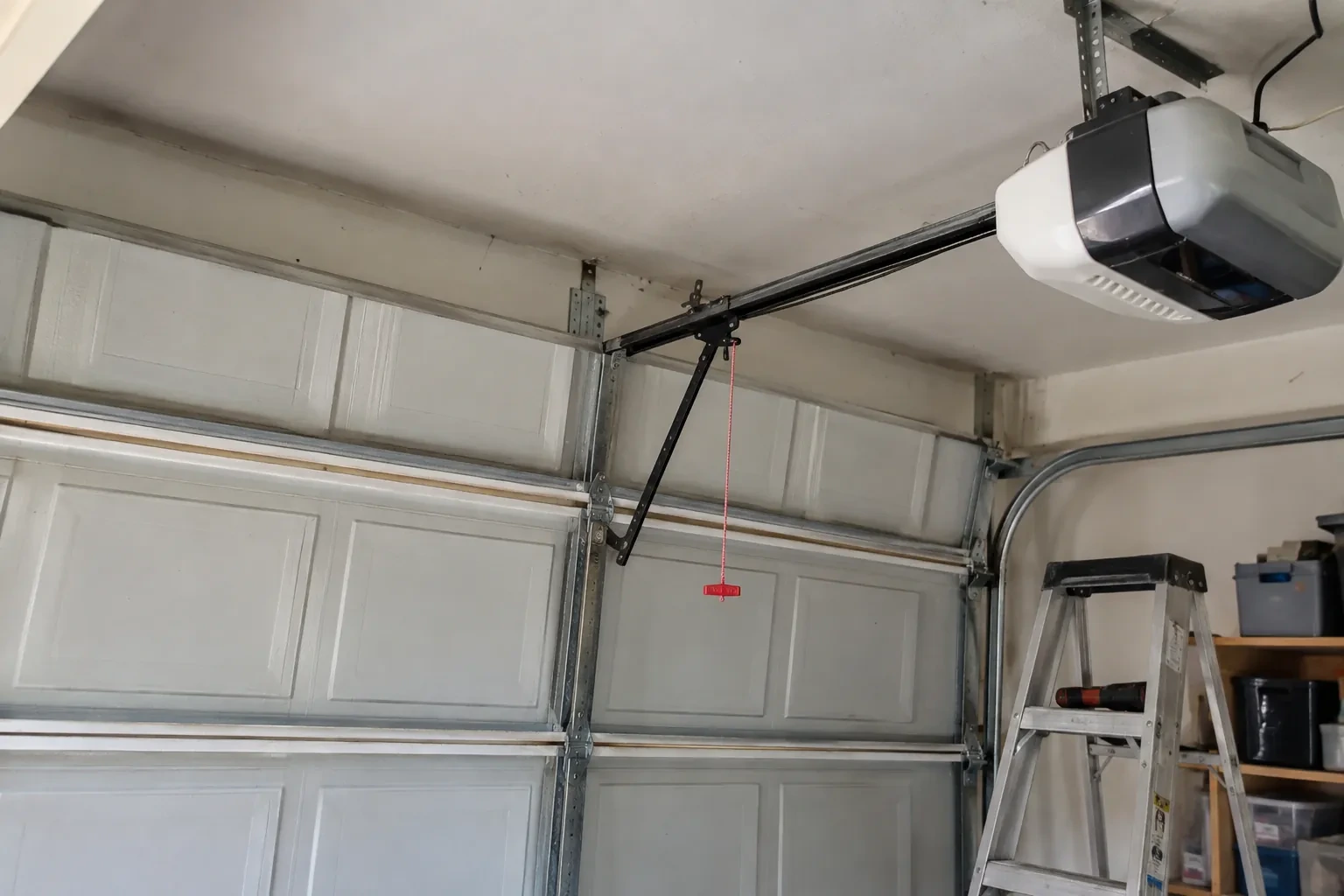
Your opener benefits as much as the door. With the spring carrying the weight again, the motor, gear drive, trolley and rail return to the light duty they were designed for, which tends to mean a longer working life and less noise. Force settings have been reset to suit a balanced door, so the safety reversal reacts to a genuine obstruction rather than to a heavy door. Once a year, repeat the simple reversal test by placing a length of wood flat on the floor in the door's path and confirming the door reverses on contact. The opener's photo-eye sensors deserve a wipe at the same time.
Torsion Spring Replacement
In the van
Lift cables
End bearing plates
Torsion shaft and coupler
Locking pliers for the track
Stationary cone bolts and nuts
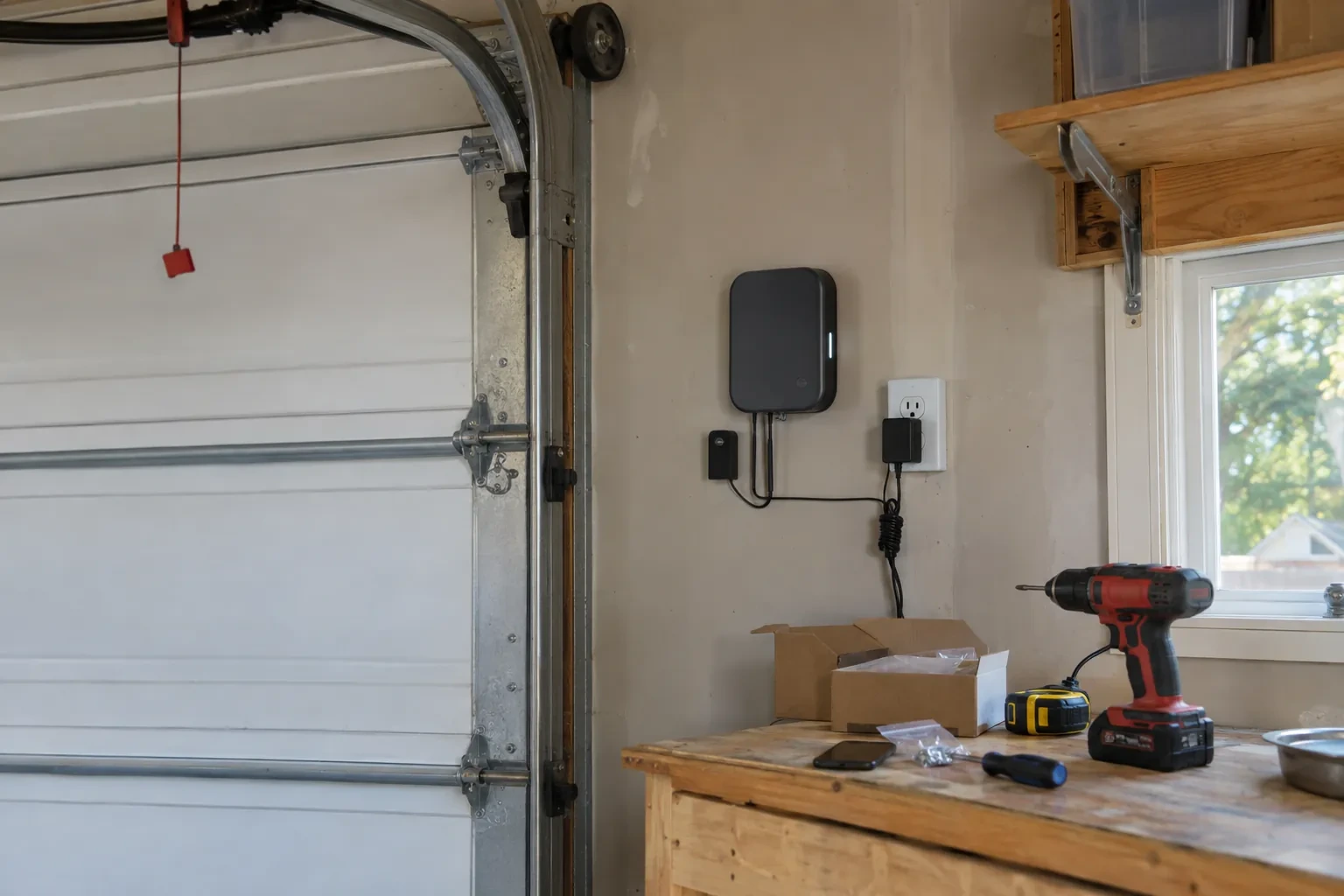
Torsion Spring Replacement
What affects the quote
One spring or two
A single-spring door needs one spring; a paired system is usually replaced as a matched set of left- and right-wound springs. The number of springs and whether both are replaced is the largest single influence on the scope.
Damage from the break
If the opener was run against a broken spring, the top section may be bowed, the trolley bent or a hinge strained. Correcting these so the balanced door runs on straight hardware adds to the scope.
Converting from extension springs
Moving a door from extension springs to a torsion system adds a shaft, bearings, drums and brackets, and removes the old pulleys, which is a broader job than replacing an existing torsion spring.
What to have ready
- Did you hear a loud bang before the door stopped working?
- Is there a working power outlet near the opener and clear space under the shaft?
- Can you send a photo of the spring area and the opener?
Torsion Spring Replacement: questions
QuestionsWhat other parts are often replaced with the spring?
The shaft is free during a spring change, which makes it the natural time to renew the centre bearing and end bearings if they grind or wobble. Lift cables that show fraying or rust at the bottom brackets are replaced so the new spring pulls on sound steel, and cracked or worn drums are swapped. On older doors, a corroded centre bracket or loose lag bolts may also be addressed. Each item is shown and explained before it is added.
Why does the door need to be balanced, and how is that tested?
Balance means the spring is holding almost exactly the door's weight, so the door neither flies up nor slams down and the opener only guides it. It is tested by releasing the opener, lifting the door to about waist height and letting go: a balanced door stays there. The technician fine-tunes in quarter turns of the spring until the door holds at several heights and travels evenly on both sides.
Why is my door sitting crooked since the spring broke?
On a two-spring door, one intact spring keeps pulling on its side while the broken side goes slack, so the door lifts unevenly and a cable can jump its drum. The technician levels the door, reseats the cables in their drum grooves and evens the tension after the new spring is fitted. Rollers and track are checked for damage from the crooked travel so the door runs square again.
Related services
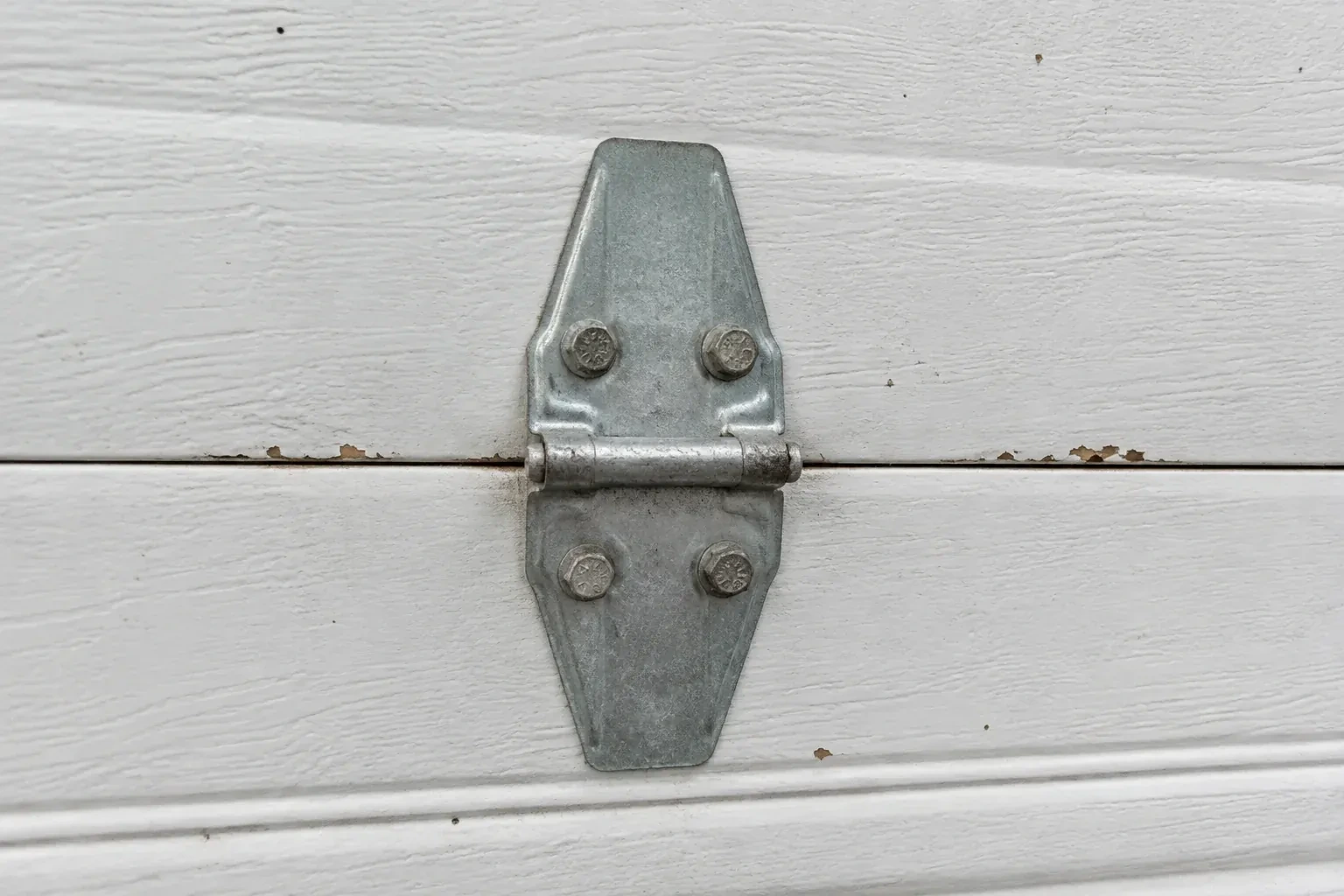
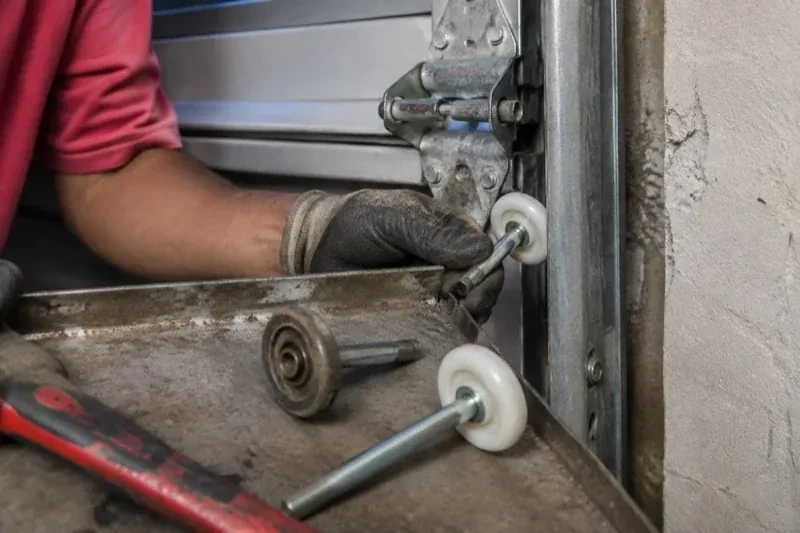
- Garage Door Hinge ReplacementWith the door closed and a flashlight on the inside face, one of the hinges near the edge has a crack running from the screw hole to the knuckle.
- Garage Door Track Repair or ReplacementThe door climbs crooked, one side clearly ahead of the other.
- Garage Door Cable ReplacementAfter years of slushy winters the cables look thinner near the bottom brackets, with rust streaks running down the door where they attach.