Springs · Richmond Hill
Extension Spring Replacement
One of the springs beside the track is hanging loose at the front end, its pulley dangling, and a length of cable lies slack along the top of the door.
In plain words
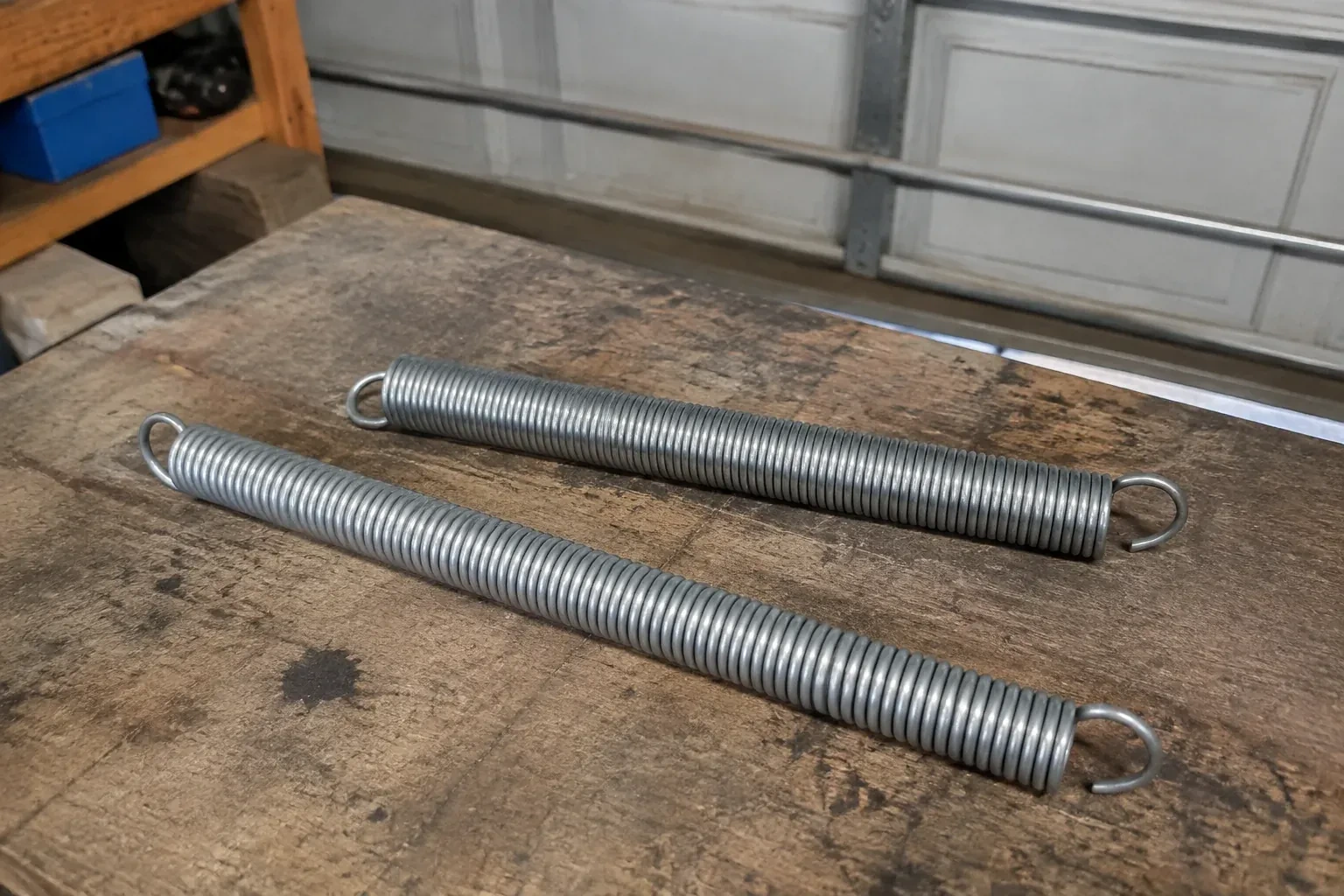
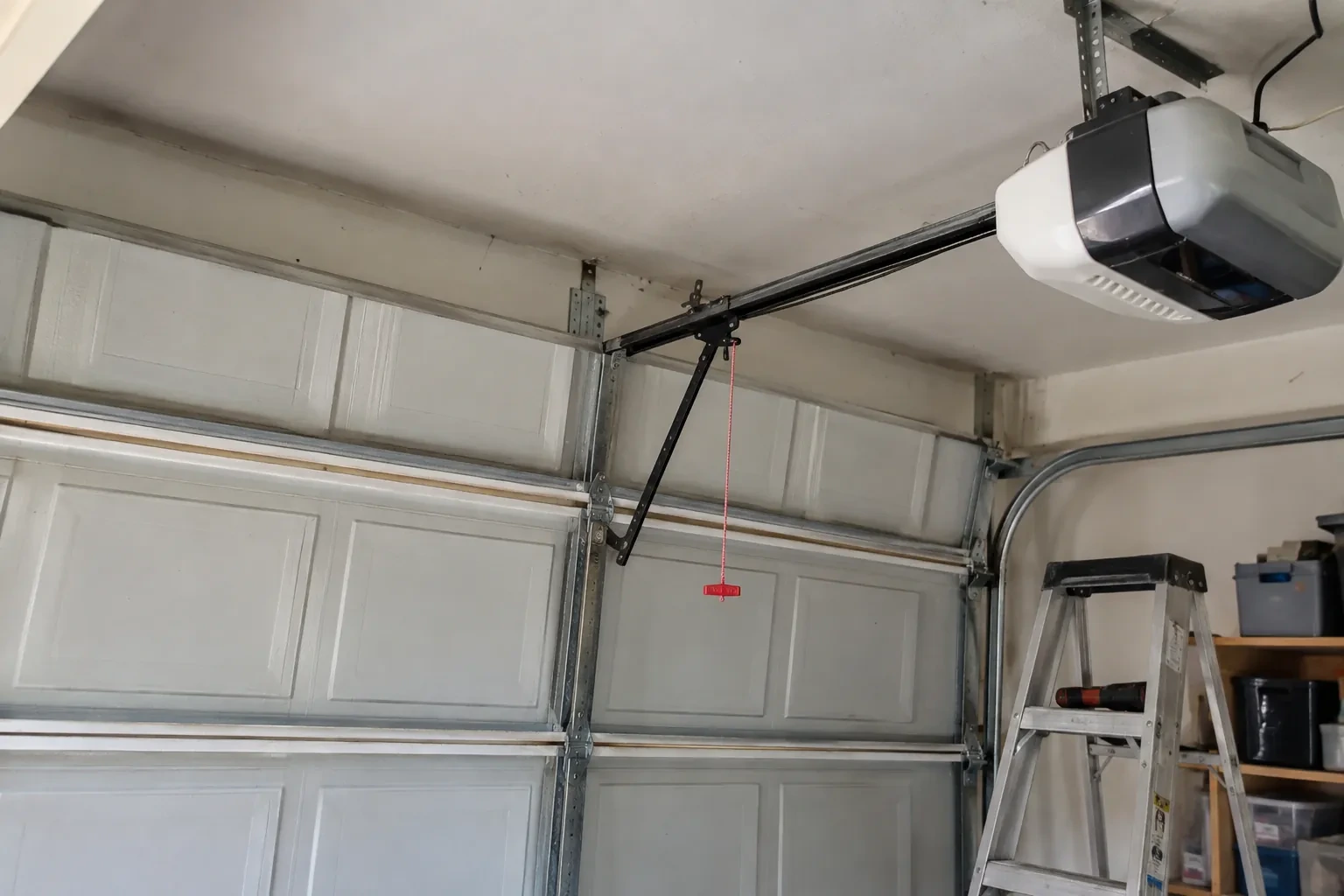
A spring visit follows a fixed order, so you know what to expect. The technician releases the opener, raises the door fully and clamps it, because an extension spring is at its slackest with the door open. Then both springs, the pulleys, cables, hangers and containment cables are inspected and the door is weighed. Old springs come off, new ones go on with containment cables threaded through, cables are routed over the pulleys and both sides are hooked at the same setting. The clamps come off, the door is balanced by hand, and only then is the opener reconnected, adjusted and put through its reversal tests.
How the visit goesIt is the first hard frost of the year and the door on the old detached garage has stopped halfway, squealing at one pulley. The springs are the ones that came with the door decades ago, orange with rust where they hang near the back wall.
Extension Spring Replacement
How the visit goes
Pulleys, cables and the hooks that set them
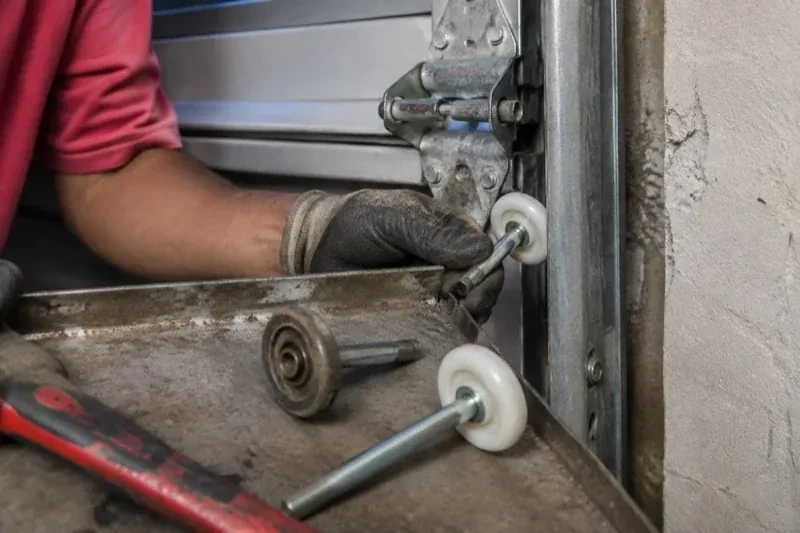
Each side of an extension system has two pulleys, one on the moving end of the spring and one fixed at the front of the horizontal track, and a lift cable that runs from the bottom bracket over both to an S-hook or clip on the track hanger. Each pulley is spun to feel for a rough bearing and looked at for a wheel worn to a sharp groove or wobbling on its bolt. The cables are followed for fraying, rust at the bottom loop and a wrap that has slipped off a pulley. Worn pulleys and cables are renewed with the springs, since a seized pulley is often what shortened the old spring's life.
Running the lift cables
Each lift cable starts at the bottom bracket, where its loop goes over the pin or is secured with a clevis pin. From there it runs up the vertical track, over the fixed pulley at the front of the horizontal track, back along the track to the pulley on the end of the spring, around it, and forward again to the S-hook or adjusting clip at the front hanger. The technician keeps the cable seated in each pulley groove and makes sure it passes on the correct side of the containment cable and the track. Cables are renewed if the old ones showed any fraying or rust, and always as a pair of the same length.
A clear threshold and an honest opener
Two habits protect the new springs from the shocks that shorten a spring's life. The first is the floor: a door that comes down on a bin, a bike wheel or a ridge of packed snow stops short while the springs and cables are still pulling, and the jolt can throw a cable off its pulley. Keep the opening clear and scrape the ice ridge off the threshold before running the door in winter. The second is the opener's force setting. It was set for the newly balanced door; if the door ever seems to need more push, that is the springs asking for attention, not a reason to turn the force up.
Extension Spring Replacement
In the van
Lift cables
Track clamps or locking pliers
Replacement rollers and hinges
Lag screws and hanger bolts
Rear spring hangers and angle iron
Extension Spring Replacement
What affects the quote
One spring per side or two
Heavier doors sometimes carry a pair of springs on each side rather than one. Four springs, four containment cables and the extra setting time show as their own lines.
Converting to torsion instead
Where the garage has the headroom, some owners take the opportunity to move to a torsion system. That is a different job with different hardware and is quoted as its own option.
Working room around the springs
Shelving, a stored canoe or a car parked under the tracks slows the work along the horizontal run. Clearing the sides of the garage beforehand keeps the time on the quote short.
What to have ready
- Is there a thin cable running through the middle of each spring?
- Has insulation, glass or a wood facing been added to the door?
- Does the door drop the last bit, or drift up on its own?
Extension Spring Replacement: questions
QuestionsIs it all right to keep shelves and storage near the springs?
Keep a clear zone around them. The springs, pulleys and cables move on every cycle, and anything leaning into their path, such as a ladder, a hockey bag or a shelf edge, can catch a cable or knock a pulley. Storage that crowds the rear hangers also slows any future service. A hand's width of clear air around each spring's full travel, and nothing hung from the springs or their cables, is the rule of thumb.
How do you know which springs my door needs?
By weight. Extension springs are rated for the weight they lift, so the technician releases the opener and weighs the door on a scale, then matches that figure and the door's height to a spring rating and stretch length. The old springs are measured as a check on wire size, coil diameter and length. Where the two disagree, the scale decides, since doors gain weight from added insulation or panels.
Can I keep using the opener until the spring is replaced?
It is better to leave the door where it is. With one spring gone, the opener is lifting most of the door's weight on its own, which strains the motor, can bend the top section and often throws a cable off its pulley, adding to the work. Use another door in and out, keep the bay clear, and let the technician move the door once it is secured.
Related services
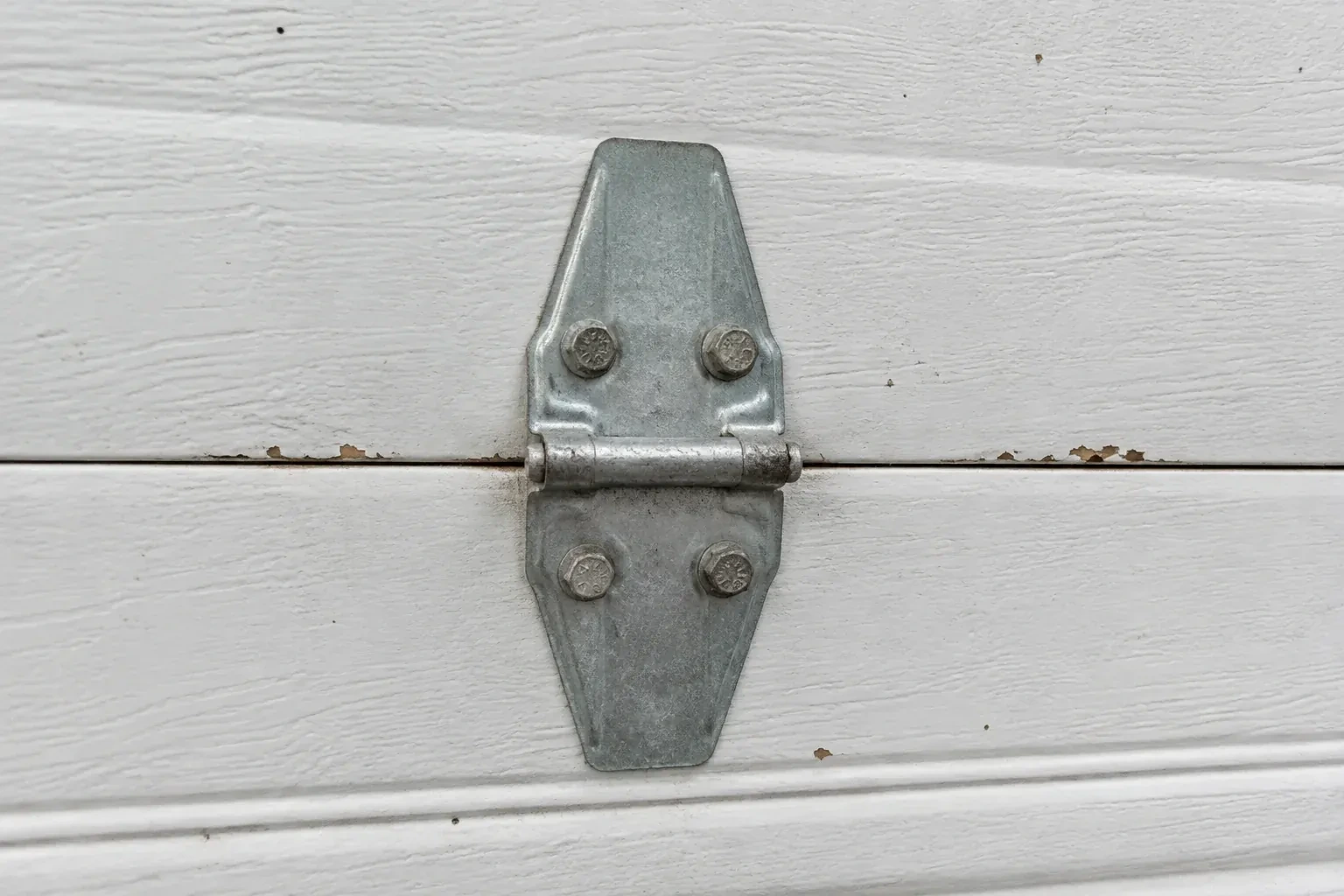
- Garage Door Hinge ReplacementWith the door closed and a flashlight on the inside face, one of the hinges near the edge has a crack running from the screw hole to the knuckle.
- Garage Door Track Repair or ReplacementThe door climbs crooked, one side clearly ahead of the other.
- Garage Door Cable ReplacementAfter years of slushy winters the cables look thinner near the bottom brackets, with rust streaks running down the door where they attach.