Openers · Richmond Hill
Garage Door Opener Replacement
You want the ceiling back.
In plain words
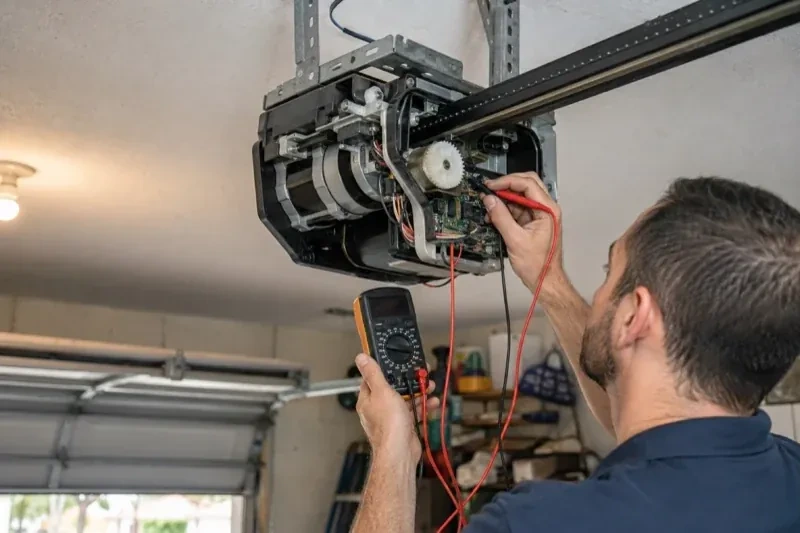
Choosing the drive is the decision that shapes daily life with the new opener. A chain drive is the familiar workhorse, sturdy and simple, with a little more sound. A belt drive runs on a reinforced rubber belt and is the answer for a garage under a bedroom. Direct-drive units move the motor itself along a stationary chain inside the rail and have very few moving parts. A wall-mount operator sits at the end of the torsion shaft and leaves the ceiling completely clear. The technician matches the drive to your door's weight, your ceiling, how close the garage sits to living space and how you use the door.
How the visit goesThe remotes only work from the end of the driveway now, and one of them disappeared with a set of keys last month. Inside the remote are tiny switches instead of a learn button, so excluding the missing one means resetting the switch pattern on every remote and the receiver.
Garage Door Opener Replacement
How the visit goes
Headroom, framing and where the rail will hang
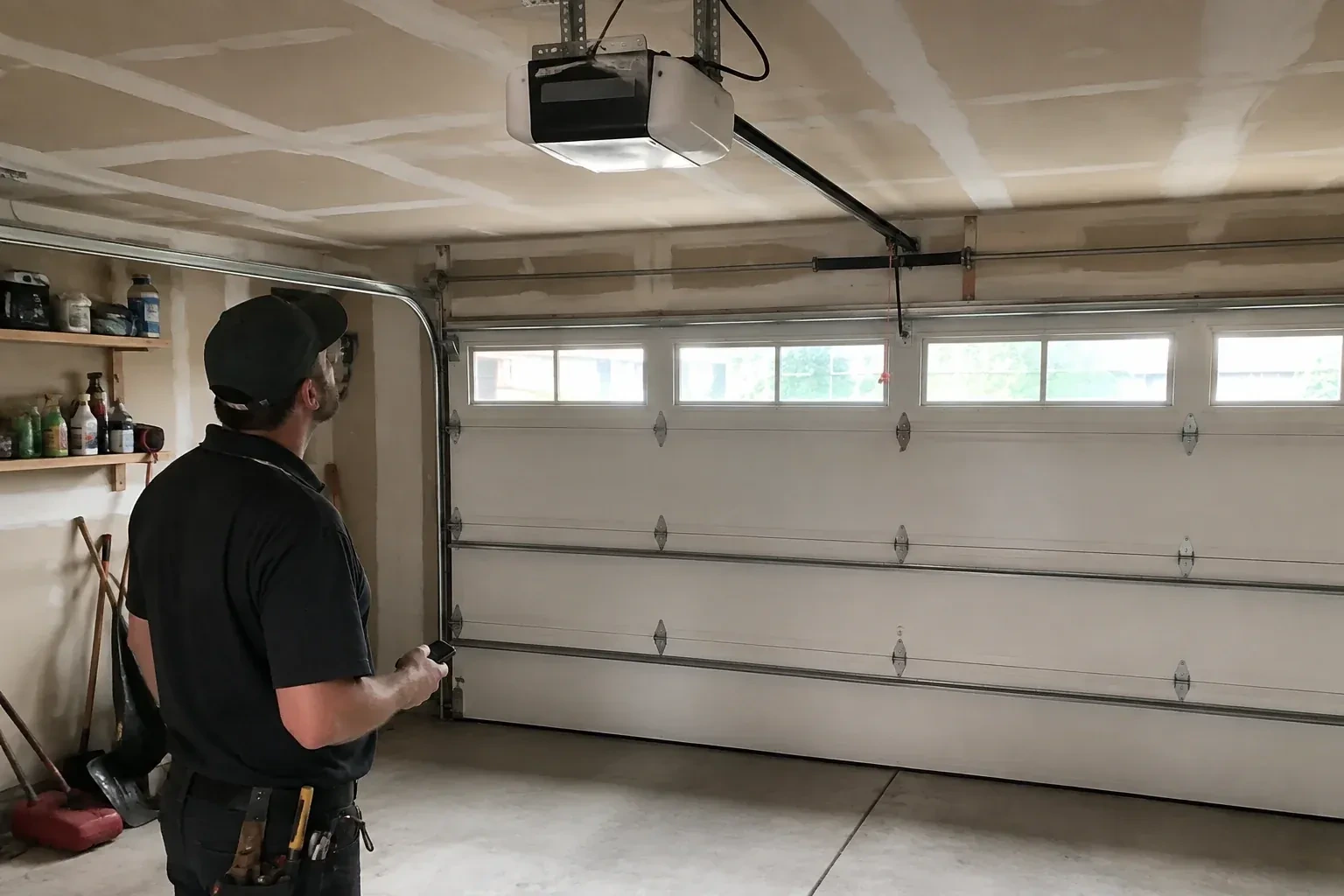
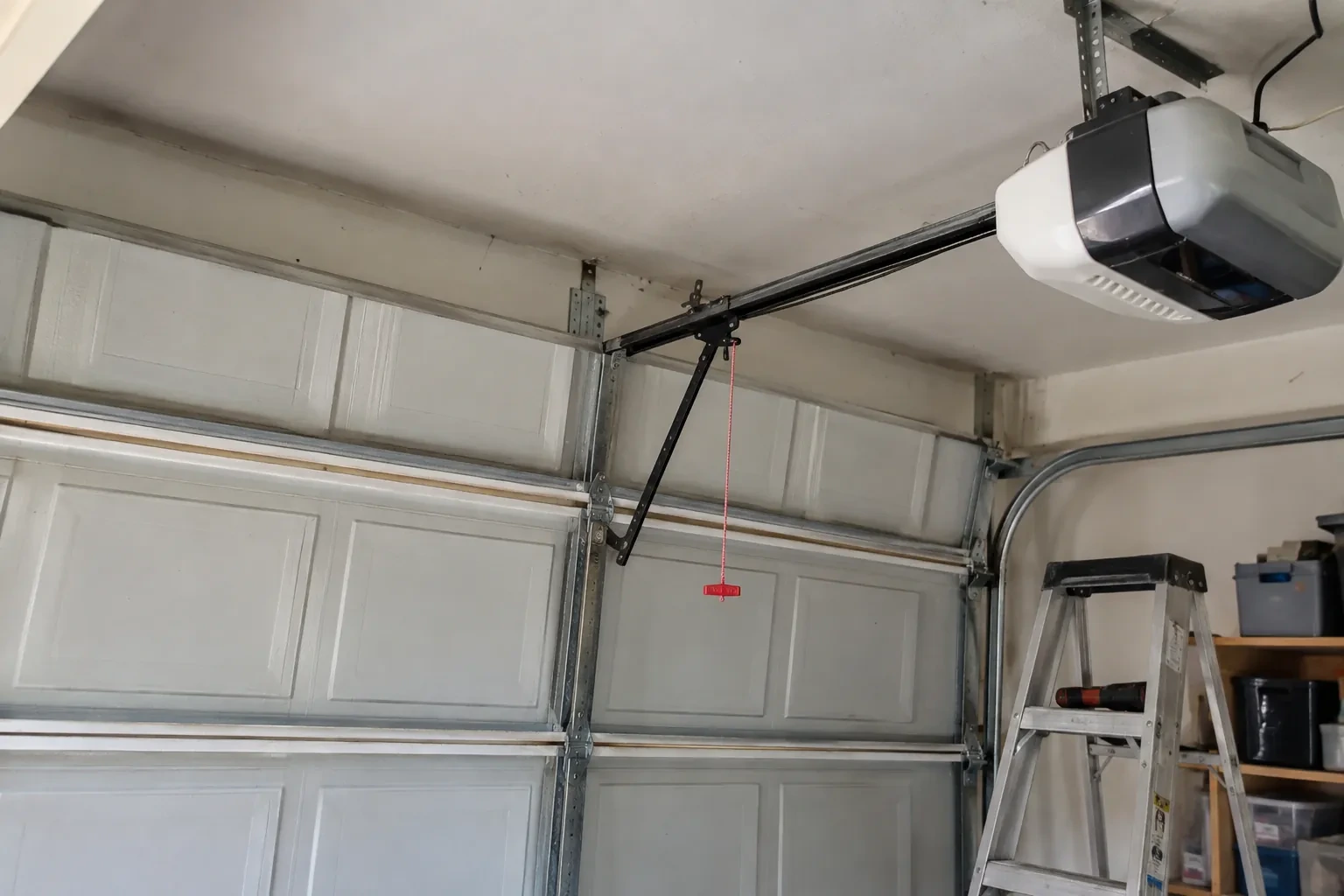
Looking up tells the technician how the new opener will fit. The gap between the top of the open door and the ceiling decides whether a standard rail has room or a low-headroom arrangement or a wall-mount operator is the better fit. The wall above the door is checked for solid framing to take the header bracket, and the ceiling for joists or trusses to carry the angle iron that hangs the head. Door height matters too: a 7 ft door takes a standard rail while an 8 ft door needs an extension. Storage racks, lights and ducts in the path of the rail are noted so nothing gets in the way on the day.
Connecting the door to the drive
Where the door needs it, a reinforcement strut or operator bracket is fitted across the top section so the pull of the arm is spread over the whole width rather than one point. The door bracket is fastened through the strut into the section, and the straight and curved arm pieces are joined at the length that gives the trolley a smooth angle of pull. The technician reconnects the trolley, runs the door partway by hand and watches the arm geometry through the top of the travel, since a poorly angled arm is a common cause of a door that shudders or bows at the top.
New codes, and old remotes that no longer work
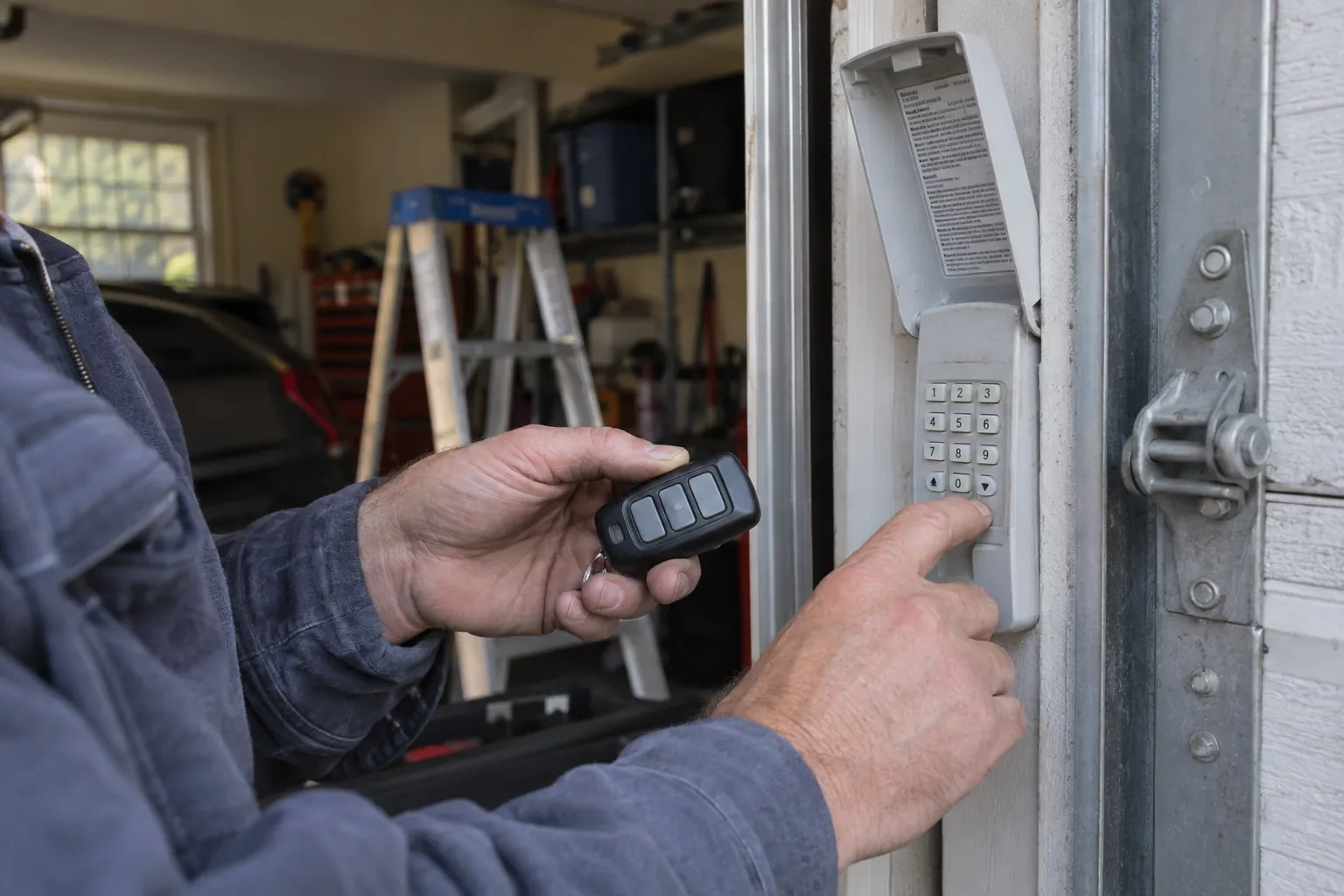
Every press of a new remote sends a code the operator has never seen before, so a signal recorded in your driveway is useless a moment later. The memory was cleared before your remotes were taught, which means any remote from the old unit, including one that went missing along with your house keys, is now just a piece of plastic. Keep the keypad code to yourself and change it if it has been shared with a contractor or house sitter; the console guide shows how. Adding a remote later is a matter of holding the learn button and pressing the new remote, and the technician leaves you with those steps written down.
Garage Door Opener Replacement
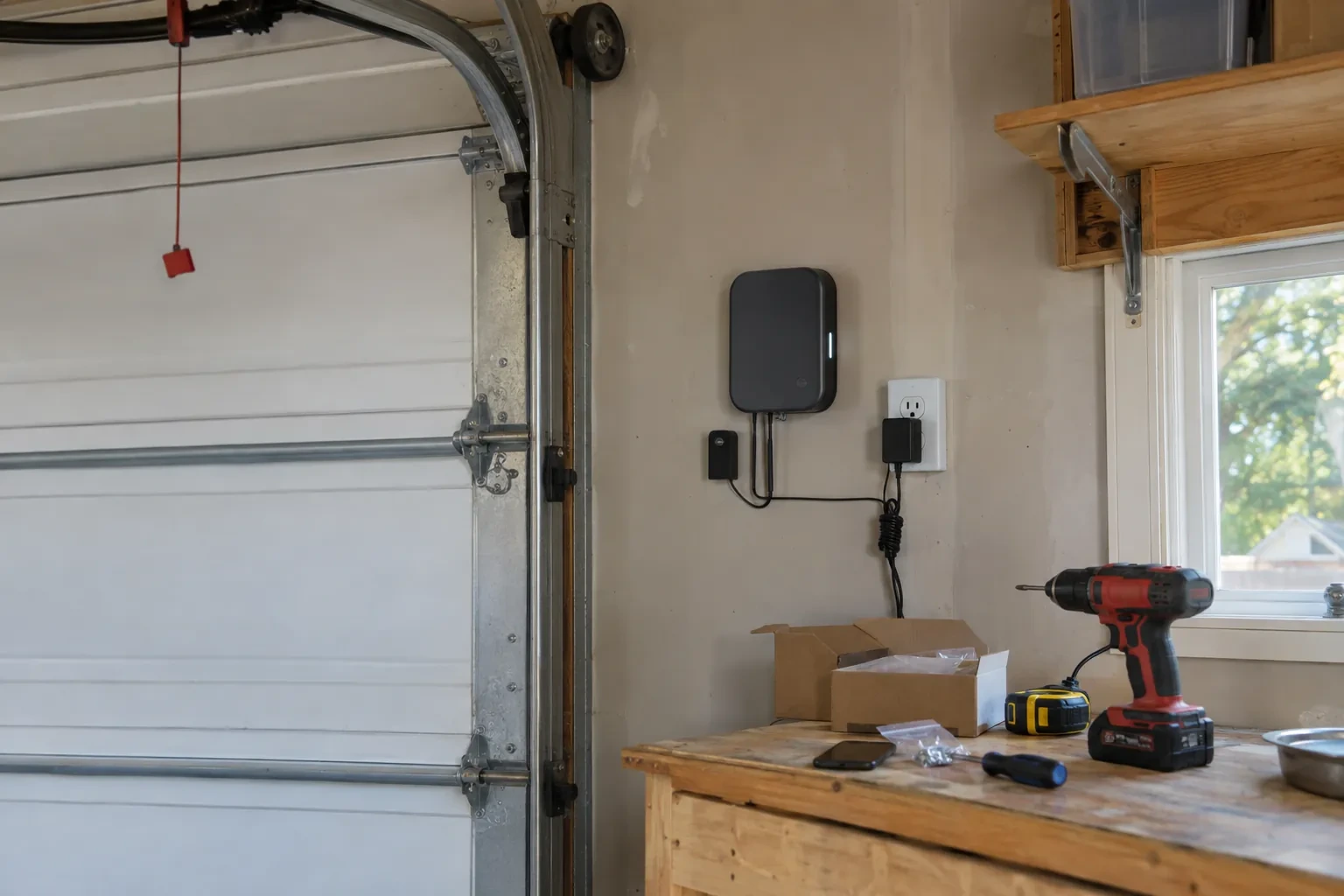
In the van
Photo-eye sensors
Low-voltage bell wire and staples
Remotes and wireless keypad
Top-section reinforcement strut
Header bracket and lag screws
Garage Door Opener Replacement
What affects the quote
Working around what is in the garage
A vehicle lift, a storage loft, ductwork or shelving where the rail will run, or a garage that cannot be emptied before the visit, adds handling time that the technician accounts for after seeing the space.
Wall-mount accessories
A wall-mount operator is installed with a cable tension monitor and a powered track lock, and sometimes a separate light kit, since the unit itself hangs no lamp over the garage.
Door height and rail length
A standard rail suits a 7 ft door. An 8 ft door or a taller custom door needs a rail extension, and a very low ceiling may call for a low-headroom arrangement, each an item on its own.
What to have ready
- Is the door steel, wood or aluminum, and is it insulated?
- What make and model is printed on the old opener's label, and roughly how old is it?
- Has a power outage ever left you unable to open the door?
Garage Door Opener Replacement: questions
QuestionsHow do I test the safety reversal myself?
Two checks, once a month, each starting with the door fully open. For the first, set a scrap of 2x4 flat on the concrete where the door will land and press the close button; the moment it meets the wood it should climb back to the top. For the second, start the door closing and pass a broom or your arm across the low sensor beam; it should reverse just the same. Any hesitation means a small adjustment is due.
Will a new opener make the door quieter?
A belt or direct drive with a soft-start DC motor removes most of the operator's own noise, and a level, well-tensioned rail removes the rattle. The door contributes its own sound through rollers, hinges and springs, so the technician looks those over during the balance check and can fit nylon rollers or fresh hinges at the same time. Together the two changes turn a morning rumble into a hum.
Can my phone control the door?
Yes, with a Wi-Fi capable operator or a small add-on hub for a compatible unit. The app opens and closes the door, shows whether it is up or down, sends an alert if it has been left open and can close it on a schedule. The garage needs a usable Wi-Fi signal at the head unit, which the technician checks during the assessment; a range extender solves a weak signal in a detached garage.
Related services
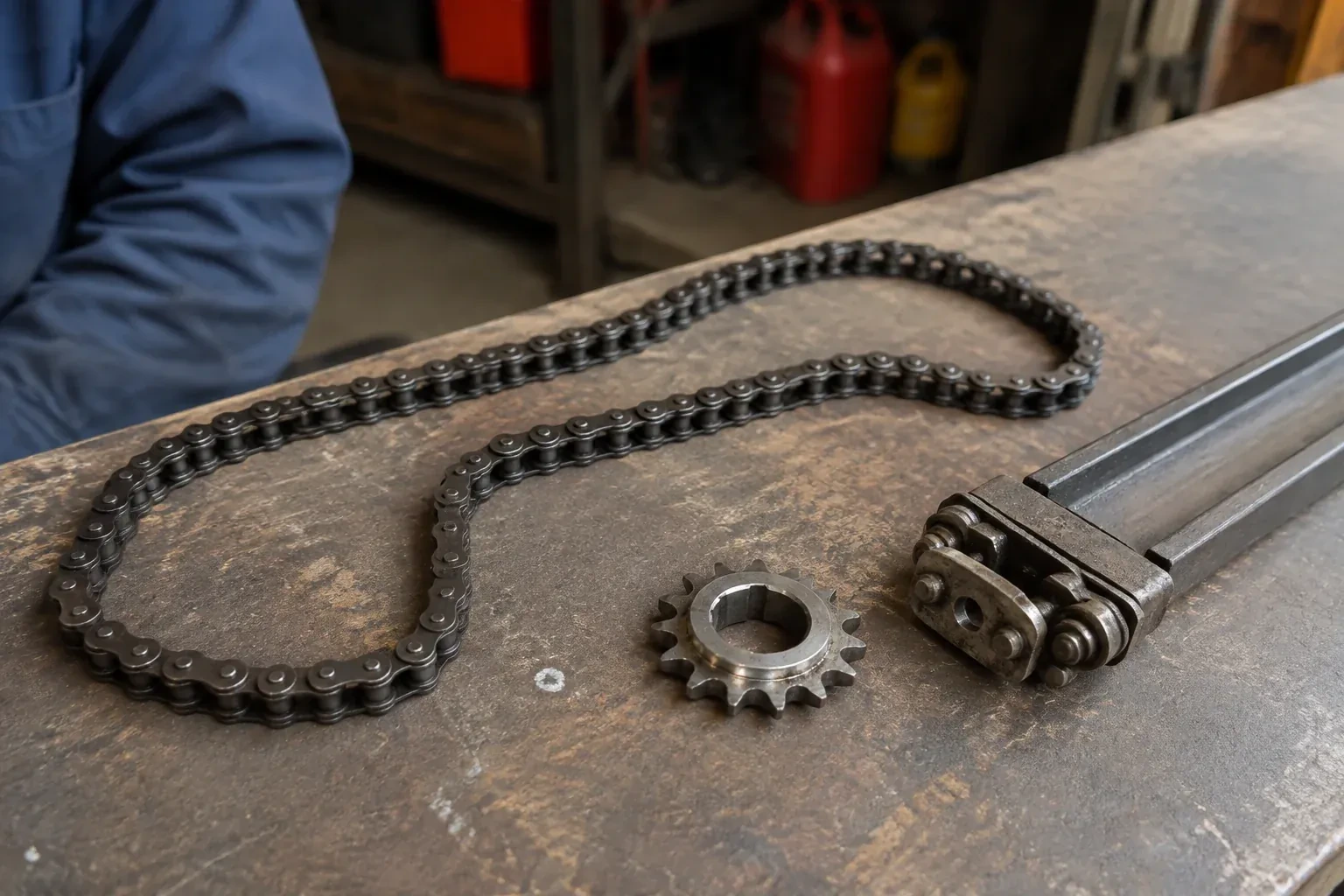
- Chain-Drive Opener RepairThe rail shakes when the door runs.
- Belt-Drive Opener RepairIt is minus twenty in the detached garage and the door climbs in jerks, the belt stiff as a board.
- Photo-Eye Sensor Alignment or ReplacementYou press the remote, the door drops a few centimetres, then climbs straight back to the top while the opener light blinks.