Openers · Richmond Hill
Emergency Release Repair
Someone pulled the cord last spring to get a car out during an outage, and the door has never properly rejoined the opener.
In plain words
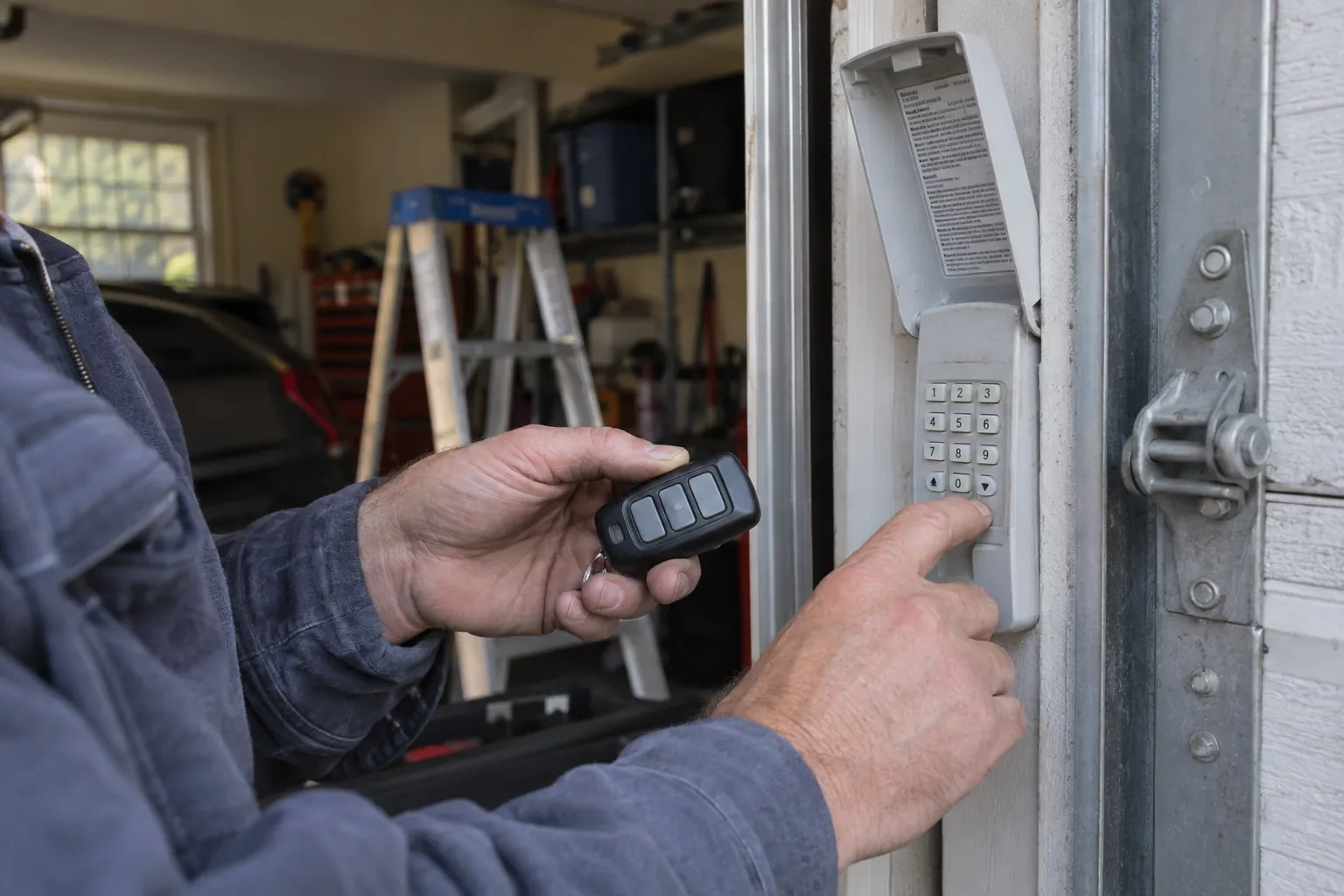
Beyond the repair, this service leaves every adult in the house able to use the release confidently. You see the handle pulled straight down with the door shut, the door lifted by its handle or a gripping point away from the panel joints, and the trolley clicked back together by pulling the cord toward the opener or running one cycle. You learn where the handle should hang, why it is red, and what to do if the door ever feels heavy when free. If there is an outside key release, its key gets a home outside the garage. The repair fixes a part; the walkthrough fixes the next outage.
How the visit goesSince the new door went in, the red handle has hung just below the ceiling, a stepladder's height above anyone in the household. During last week's blackout your daughter stood under it with a broom, unable to hook it down.
Emergency Release Repair
How the visit goes
Where the handle hangs
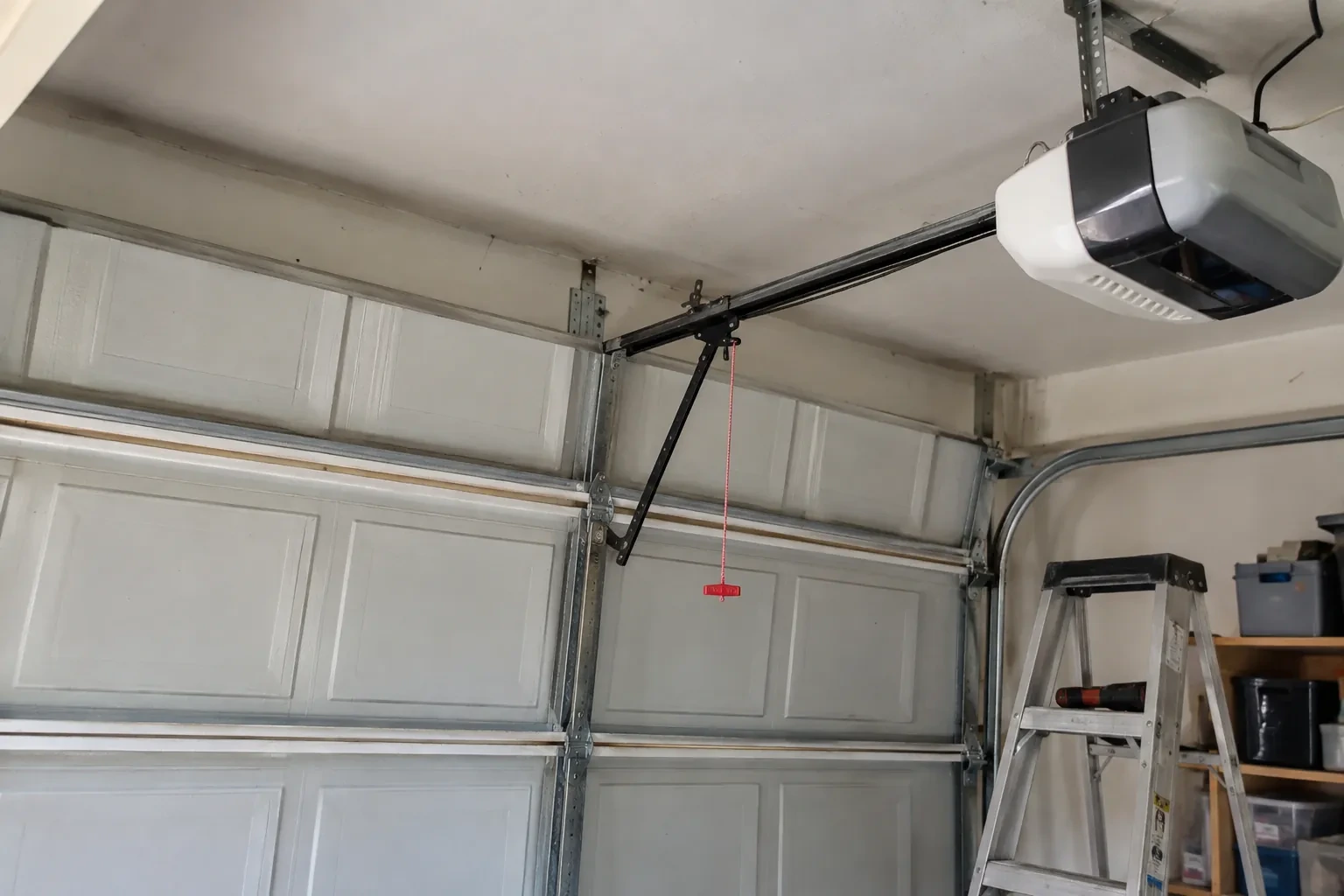
Height and position are measured, not guessed. The handle should hang no more than about 1.8 metres above the floor so a person standing on the slab can reach it, and it should clear the roof and antenna of the vehicle parked beneath. The technician also looks at what surrounds it: shelving, bikes on hooks, a storage loft, a cord tied up around the rail by a previous owner. A handle nobody can find in the dark is as good as no handle at all, so obstructions and a cord that was shortened after a door change are recorded as part of the fault, not as clutter.
A new cord and handle at the right height
A cord that has frayed, rotted in the sun or snapped is replaced with a rope and red handle kit made for openers. The rope is tied to the release lever with a knot that will not slip under a hard pull, then cut so the handle hangs no higher than about 1.8 metres above the floor and clears the vehicle roof. The handle sits where it can be seen from the door into the house, and any storage that crowded it is pointed out to you. A red handle that is easy to tell apart from everything else on the ceiling is what the standard asks for, and it is what the technician leaves behind.
Battery backup and outage-prone streets
If your street loses power a few times each winter, the technician may raise battery backup. Modern openers can carry a battery that opens and closes the door on stored power, which spares you the release altogether in most outages. The battery is a wearing part, generally replaced every few years, and the head unit signals when it is tired. The release remains the fallback when the battery is flat or the opener itself has failed, which is why both are kept in working order. You leave knowing which of the two your household relies on and how each one is checked.
Emergency Release Repair
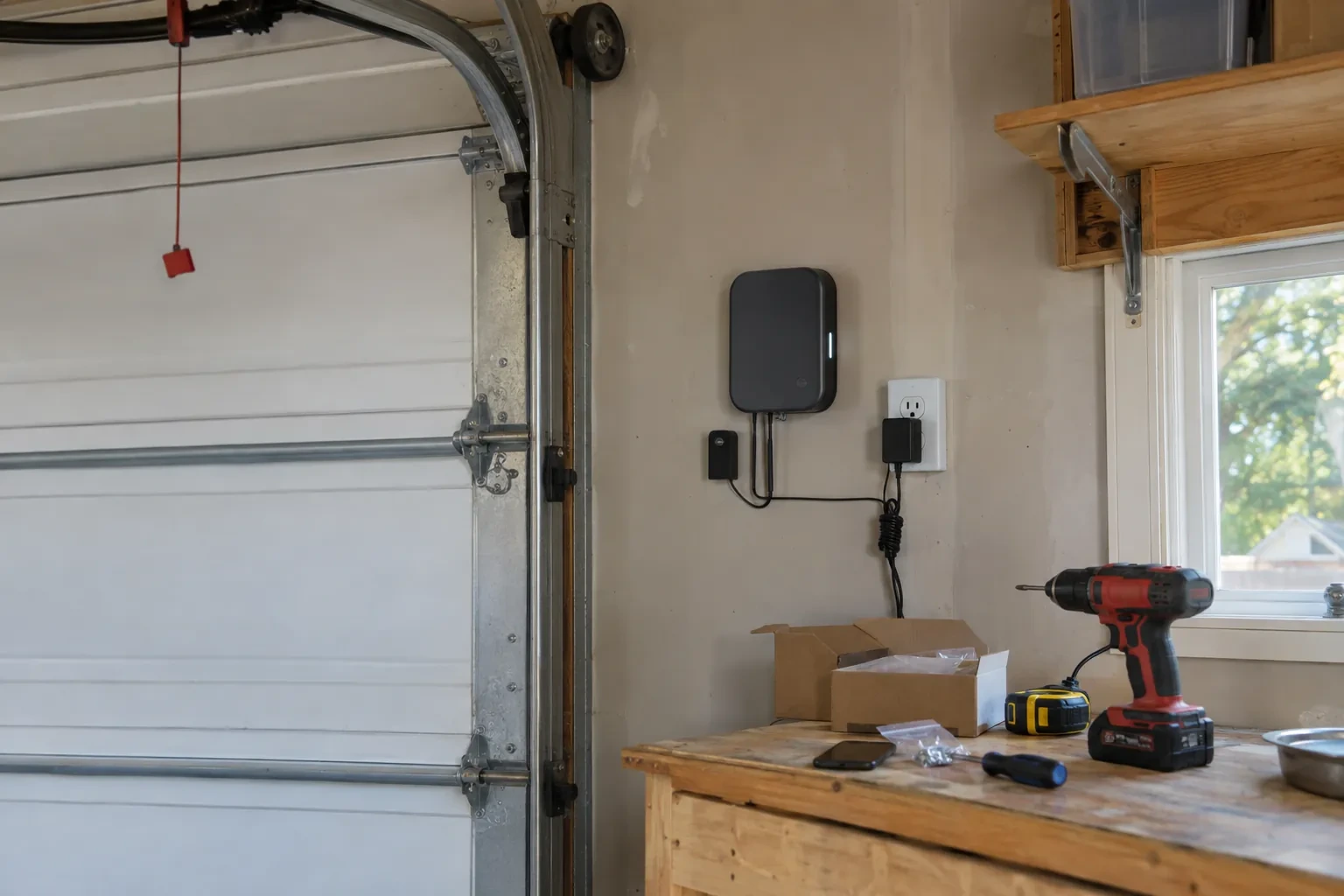
In the van
Garage door lubricant
Dry lock lubricant and de-icer
2x4 offcut for the reversal test
Chain or belt tension hardware
Door arm, clevis pins and clips
Emergency Release Repair
What affects the quote
Number of doors and openers
A double garage with two openers, or a house with a detached garage as well, means two releases to check and possibly two sets of parts, and the quote counts each.
Opener type and rail
A chain or belt unit on a one-piece rail, a sectional square rail, a screw drive and a wall-mounted opener each use a different release part, and the part sets the shape of the job.
Age and parts availability
Trolleys, levers and rope kits for openers from the last two decades are stocked. An older model may need a part sourced, and the quote says whether that is a wait or a reason to consider replacement.
What to have ready
- Has the trolley ever been left disconnected for a stretch of manual use?
- Is there a small keyed lock near the top of the door outside, and do you have its key?
- Where was the door when the release was pulled, and where is it now?
Emergency Release Repair: questions
QuestionsThe door is stuck shut, the opener is dead and there is no other door. Can you still get in?
Usually. If the door has an outside key release, a small round lock near the top panel, that is what it is for: the key pulls a cable that frees the trolley from outside so the door can be lifted by hand. If there is no such release, the technician has other methods to reach the lever from outside, and once inside the fault is dealt with. Fitting an outside release afterwards is a sensible follow-up for a garage with a single door.
What should I tell you when I call?
What the release did: handle missing, cord snapped, trolley will not reconnect, door let go on its own. Where the door was at the time and where it is now. Whether the opener is a chain, belt or screw unit on a rail, or a wall-mounted one beside the door. Whether there is an outside key release and whether you have its key. And whether the garage has a side door or a door into the house. That shapes what comes on the truck.
What happens if someone pulled the release while the door was open?
Sometimes nothing, if the door is well balanced and stayed where it was. If the door came down on its own, the technician checks what took the impact: the door arm, the carriage, the bottom brackets, the rollers and the panel around the arm bracket. A bent arm or carriage is replaced, and the balance test shows whether the springs contributed. Then the release is reconnected with the door closed and the household is shown the right sequence.