New Doors · Richmond Hill
High-Lift Garage Door Conversion
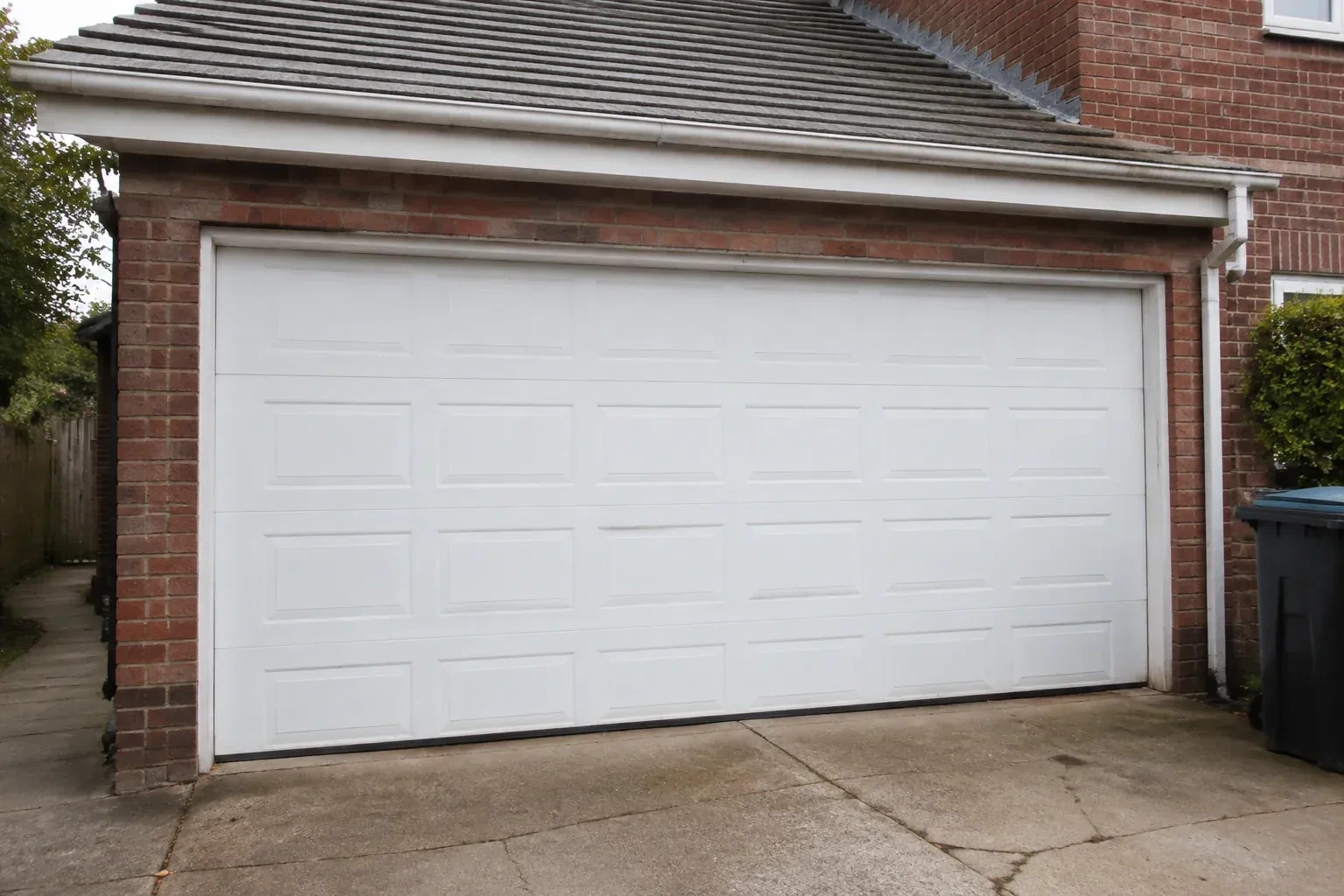
A taller van clears the closed opening comfortably, then loses useful space when the door is raised because the bottom section hangs below the ceiling.
In plain words
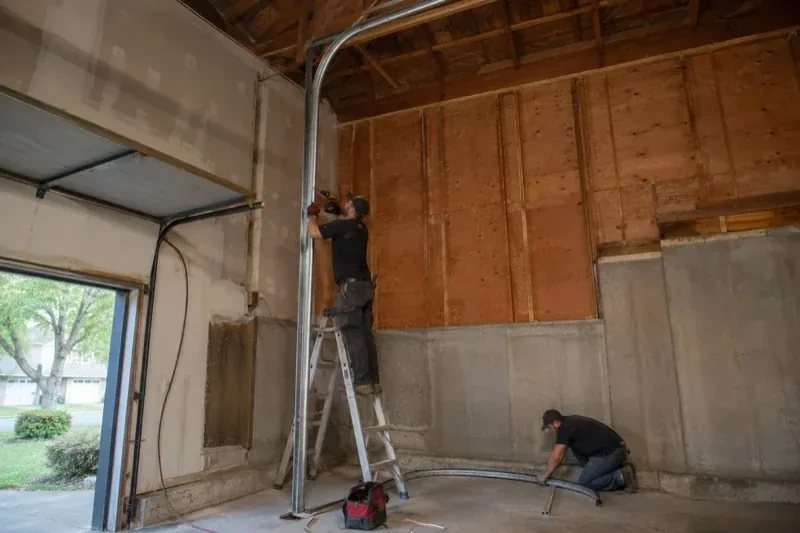
For a garage with generous headroom, standard track can leave valuable space unused. High-lift hardware raises the horizontal portion of the track so the open door rests closer to the ceiling. Planning starts with the exact clearance you want, then maps the opening, wall height, beams, lights, ducts and roof shape. The door weight and desired lift determine the counterbalance components. A compatible opener arrangement is included in the layout, creating one coordinated system instead of moving the track while leaving the rest unchanged.
How the visit goesThe door works well, although the open panels sit far beneath a sloped or raised ceiling. You are exploring whether the track, counterbalance and operator can be redesigned to follow the room more closely.
High-Lift Garage Door Conversion
How the visit goes
Distinguish high lift from full vertical lift
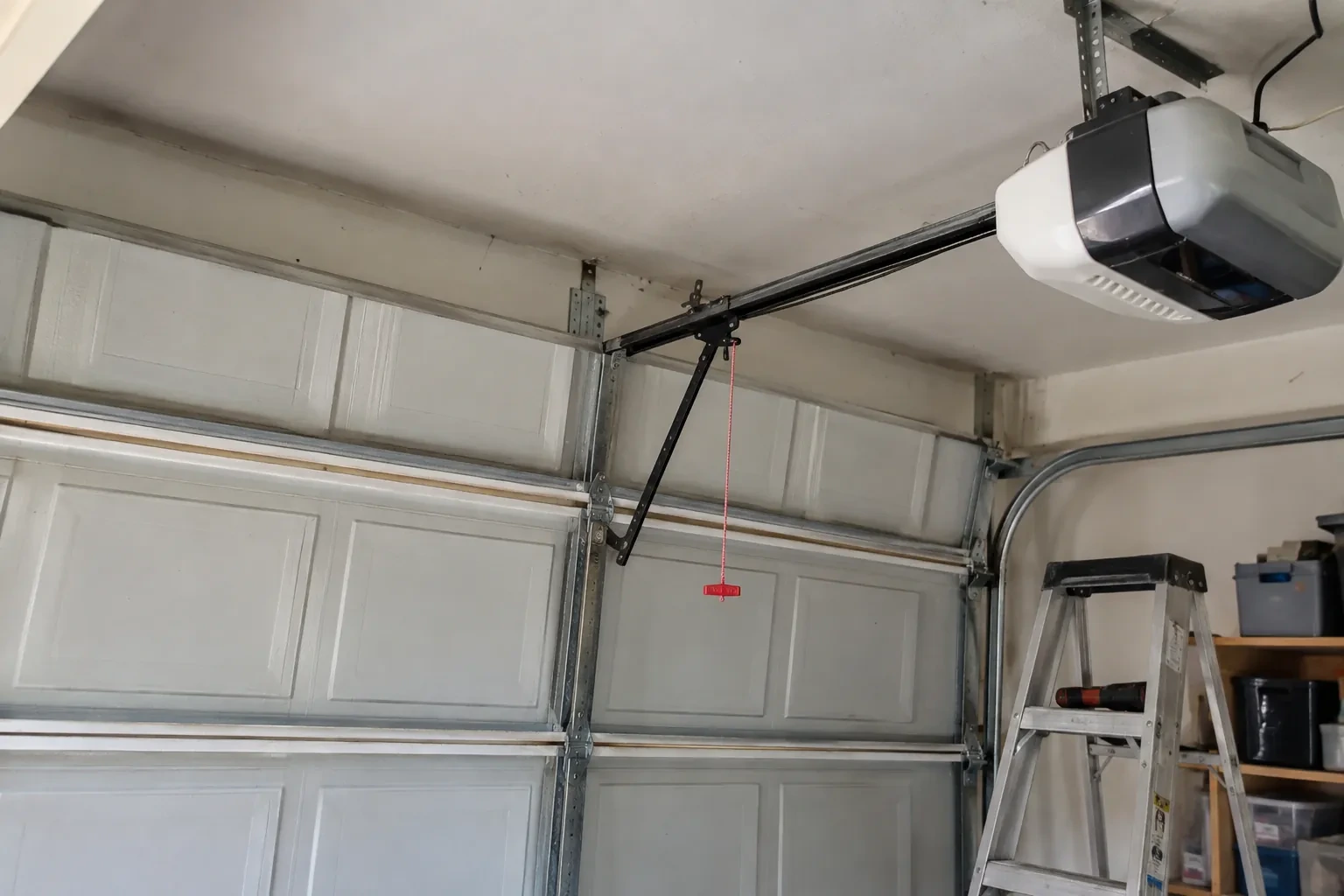
The room geometry determines which track family fits. A high-lift door rises an additional distance up the wall and then turns to a horizontal position. A full vertical-lift door continues upward without horizontal track. The technician checks wall height above the opening, usable ceiling depth and the desired open position to confirm which description matches the project. Naming the arrangement correctly matters because drums, tracks, spring placement and support details differ, and the quote should reflect the actual travel path being designed.
Match drums and cables to the new travel
High-lift drums have a contoured cable surface that manages changing leverage as the door climbs. The selected drums are installed on the shaft with new lift cables of the specified length and construction. Each cable is routed from its bottom attachment, seated correctly in the drum grooves and set evenly with its partner. Technicians rotate the system under controlled conditions to observe how both sides wind. Proper drum and cable coordination keeps the door level and maintains useful tension throughout the vertical and curved portions of travel.
Seasonal observation without adjustment
Temperature and humidity shifts can change lubrication behaviour, door weight and how materials move, while road salt and moisture may reach lower hardware. From a safe position, look for smooth travel, an even bottom edge and cables that remain neatly seated. Listen for a new scrape or repeated contact at the transition. Cleaning accessible track surfaces and following the manufacturer-listed lubrication points supports regular care. Spring, cable, drum and bottom-bracket changes remain technician work because those components carry the counterbalance load.
High-Lift Garage Door Conversion
In the van
End bearing plates
Torsion shaft
Transition track sections
High-lift vertical tracks
Horizontal track assemblies
High-Lift Garage Door Conversion
What affects the quote
Required open-door clearance
The target space above a raised vehicle, lift or work area determines how much additional vertical travel the design must create and which layouts are worth evaluating.
Condition of reusable sections
Sound panels and hardware may remain in service, while worn hinges, rollers, top fixtures or damaged reinforcement add related work to the conversion.
Selected high-lift dimension
A modest rise and a layout using most of a tall wall require different track lengths, cable travel, drum geometry, spring design and access planning.
What to have ready
- Are shelving, cabinets or ceiling racks inside the proposed work area?
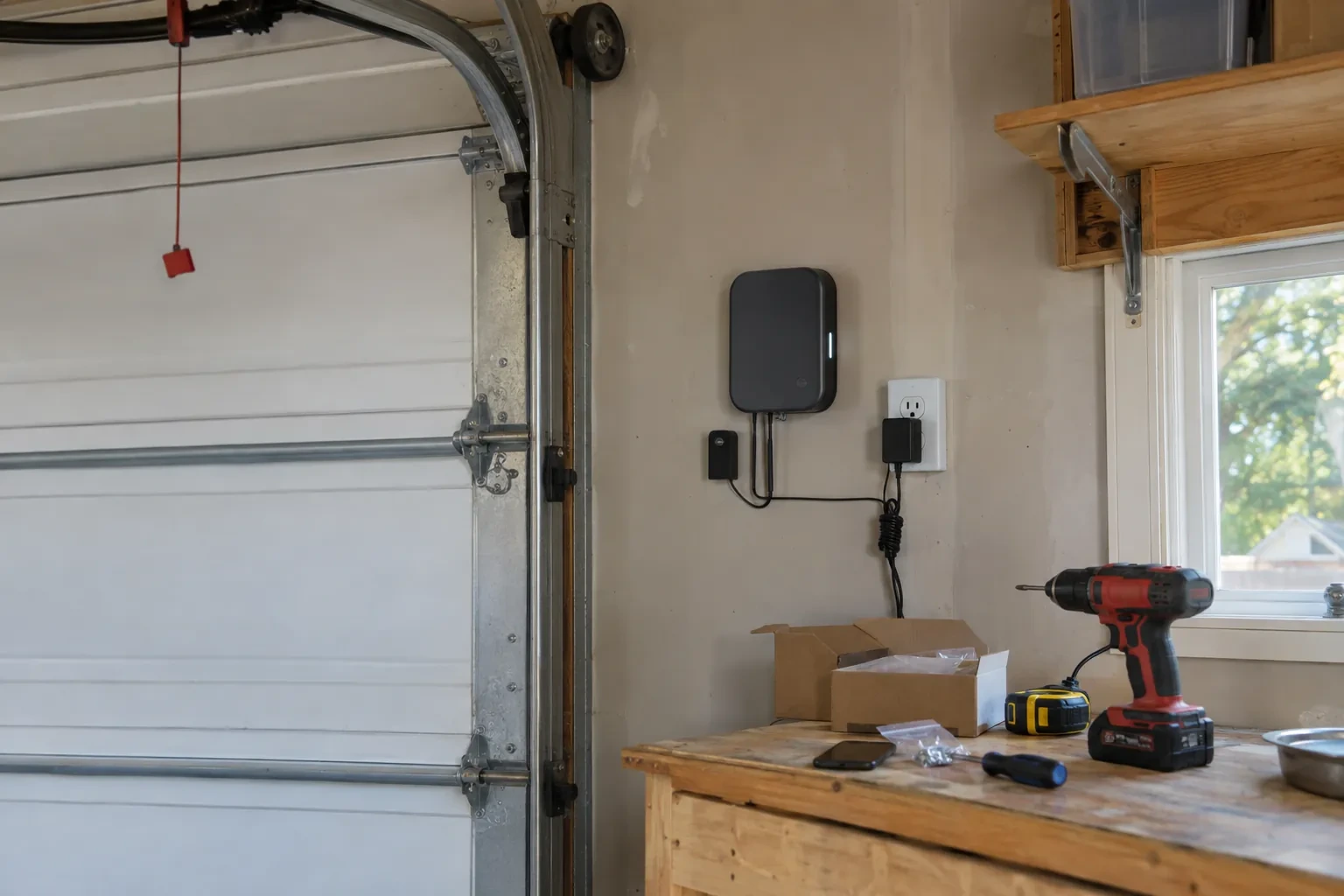
- Where is the current opener and its rail mounted?
- Do you have vehicle-lift drawings or planned equipment dimensions?
High-Lift Garage Door Conversion: questions
QuestionsDo the torsion springs change during conversion?
The spring specification is recalculated because track geometry and drum profile change the counterbalance requirement. Door weight, high-lift distance, cable travel, drum dimensions and desired use all inform the selection. Technicians then refine the installed setup through controlled manual-balance checks. Carrying over an old spring solely because it looks serviceable would leave out essential design information.
Can I keep my existing garage door sections?
Sound sectional panels can often remain, subject to inspection. Their construction, reinforcement, hinges, rollers, top fixtures, weight and condition are reviewed for the new travel path. Reusing the door does not automatically mean reusing its track or counterbalance parts, since those components are selected for the changed geometry. The assessment identifies retained and replaced items separately.
Does cold weather affect a high-lift system?
Cold, moisture and road salt can influence metal surfaces, seals and lubrication just as they do on other garage doors. The taller track path also makes unobstructed movement and correct cable winding important to observe. Follow the installed door and opener manuals for seasonal care, keep lower hardware clean, and arrange service when movement or sound changes noticeably.
Related services
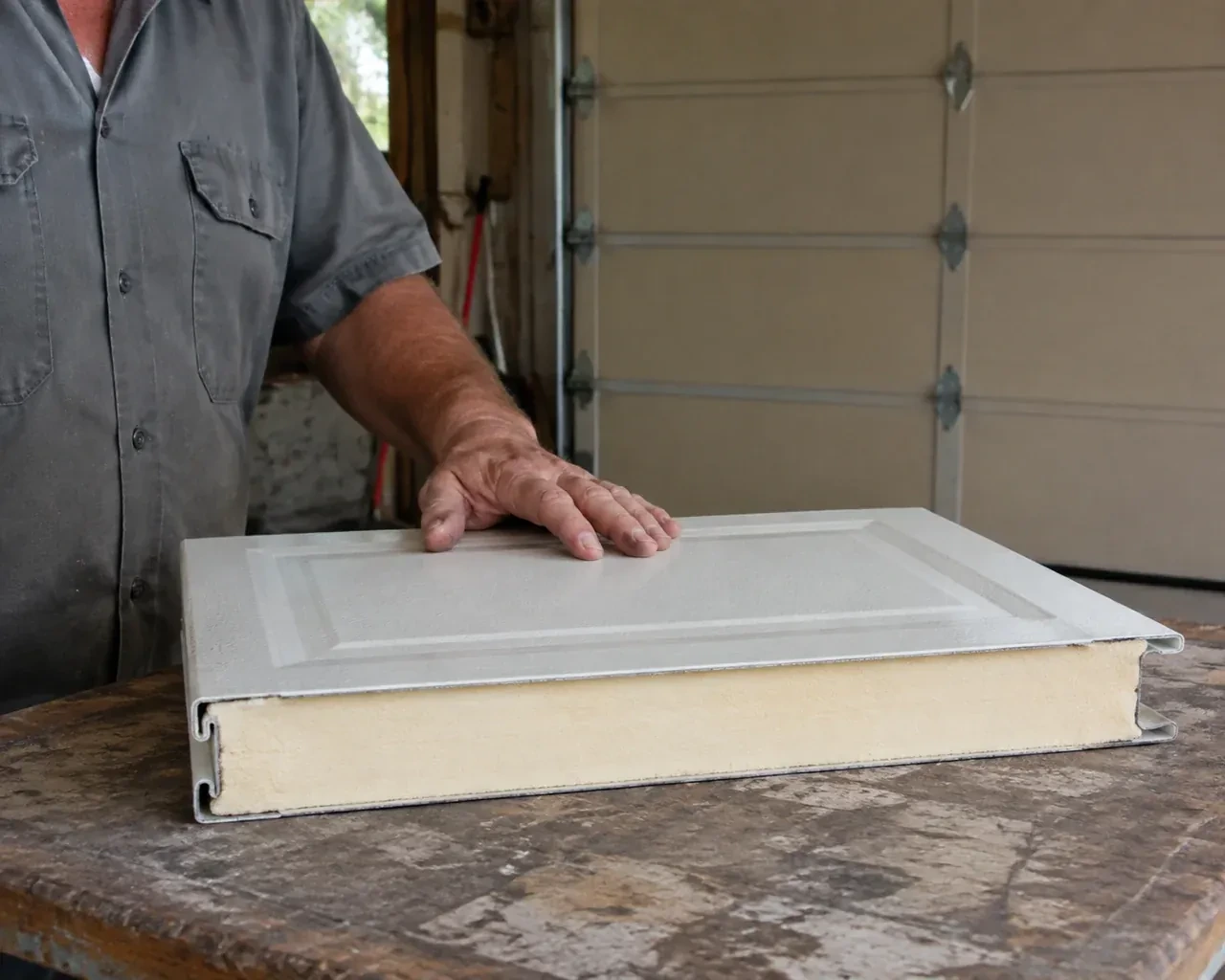
- Insulated Steel Garage Door InstallationYour garage is becoming a workshop, but the thin single-skin door rattles, sweats and lets outdoor temperatures shape the whole room.
- Wind-Rated Garage Door ReplacementYour building designer has supplied positive and negative pressure values for the garage opening.
- Carriage-House Garage Door InstallationCold air is noticeable around the current door, especially near the floor and section joints.