New Doors · Richmond Hill
High-Lift Garage Door Conversion in Richmond Hill
A taller van clears the closed opening comfortably, then loses useful space when the door is raised because the bottom section hangs below the ceiling.
In plain words
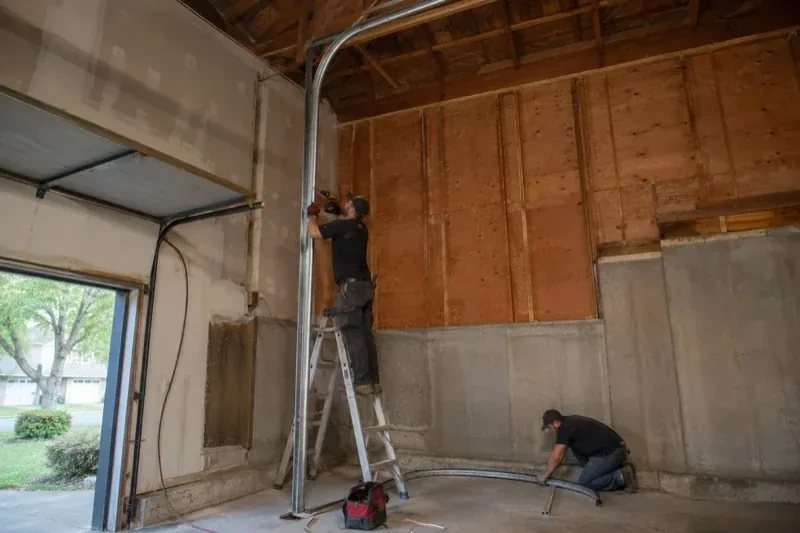
A vehicle lift and an overhead door can share one bay when their clear zones are designed together. The technician records the lift height, vehicle profile and door travel, then calculates how far the panels can rise before turning. High-lift track, contoured cable drums, longer cables and correctly selected springs guide and balance that new movement. The opener may also move away from the centre ceiling line. Full-cycle checks confirm that the door, vehicle area and building features remain separated through operation.
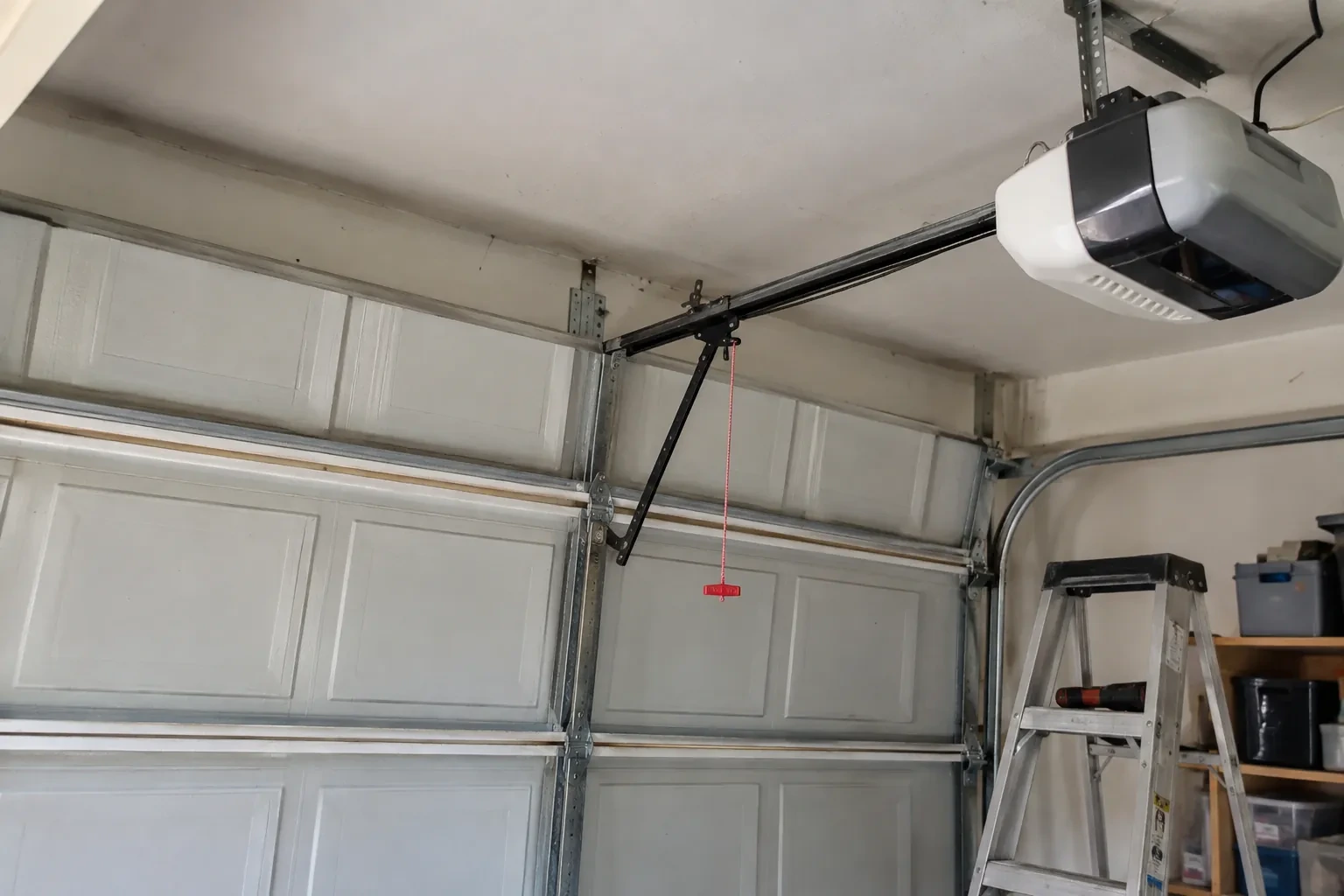
How the visit goesWorkshop equipment is moving in, and the present opener rail and door sections occupy the same overhead zone planned for lighting and clear working space. A different travel path could organize that ceiling area more effectively.
High-Lift Garage Door Conversion
How the visit goes

Set a measurable feasibility point
Before components are ordered, the assessment should produce a proposed high-lift dimension and an expected lowest point beneath the open door. Those figures are considered alongside spring room, transition radius, shaft elevation, opener location and future service access. The record also identifies assumptions that need confirmation, such as hidden framing or a planned vehicle-lift height. This gives the customer a useful go-forward decision: a defined clearance outcome, a coordinated parts list and any preparatory work that belongs ahead of installation.
Secure the door before changing its geometry
Conversion begins with the door closed, the work area organized and the panels firmly supported. The operator is disconnected from door movement, and the spring system is released through controlled professional procedures. Clamps and lifting equipment keep the door from shifting while loaded components are removed. This deliberate setup gives technicians stable access to tracks, cables, drums and shaft hardware. It also protects the reusable sections and creates a known starting condition for building the new path rather than dismantling parts around an unsupported door.
A ceiling plan with defined boundaries
The finished system gives electricians, storage installers and other trades a visible travel envelope to work around. Keep lights, conduits, door-lift posts, shelving and ceiling-mounted equipment outside that envelope, including room for panels to flex slightly during movement. The documented open position and support locations make coordination easier than guessing from a closed door. Before adding anything overhead, cycle the door and review the recorded clearances. This preserves the practical benefit of the conversion while allowing the rest of the garage to be developed thoughtfully.
High-Lift Garage Door Conversion
In the van
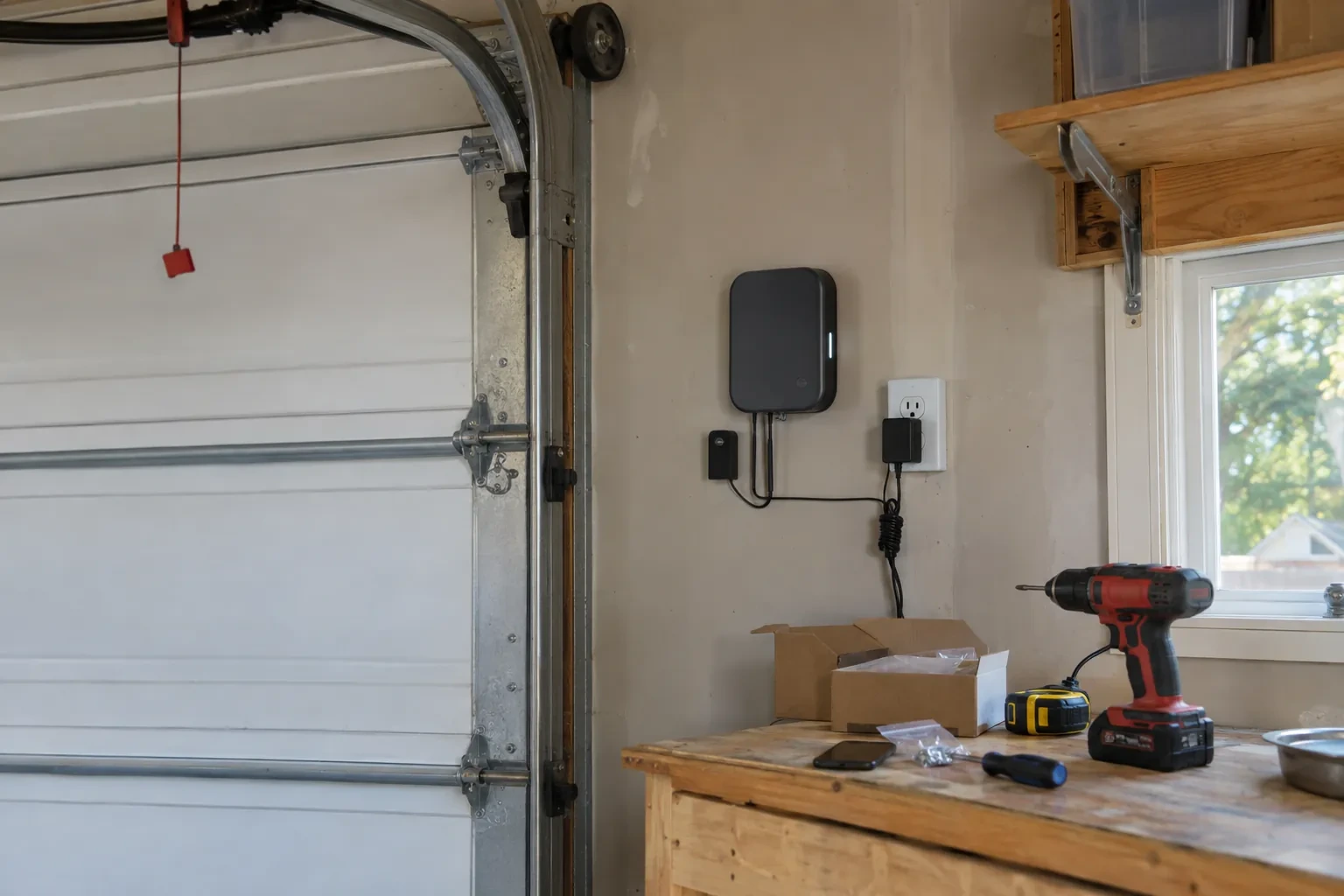
End bearing plates
Torsion shaft
Transition track sections
High-lift vertical tracks
Horizontal track assemblies
High-Lift Garage Door Conversion
What affects the quote
Selected high-lift dimension
A modest rise and a layout using most of a tall wall require different track lengths, cable travel, drum geometry, spring design and access planning.
Available headroom and backroom
Wall height above the header and clear ceiling depth shape the feasible high-lift dimension, transition location and final horizontal storage run.
Documentation and handover detail
Layout drawings, component records, clearance measurements, control demonstrations and recorded balance or safety tests determine the closeout material included with the project.
What to have ready
- Do you have vehicle-lift drawings or planned equipment dimensions?
- Are there beams, ducts, pipes, lights or attic access above the bay?
- Will the space serve a vehicle lift, storage, lighting or workshop equipment?
High-Lift Garage Door Conversion: questions
QuestionsDo the torsion springs change during conversion?
The spring specification is recalculated because track geometry and drum profile change the counterbalance requirement. Door weight, high-lift distance, cable travel, drum dimensions and desired use all inform the selection. Technicians then refine the installed setup through controlled manual-balance checks. Carrying over an old spring solely because it looks serviceable would leave out essential design information.
Can I keep my existing garage door sections?
Sound sectional panels can often remain, subject to inspection. Their construction, reinforcement, hinges, rollers, top fixtures, weight and condition are reviewed for the new travel path. Reusing the door does not automatically mean reusing its track or counterbalance parts, since those components are selected for the changed geometry. The assessment identifies retained and replaced items separately.
Does cold weather affect a high-lift system?
Cold, moisture and road salt can influence metal surfaces, seals and lubrication just as they do on other garage doors. The taller track path also makes unobstructed movement and correct cable winding important to observe. Follow the installed door and opener manuals for seasonal care, keep lower hardware clean, and arrange service when movement or sound changes noticeably.
Related services
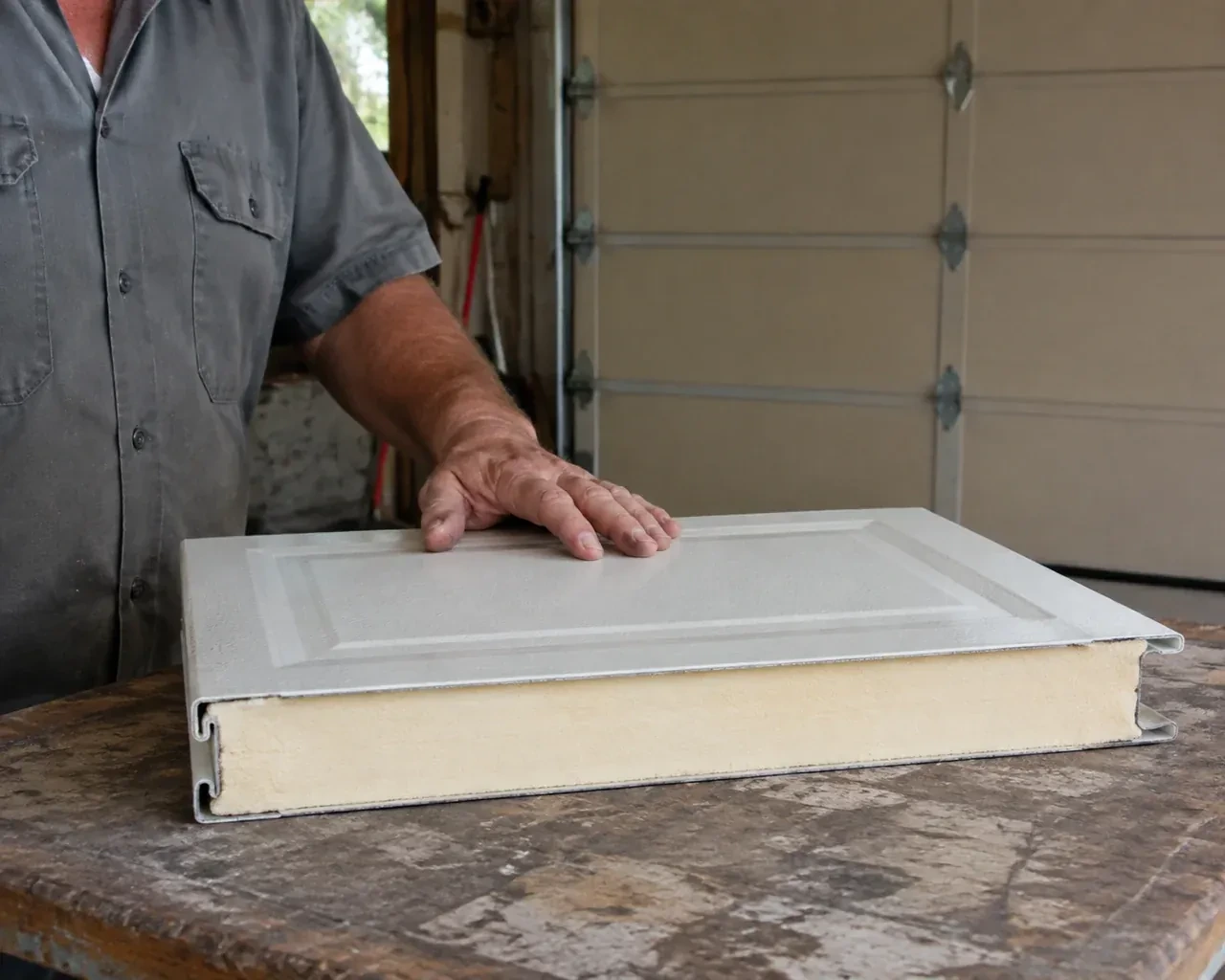
- Insulated Steel Garage Door InstallationYour garage is becoming a workshop, but the thin single-skin door rattles, sweats and lets outdoor temperatures shape the whole room.
- Wind-Rated Garage Door ReplacementYour building designer has supplied positive and negative pressure values for the garage opening.
- Carriage-House Garage Door InstallationCold air is noticeable around the current door, especially near the floor and section joints.