Repairs · Richmond Hill
Garage Door Bottom Seal Replacement
One end of the bottom seal has slipped out of its channel and hangs down like a loose shoelace.
In plain words
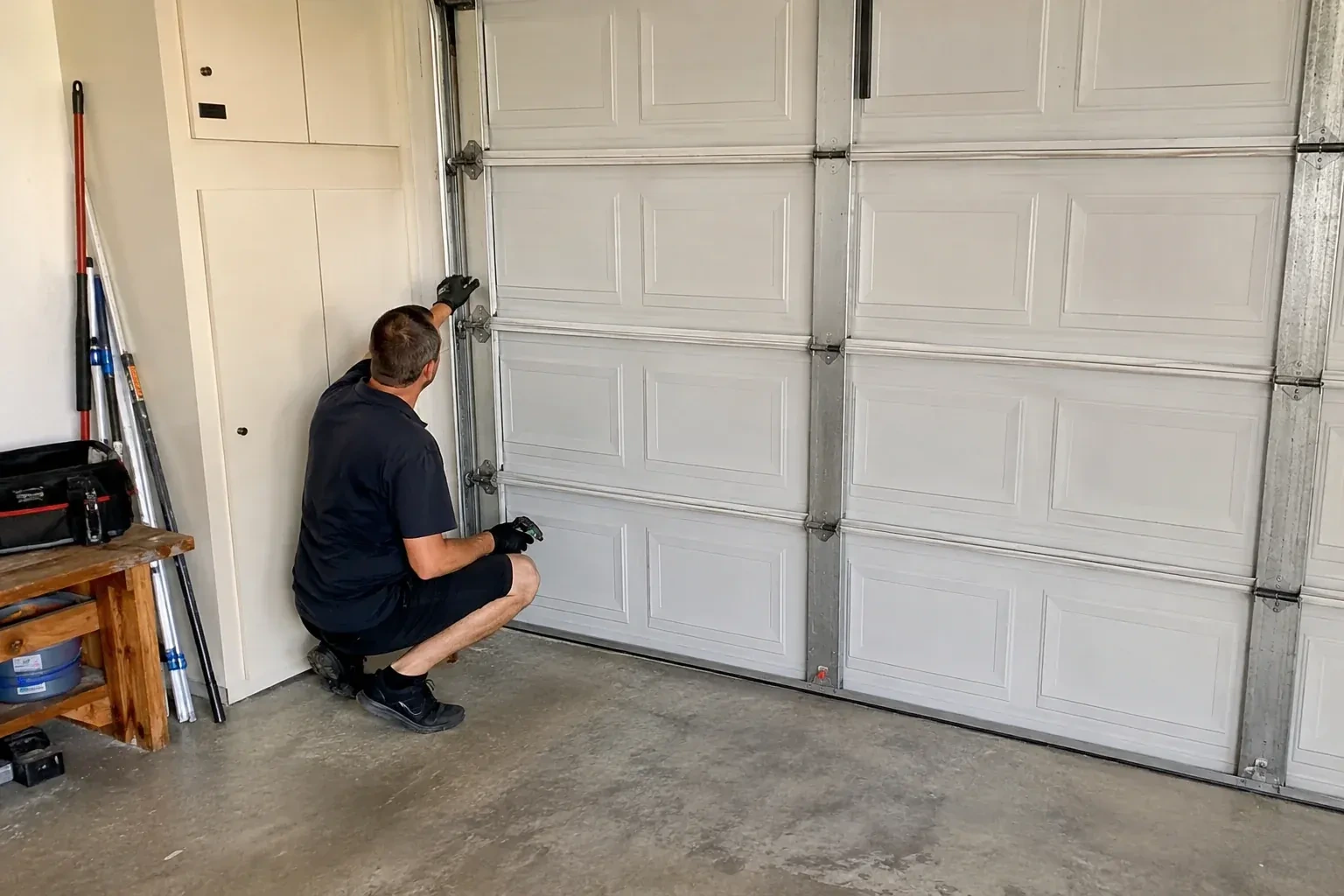
Not every gap under a garage door is the seal, so the service begins with finding out what the gap is. A strip of light the whole width usually means a seal that has flattened or hardened. A gap at one corner only points to a door hanging out of level or a slab that has settled there. A gap in the middle suggests a bowed bottom section or a crowned floor. Reading these before choosing a seal means the new strip is sized to fill the space that is really there, and any door or floor issue is named and dealt with rather than hidden behind a thicker bulb.
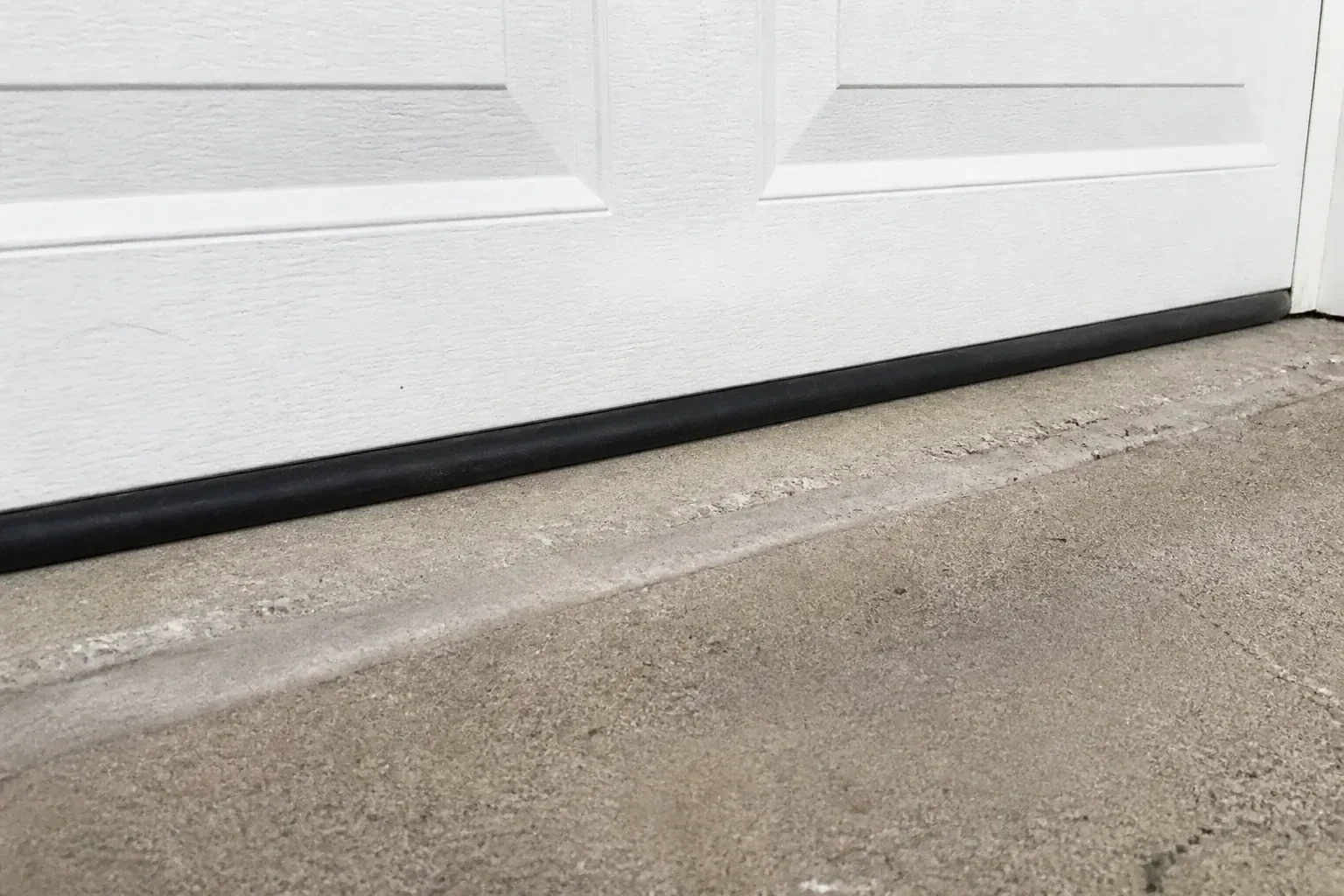
How the visit goesThe strip under the door has gone as hard as a hose left out for ten summers. Press it and it does not give; bend it and it cracks. Where the door meets the floor it sits on the concrete without squashing at all.
Garage Door Bottom Seal Replacement
How the visit goes
Retainer condition and fasteners
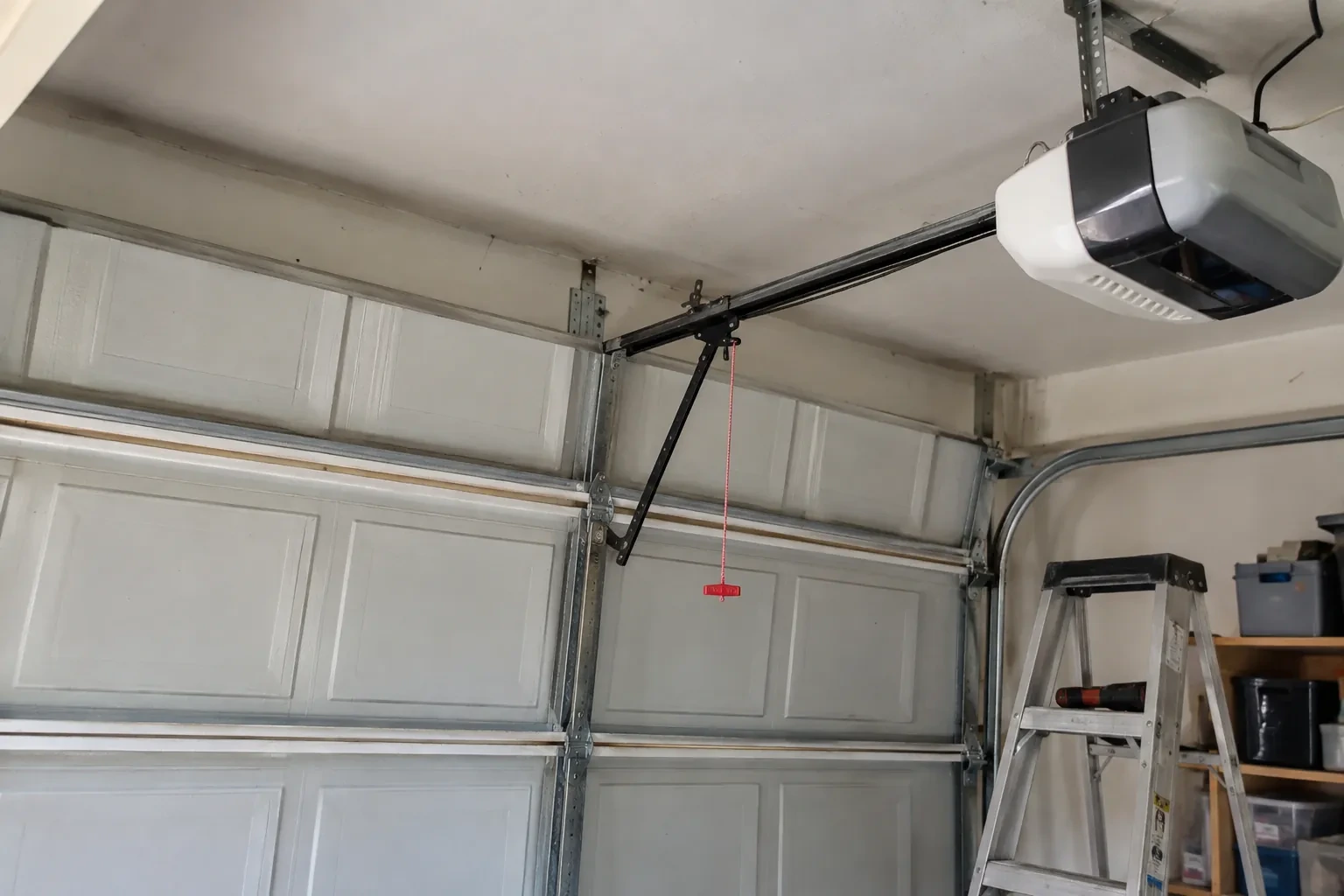
The aluminum or plastic retainer that grips the seal is inspected along its full length. The technician looks for kinks where something struck it, channels that have been spread open, corrosion where salt has sat, and screws that have rusted or pulled loose from the rail. A retainer that is straight and tight is reused; one that is damaged is measured for a matching replacement so both channels line up with the new seal. On doors where the retainer is part of a plastic bottom cap, a cracked cap is noted and a screw-on aluminum retainer is offered as the practical repair.
Fitting a new retainer where needed
If the inspection found a retainer that is bent, corroded or spread open, it is replaced before the seal goes in. The old extrusion is unscrewed or its rivets drilled out, the bottom rail is cleaned and any rust treated, and a new aluminum retainer is fixed straight along the rail with fresh self-drilling screws, checked with a straightedge so the channels run true. Fastener heads are sealed against meltwater. On a door whose channel was moulded into a plastic bottom cap, a screw-on retainer is fitted over the rail so a standard seal can be used from now on.
Fewer visitors of the four-legged kind
A continuous seal removes the easy route mice and insects used along the floor. If rodents were part of the reason for the visit, a few habits finish the job: keep birdseed, pet food and grass seed in lidded bins, move firewood and cardboard away from the walls, and check the jamb seals at floor level, where a gap beside the door is as inviting as one under it. Seals with a stainless mesh embedded in the vinyl are available for garages that have had repeated trouble. A sealed bottom edge plus tidy corners keeps the garage a place where nothing wants to nest.
Garage Door Bottom Seal Replacement
In the van
Bulb or U-style bottom seal
Bead-style bottom seal
Straightedge and tape measure
Threshold seal and adhesive
Seal end caps
Garage Door Bottom Seal Replacement
What affects the quote
Door width
A single door takes a shorter length of seal than a double, and the widest doors need more time to feed the strip evenly across. The quote starts from the width measured on the day.
Condition of the old seal
A supple strip slides out in a minute. One that has hardened and seized in its channel, or been torn and frozen into the corners, has to come out in pieces, which takes longer.
Wood door nail-on strip
A wood door with a nailed strip takes a different product and more fastening time than a channel seal, and adding a retainer to a wood rail is a further option to consider.
What to have ready
- Does the door stop short of the floor or reverse before it closes?
- Is the old seal hard and cracked, torn, hanging loose, or missing?
- Is there a car or storage inside that needs moving before the visit?
Garage Door Bottom Seal Replacement: questions
QuestionsWhat does a new bottom seal do about water coming in?
It closes the gap between the door and the slab so rain and meltwater meet a continuous barrier. Where the driveway slopes toward the garage, or the slab edge has dipped, the seal alone is working against gravity, and a threshold seal glued to the floor adds a lip that turns water back toward the drive. The technician looks at where the water comes from and recommends the combination that suits your threshold.
My garage floor is uneven. What are the options?
Three, and they can be combined. A taller bulb-style seal compresses more and follows a modest dip or crown. A threshold seal fixed to the floor follows the slab's existing contour and gives the door a raised, consistent line to land on where it is dished or sloped. And where the floor has heaved or broken up badly, grinding or patching the concrete is a separate job that makes any seal perform better. The gap map from the first look shows which applies.
How long does a bottom seal last?
Several years is typical, with the range set by exposure. A door facing south or west, a threshold that is wet and salted all winter, and a seal that freezes to the floor a few times a season all shorten the life. A shaded door on a dry slab with a wipe of silicone each autumn can go much longer. The condition of the strip, rather than its age, is what to watch.
Related services
- Garage Door Tune-UpThe door lands with a thud you can feel through the kitchen floor, and sometimes it bounces back up a few centimetres before settling.
- Off-Track Garage Door ResetThe rollers on the door have been squealing for months.
- Garage Door Panel ReplacementFrom outside, the horizontal groove between two sections now steps sideways by a centimetre.