Repairs · Richmond Hill
Garage Door Manual Lock Repair
You pushed the slide bolt across like always, but tonight it stops short of the slot in the track and springs back.
In plain words
The cylinder in a garage T-handle is a small pin-tumbler lock, much like a front door's. If the key is lost, or a previous owner kept it, the cylinder is rekeyed to a fresh combination or swapped for a new one and keys are cut on the spot. Where the keyway matches the house locks, the garage handle can often be pinned to the same key, so one key runs the property. Worn keys that need a wiggle are replaced by keys cut to the new pinning rather than copied. All of it happens in the same visit as any mechanical repair.
How the visit goesThe outside handle wobbles in your hand and the inside knob spins round and round with nothing attached. The screws that held the lock through the door skin have pulled loose, leaving oval holes, and the whole thing hangs on by little more than paint.
Garage Door Manual Lock Repair
How the visit goes
Which lock the door actually has
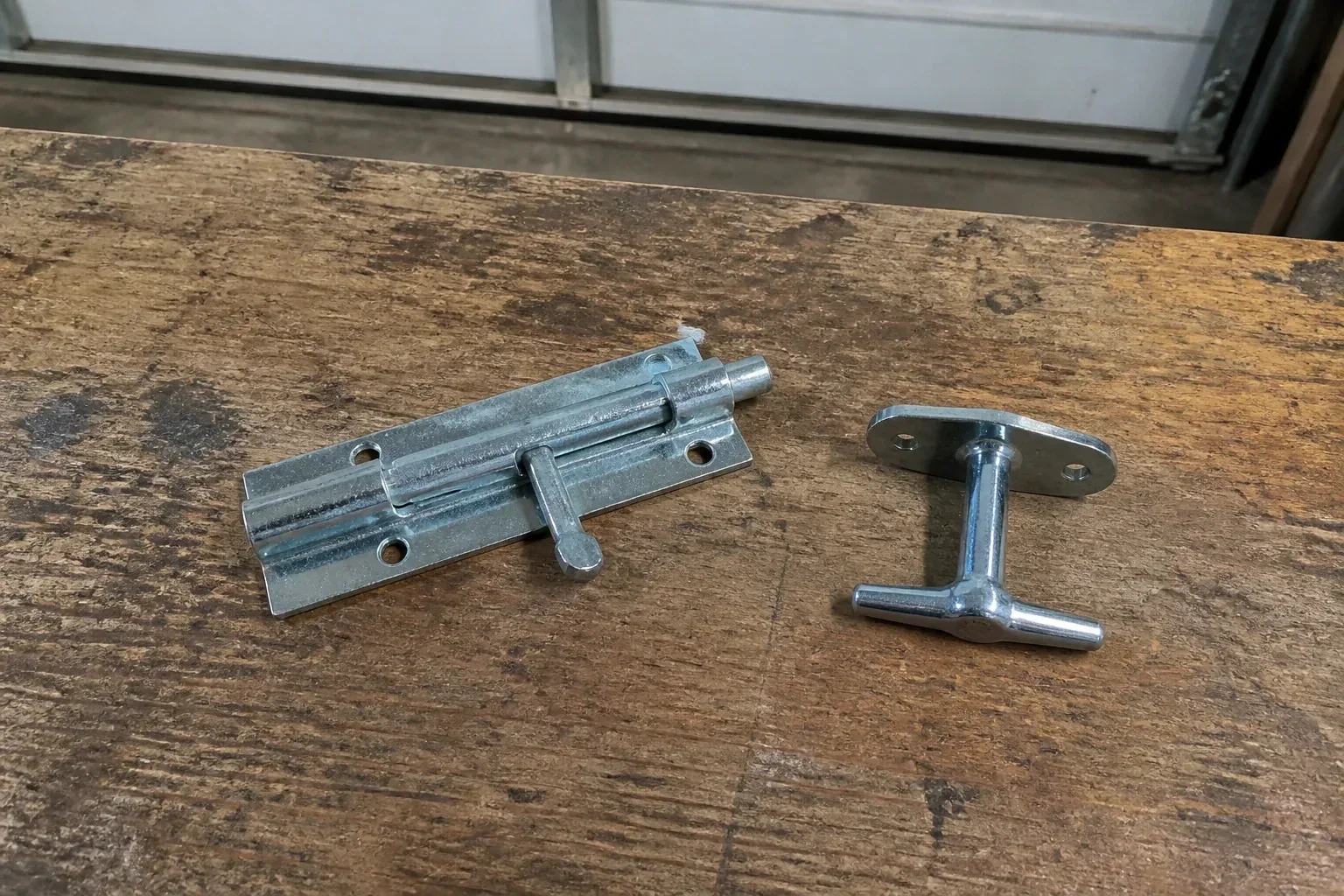
Garage doors carry a few different locks and the first job is to name the one in front of the technician. An inside slide bolt is a short bar on the door's edge that shoots through a slot in the vertical track; some are snap latches that lock on their own when the door closes. An outside keyed T-handle or L-handle works a centre mechanism that throws a bar into each track, or on some models pulls a cable to release a spring latch at each side. Some doors have a keyed cylinder on the side that operates the slide bolt from outside. Each has its own parts and failure points, so naming it correctly sets up everything that follows.
Freeing and renewing the bars and guides
Bars that have stiffened are worked loose with penetrating oil and then cleaned back to bare metal, while guides packed with rust are removed, cleaned or replaced with new ones fixed into sound material. A bar that has kinked is replaced rather than straightened, since spring steel that has been bent once takes a set and binds forever after; the new bar is cut to suit the door's width so it reaches through the track with a comfortable margin and retracts fully clear. Both bars are set to the same throw so the door locks evenly on both sides. A light film of silicone on the bars, not grease, finishes the job.
A record of what was fitted
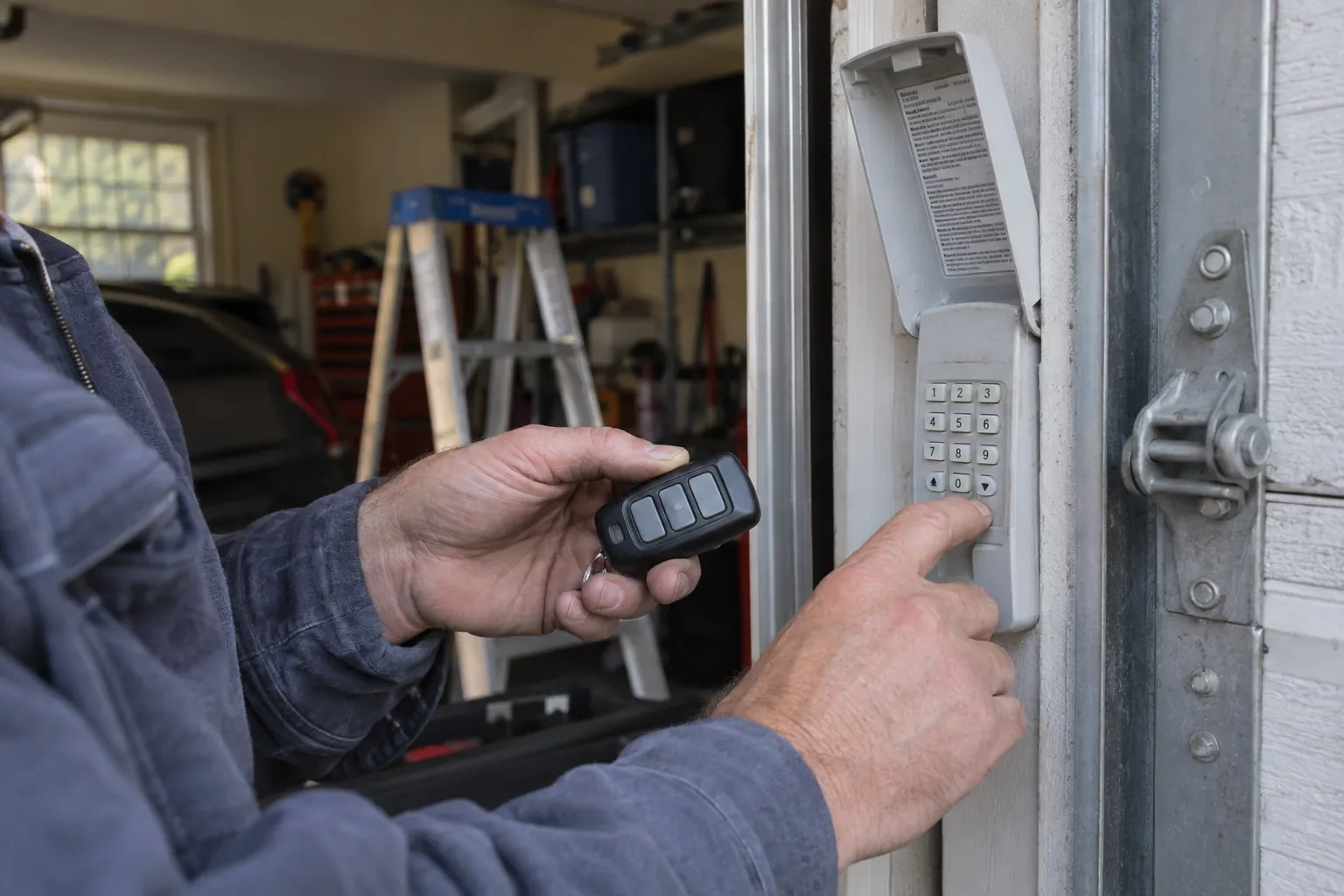
Before the technician leaves you get a plain account of the work: which lock type is on the door, what was adjusted, which parts were renewed, the cylinder and keyway details, how many keys were cut, and how the lock and the opener have been set up to work together. If the bars were disabled at your request, that is written down too, so a future technician or a new owner knows why they are fixed back. Keep the note with the door manual or on a card by the opener. It turns any later service into a short conversation and saves someone measuring the door's thickness and bar length from scratch.
Garage Door Manual Lock Repair
In the van
Centre lock body and return spring
Keyed T-handle lock set
Carriage bolts and backing plates
Inside turn handle and spindle
Inside slide bolt or snap latch
Garage Door Manual Lock Repair
What affects the quote
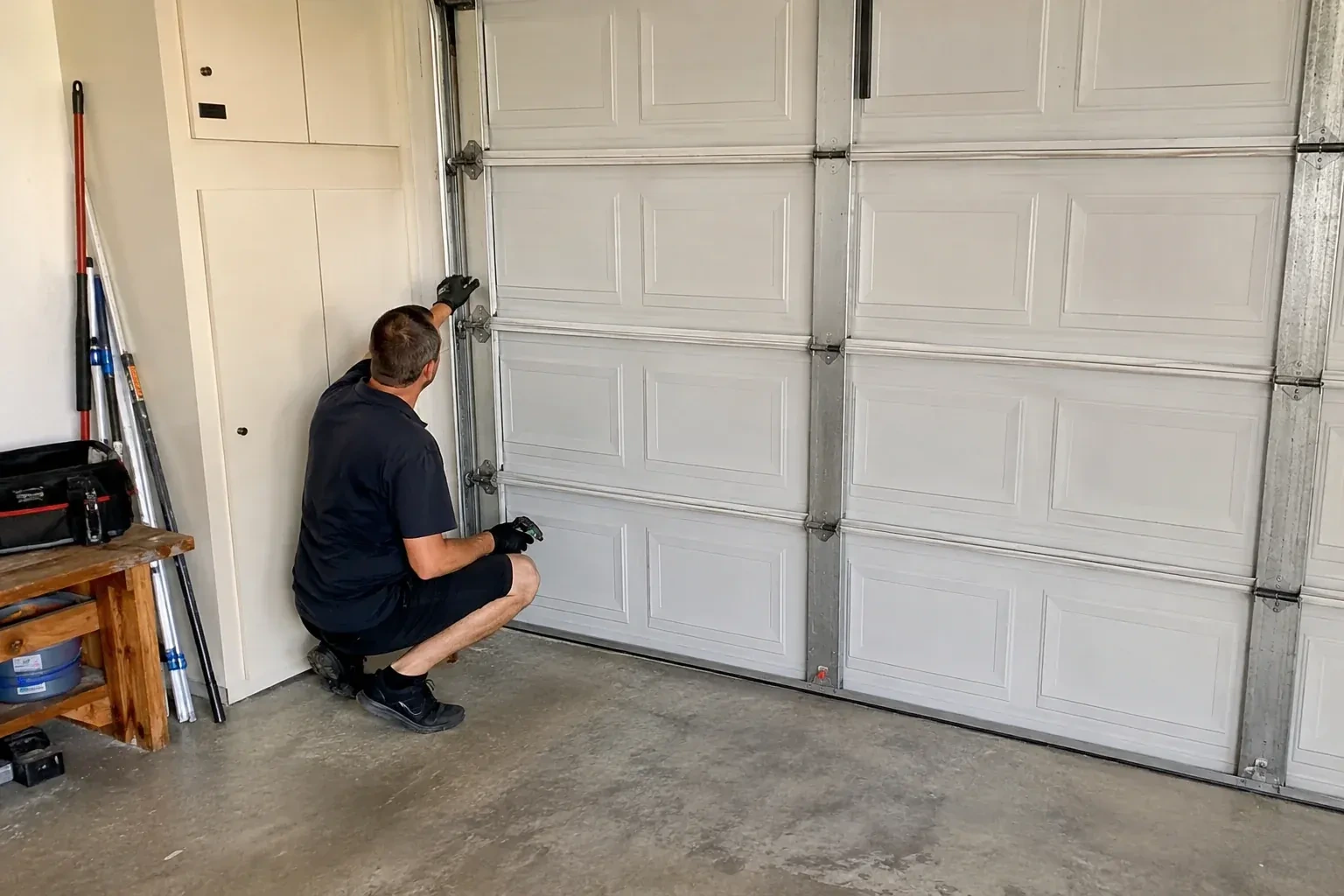
Access along the door edges
Shelving, bikes or storage against the vertical tracks and door edges slow the work at the guides and slots. Clearing a metre either side beforehand shortens the visit.
Condition of the bars and guides
Bars that are merely stiff are cleaned and lubricated; bars that are bent are replaced and cut to length, and rusted guides are renewed. The quote follows what the bars turn out to need.
Corrosion and seized hardware
Screws rusted solid, a cylinder seized in its handle or bars welded into their guides take time to free or cut out, and corroded parts are replaced rather than reused.
What to have ready
- Does the door close fully to the floor and sit level?
- Does the key go in and turn, or is it stiff or spinning freely?
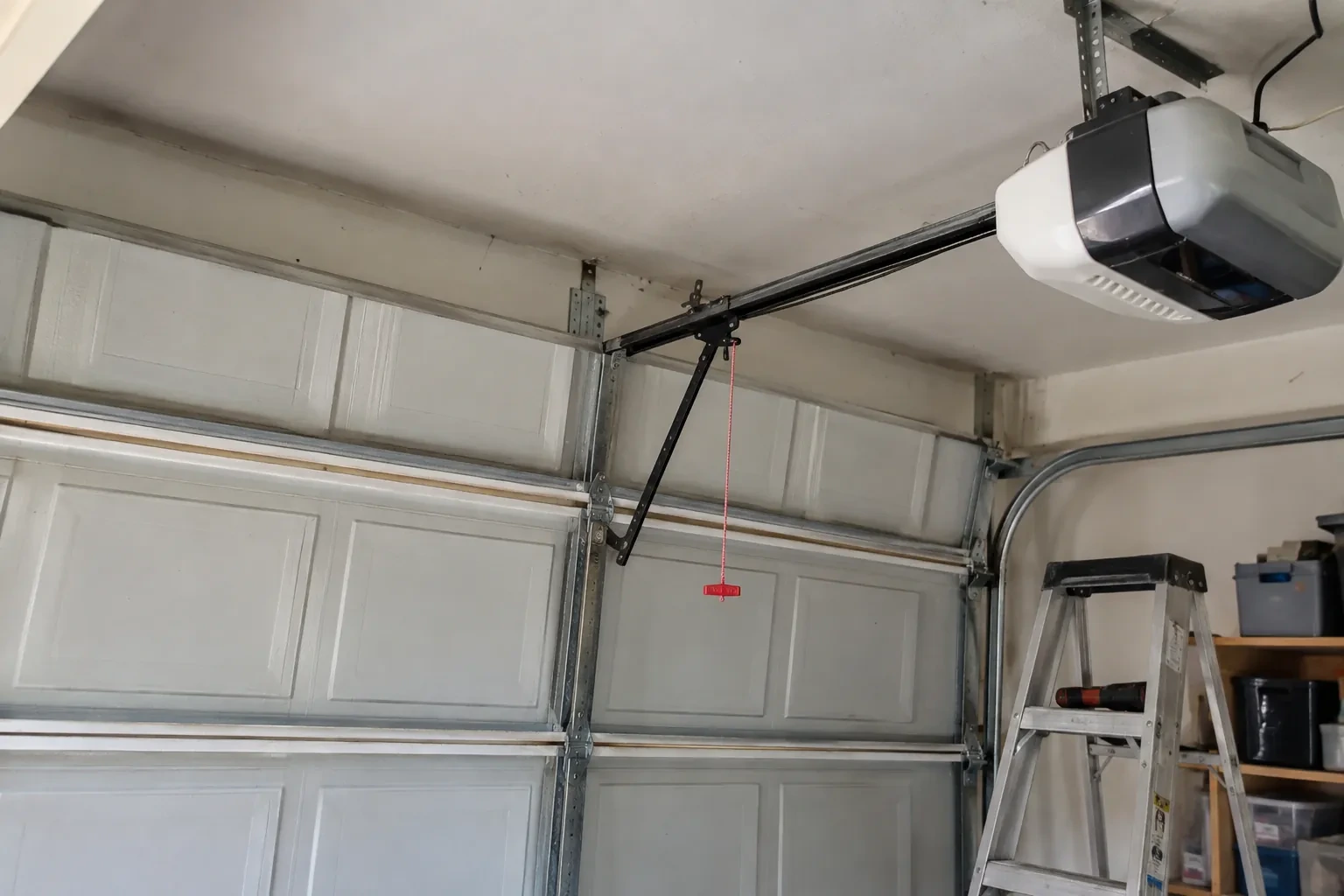
- Is there an automatic opener on this door?
Garage Door Manual Lock Repair: questions
QuestionsShould the manual lock be removed when an opener is installed?
Opener makers ask for it to be disabled or removed, and the door industry's guidance agrees. Disabled can mean the bars are fixed back or taken out while the handle stays for appearance, or a snap latch is held open on its catch. Keeping a lock live for outages calls for a manufacturer-approved interlock, not a label alone, since a reminder and routine are not treated as a substitute for removing or disabling the bars.
What happens during the visit?
The opener is disconnected and the door lowered by hand and checked for level. The lock is identified and examined: handle, spindle, centre body, bars, guides, cylinder, fixings and track slots. Adjustments come first, then any worn parts are renewed, and the lock is worked from both sides with the door shut. The opener is reconnected and run, and you are shown how the lock and opener are to be used together.
I have no key for the outside handle. Can it be made to work?
Yes. The cylinder is removed and either rekeyed to a fresh combination, so any key held by a previous owner is retired, or replaced with a new cylinder carrying the correct tailpiece. New keys are cut and tested in the handle before the technician leaves. If a locked door has to be opened first, the technician confirms your connection to the property as a matter of course.
Related services
- Garage Door Tune-UpThe door lands with a thud you can feel through the kitchen floor, and sometimes it bounces back up a few centimetres before settling.
- Off-Track Garage Door ResetThe rollers on the door have been squealing for months.
- Garage Door Panel ReplacementFrom outside, the horizontal groove between two sections now steps sideways by a centimetre.