Repairs · Richmond Hill
Garage Door Tune-Up
The door lands with a thud you can feel through the kitchen floor, and sometimes it bounces back up a few centimetres before settling.
In plain words
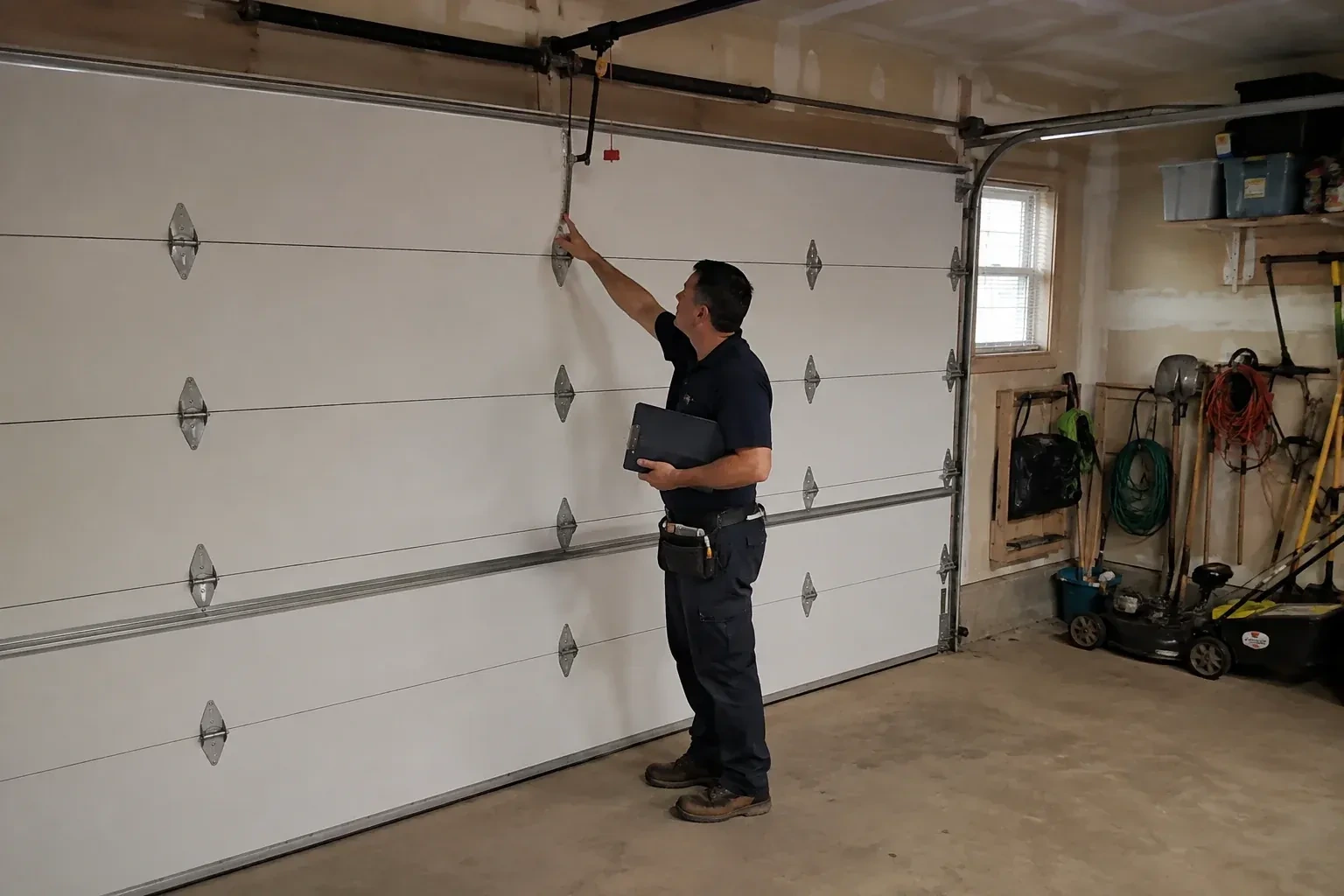
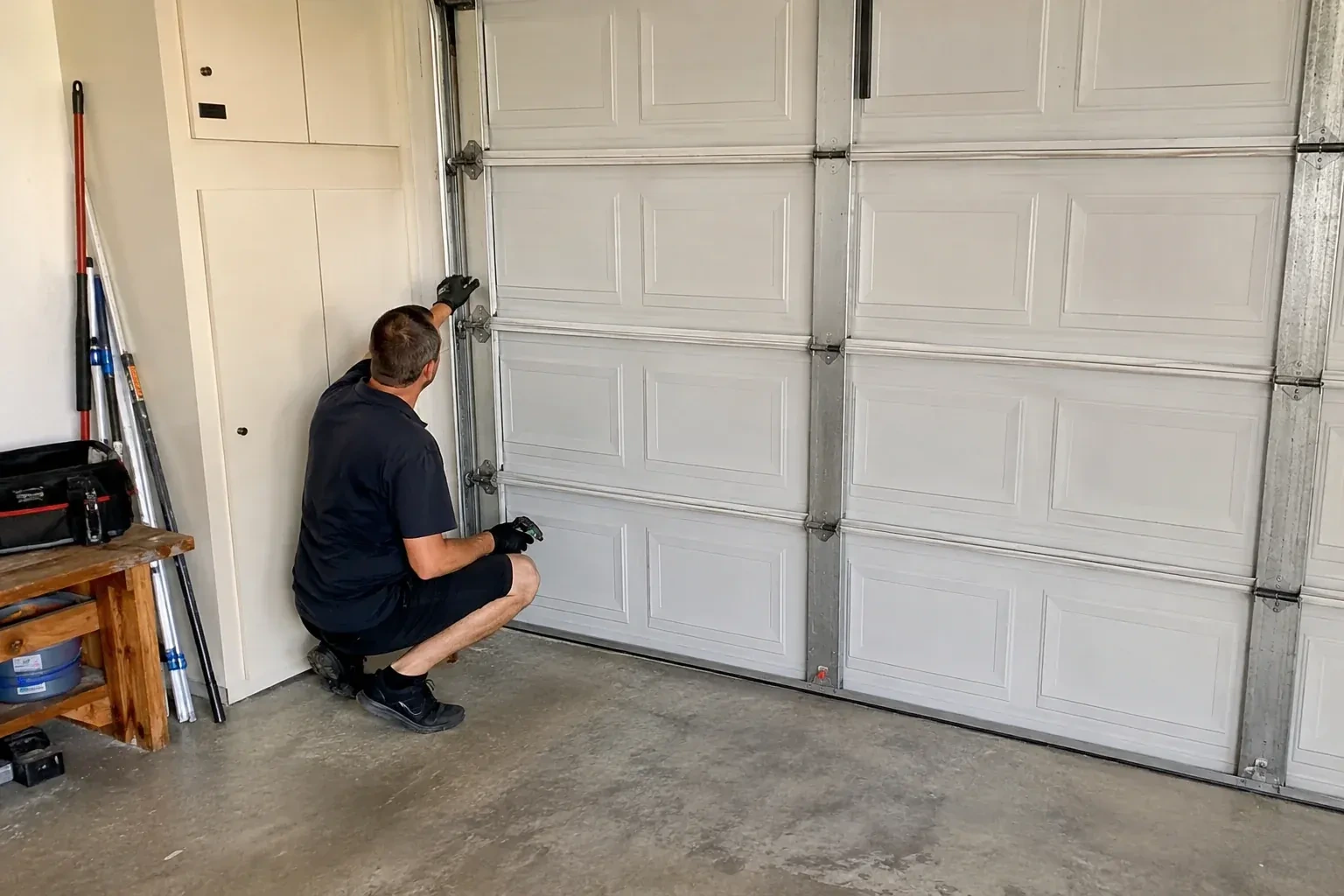
A garage door tune-up is preventive care for a door that still works. Instead of waiting for a part to fail, a technician goes over the whole system while it is operating: the hinges, rollers and tracks, the springs and cables that carry the weight, the fasteners that vibration loosens, and the opener with its sensors and reversal. Loose hardware is tightened, the right points are lubricated with the right product, the balance is checked and the safety tests are run. You end the visit with a door that runs more smoothly and a clear account of anything that deserves its own repair.
How the visit goesYou pulled the red cord to lift the door by hand during a power cut and it felt like lifting a car. The opener has been doing all the work and grumbling about it, and you are not sure how long that can go on.
Garage Door Tune-Up
How the visit goes
Rollers in their track
Rollers and track are read together. The technician looks at the wear pattern on the rollers, checks whether steel rollers have gone out of round and whether nylon ones are chipped, and confirms that each roller sits fully in the track with its stem seated in the hinge. The vertical tracks are checked for plumb and for the small gap that should exist between the roller and the track wall, since a track that has been pulled tight against the door makes the rollers drag. The curved and horizontal sections are inspected for dents, loose hangers and the grit that accumulates at the bend. A clean, straight track with rolling rollers is what a smooth door is made of.
Setting travel and force on the opener
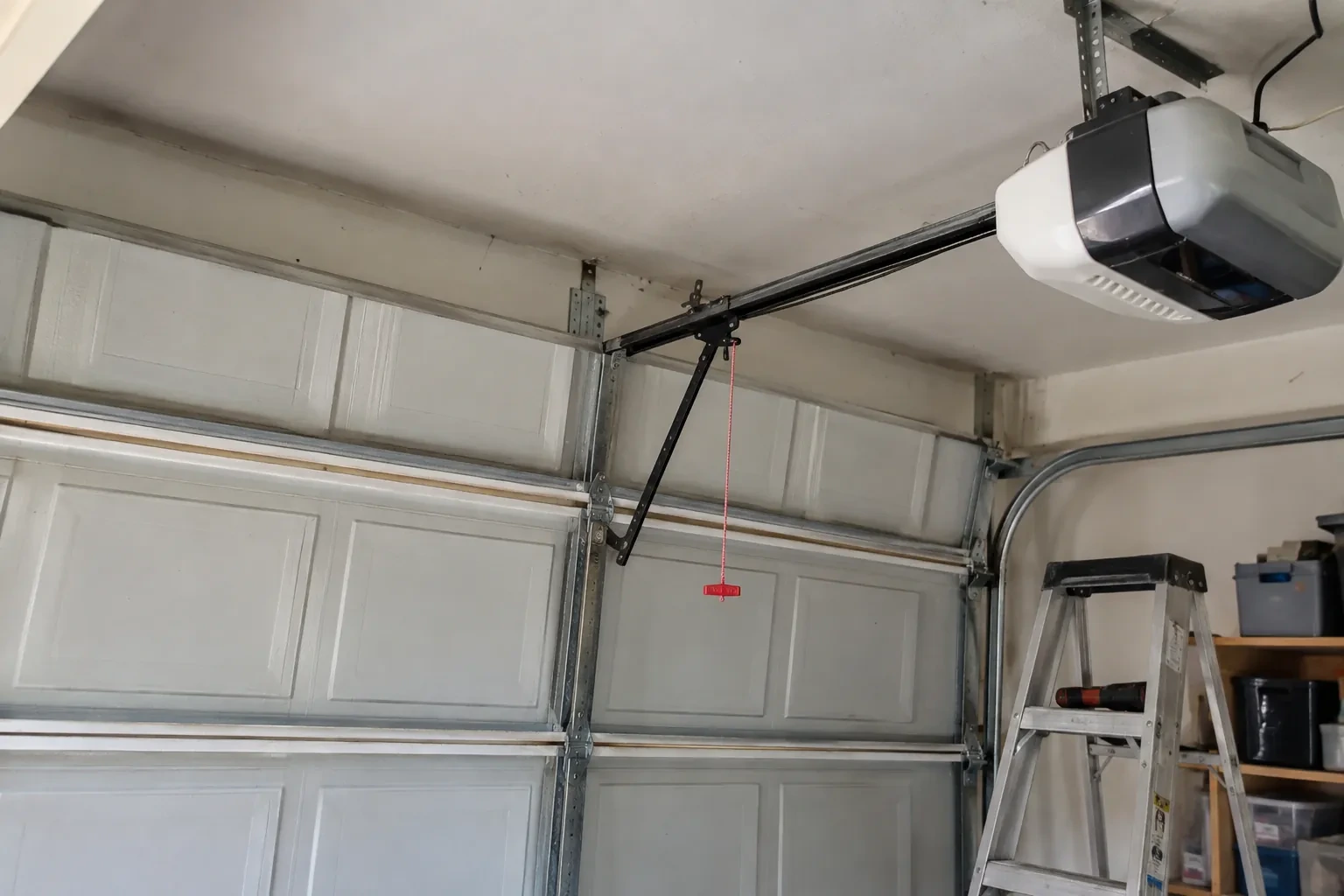
The opener has two settings that drift over time: how far the door travels, and how much force it applies before deciding something is in the way. The technician runs the door and adjusts the down travel so the door seals firmly on the floor without bowing the top section or crushing the seal, and the up travel so it stops fully open without the trolley hitting the stop. Force is set as low as will reliably close the door, because a low force setting is what lets the door reverse gently on contact. On a sectional door the arm is kept from passing straight up and down at the closed position, which protects the top section and the rail.
When to book the next one
How soon the door wants another visit depends on how hard it works. A door that cycles a few times a day, in an attached garage that sees salt, snow and meltwater every winter, does well with a tune-up once a year, usually in the fall before the cold arrives. A lightly used door in a detached garage can often go longer, with the monthly reversal tests and a little lubricant from you in between. The written record is your guide: if it lists parts to watch, the next visit checks those first; if everything was healthy, the interval can stretch. The technician will suggest a timing that fits your door rather than a blanket schedule.
Garage Door Tune-Up
In the van
Hinge screws and track bolts
Locking pliers or C-clamps
Lag screws for brackets and header
Bottom seal (astragal)
Photo-eye brackets and wire
Garage Door Tune-Up
What affects the quote
Upgrades you choose on the day
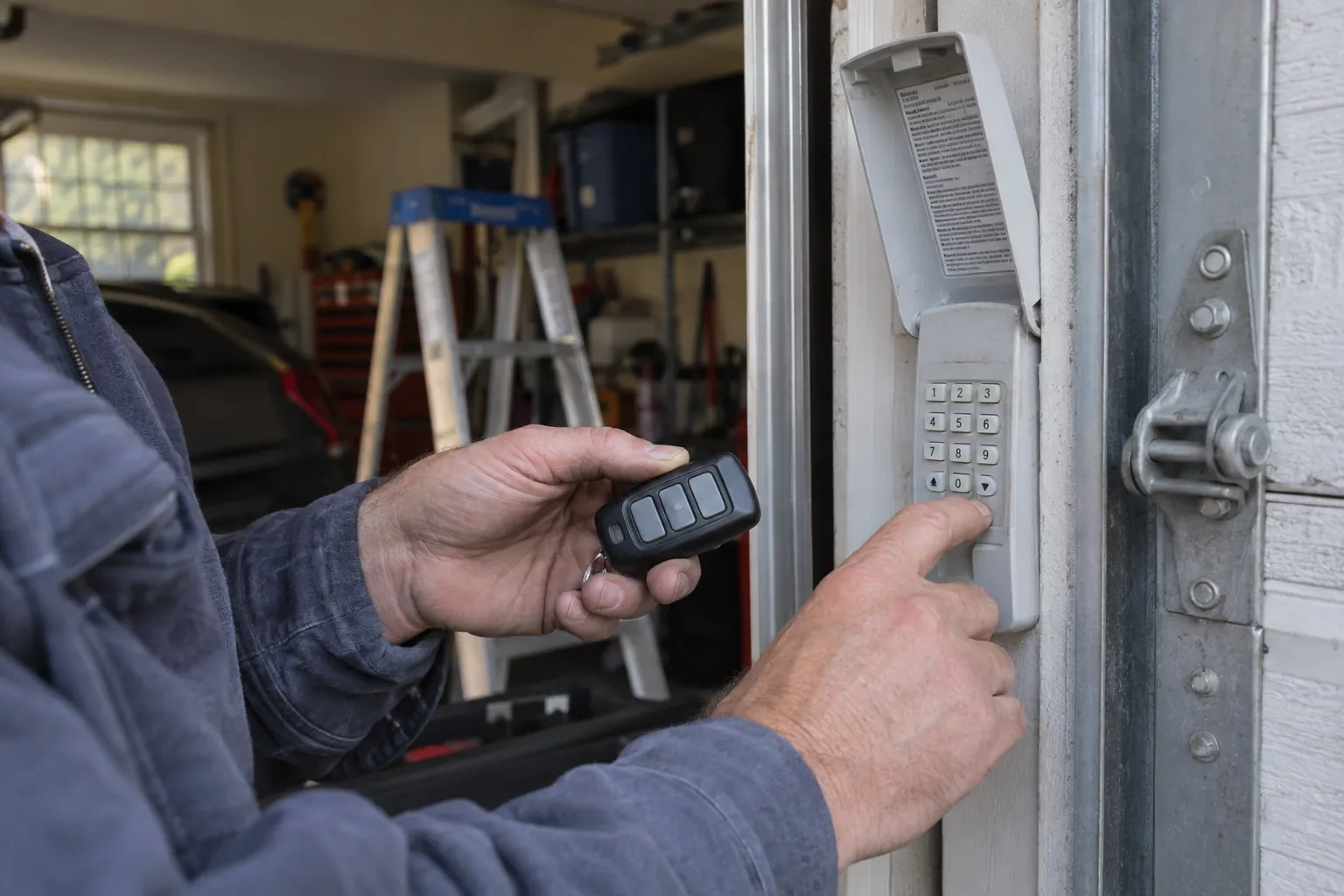
Quieter nylon rollers, a new bottom seal profile, a keypad or a battery backup for the opener are options some customers add while the technician is there, each priced as a separate line.
Single or double door
A double-width door has more hinges, rollers and track to inspect and lubricate, a heavier counterbalance and usually a strut or two on the top section, so it takes longer than a single door.
Condition of rollers and hinges
Worn rollers or a cracked hinge found during inspection can be replaced on the spot if you choose, and each replaced part is listed as its own line on the quote.
What to have ready
- When was the door last serviced, and do you have any paperwork?
- Is the door worse in cold weather or after rain?
- Where in the door's travel does the problem happen?
Garage Door Tune-Up: questions
QuestionsWhat should I do if the bottom seal freezes to the floor?
Do not keep pressing the button; the opener can tear the seal or pull the top section out of shape. Free the seal by clearing the ice along the threshold, with warm water poured on the concrete rather than the door, or by working a plastic scraper along the seal. Then treat the seal with a silicone spray. Keeping snow and meltwater cleared from the threshold and keeping the seal flexible with silicone prevents most repeats.
What kind of doors and openers do you service?
Residential sectional doors of every common construction: steel, insulated steel, aluminum and glass, wood and composite, single and double width, with torsion springs above the header or extension springs beside the horizontal tracks. Openers of all the usual types are covered too, including chain drive, belt drive, screw drive and wall-mounted jackshaft units. If the door is a one-piece tilt-up or a commercial rolling door, mention that when booking so the right hardware comes along.
Should I lubricate the tracks?
No. Tracks should be clean and dry. Rollers are meant to roll along the track on their own bearings, and a film of lubricant on the track collects grit, thickens in the cold and makes the rollers slide and drag instead. Wipe the tracks with a rag and put the lubricant where it belongs: on the hinge pins, the roller bearings, the spring coils and the bearing plates at the ends of the torsion shaft.
Related services
- Off-Track Garage Door ResetThe rollers on the door have been squealing for months.
- Garage Door Panel ReplacementFrom outside, the horizontal groove between two sections now steps sideways by a centimetre.
- Garage Door Bottom Seal ReplacementOne end of the bottom seal has slipped out of its channel and hangs down like a loose shoelace.