Repairs · Richmond Hill
Garage Door Panel Replacement in Richmond Hill
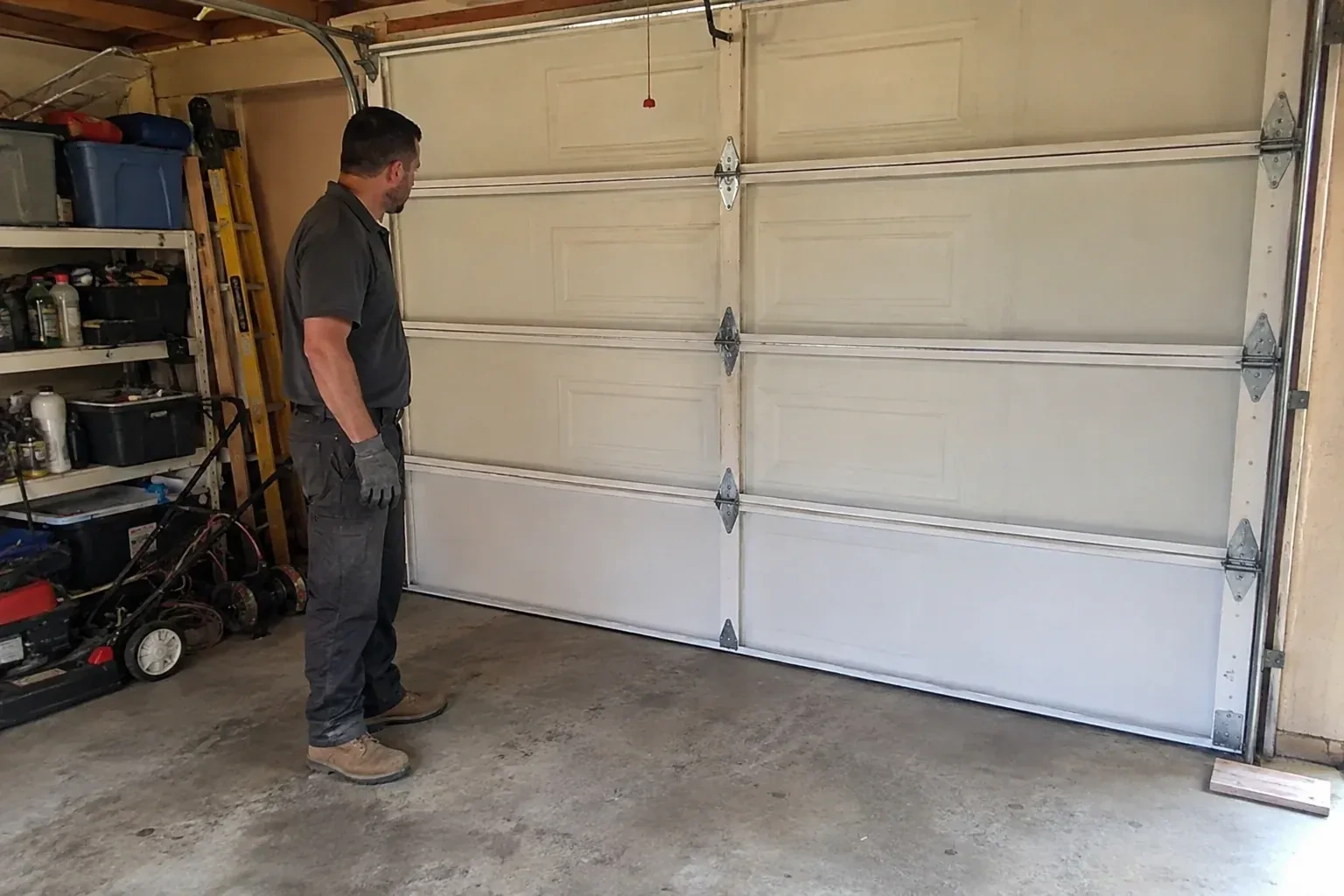
From outside, the horizontal groove between two sections now steps sideways by a centimetre.
In plain words
The first real decision is whether a section is the right scale of repair. A shallow dent in the middle of a steel skin can often be worked out or filled and painted. A crease that reaches a joint, an end stile or a hinge point changes how the section carries load and is usually a section replacement. Damage spread over several sections, widespread rust, or a door whose design is no longer made pushes the conversation toward a new door. Panel replacement sits in the middle of that range, and a good assessment places your door on it honestly before anything is ordered.
How the visit goesA stray ball went through one of the window panes in the top section. The glass is gone, the frame around it is cracked, and the steel beside the opening is pushed in, so the whole section is in question rather than one pane.
Garage Door Panel Replacement
How the visit goes
Keeping the door safe until the new section arrives
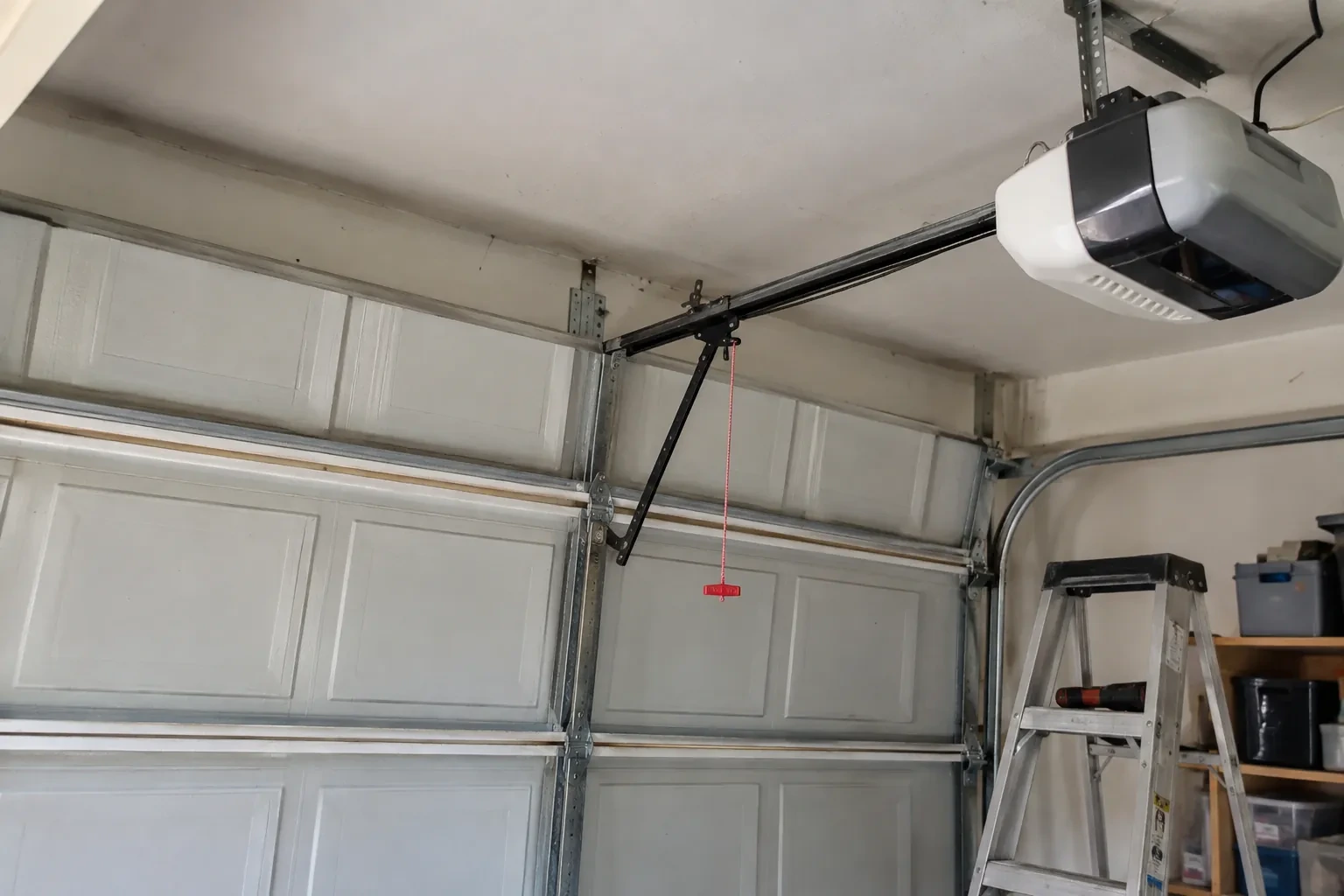
Because a section is ordered rather than pulled from a shelf, the first visit ends with the door in a safe state for the wait. If the damage is cosmetic, the door can usually stay in normal service. If a section is folded, a hinge has torn out or a cable has gone slack, the technician braces the section, disconnects the opener so it cannot pull on a weakened door, and secures the door in the closed position. Sometimes a temporary strut will let a bowed section run until its replacement comes. You are told plainly which of these applies and what to avoid doing in the meantime.
Releasing tension for a bottom section
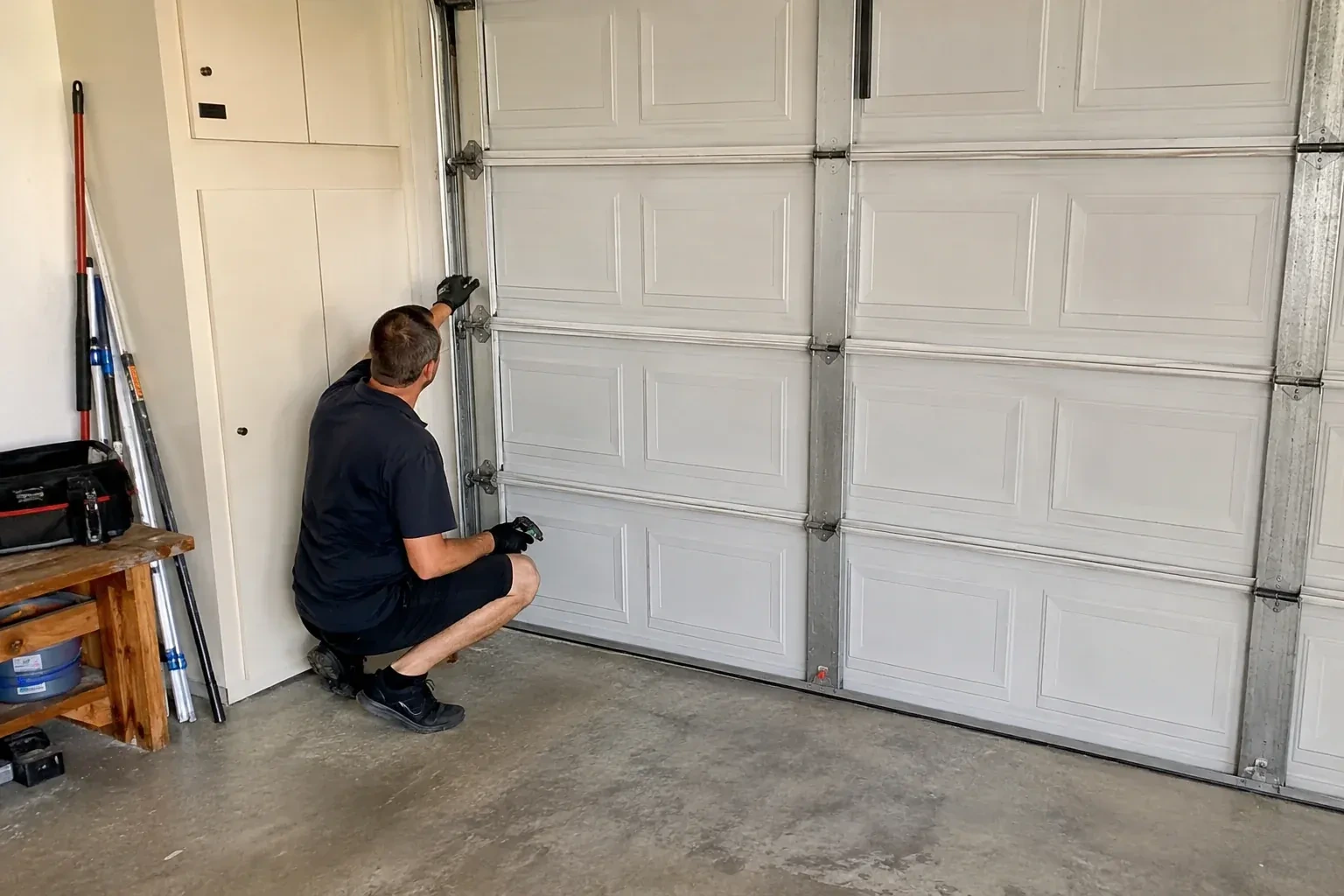
The bottom section is the one place where the lift cables attach, and those cables are held taut by the springs. Before its brackets are unbolted, the technician takes the energy out of the system. On a torsion door that means fitting winding bars into the cone and unwinding the spring turn by turn while the set screws are loosened; on an extension-spring door it means propping the door open and unhooking the springs. With the cables slack, the bottom brackets, the seal retainer and the section itself can be removed safely. The same steps are reversed at the end, and the door's balance is set fresh.
Checking balance and reversal yourself
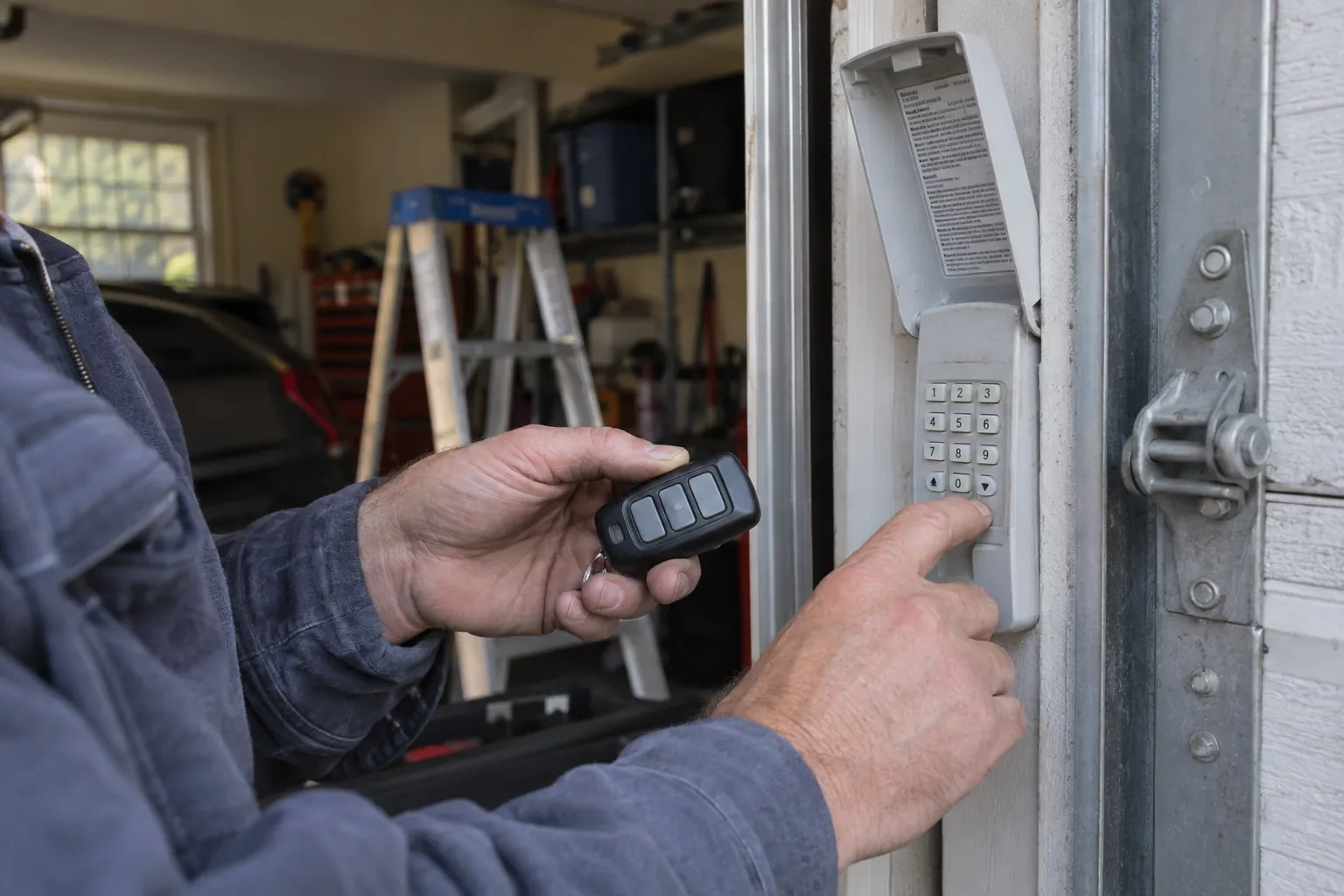
Two simple checks tell you the door is still healthy after the repair. With the door closed, pull the release cord and lift it by hand; it should rise smoothly and stay put around waist height. A little slow drift is normal, but a door that rises or sinks on its own, or feels heavy, is asking for a spring adjustment before anything wears. Reconnect the opener, then lay a piece of wood flat on the floor under the door and close it; the opener should touch the wood and reverse. Pass a carton through the photo-eye beam while standing clear of the door as it closes, and watch it stop and return. Trade associations recommend running these checks monthly.
Garage Door Panel Replacement
In the van
Self-tapping stile screws
Touch-up paint
Nylon or steel rollers
Matching replacement section
Window frame insert and glazing
Garage Door Panel Replacement
What affects the quote
Which position the section sits in
A bottom section includes releasing and resetting spring tension and fitting brackets and seal; a top section involves the opener bracket and top fixtures; a middle section is the plainest exchange. The position shapes the labour.
Access and working room
A section is wider than the door opening and is carried in and manoeuvred by two people. A cluttered garage, a low ceiling around the spring, or a tight driveway adds handling time.
Spring work required
A bottom section means torsion springs are unwound and rewound, or, on an extension-spring door, the door is raised and secured so the springs relax and its hooks and cables are reset instead. A section changing the door's weight may call for a balance adjustment.
What to have ready
- Are any hinges, rollers or cables visibly bent, loose or hanging?
- Does the door still open and close, by opener or by hand?
- What colour and panel design is the door?
Garage Door Panel Replacement: questions
QuestionsWhat information or photos help before the visit?
A photograph of the whole door from outside, a close-up of the damaged section, a picture of the manufacturer's label if you can find it, and a shot of the inside of the door showing the hinges, tracks and springs. Add the door's approximate width and height, whether it is insulated, its colour and panel style, and how the damage happened. That set often lets the technician confirm availability before arriving.
Will the new section match the colour of the rest of the door?
It will match the factory colour your door was made in, which is not quite the colour your door is today, because paint fades in sun and weather. A fresh section can look noticeably brighter than its neighbours, and that difference may not go away with time. If the contrast bothers you, the whole door can be painted with an exterior product suited to the finish. Ask to see the current colour chip against your door first.
Why is the bottom section handled differently from the others?
The bottom section is where the lift cables attach, through the bottom brackets at each end, and those cables are under the full pull of the springs. Before the brackets come off, the springs have to be unwound or unhooked so the cables go slack. The bottom section also carries the seal retainer and astragal that meet the floor. After the new section is in, the springs are re-tensioned and the balance reset.
Related services
- Garage Door Tune-UpThe door lands with a thud you can feel through the kitchen floor, and sometimes it bounces back up a few centimetres before settling.
- Off-Track Garage Door ResetThe rollers on the door have been squealing for months.
- Garage Door Bottom Seal ReplacementOne end of the bottom seal has slipped out of its channel and hangs down like a loose shoelace.