Openers · Yongehurst
Emergency Release Repair in Yongehurst
Someone pulled the cord last spring to get a car out during an outage, and the door has never properly rejoined the opener.
In plain words
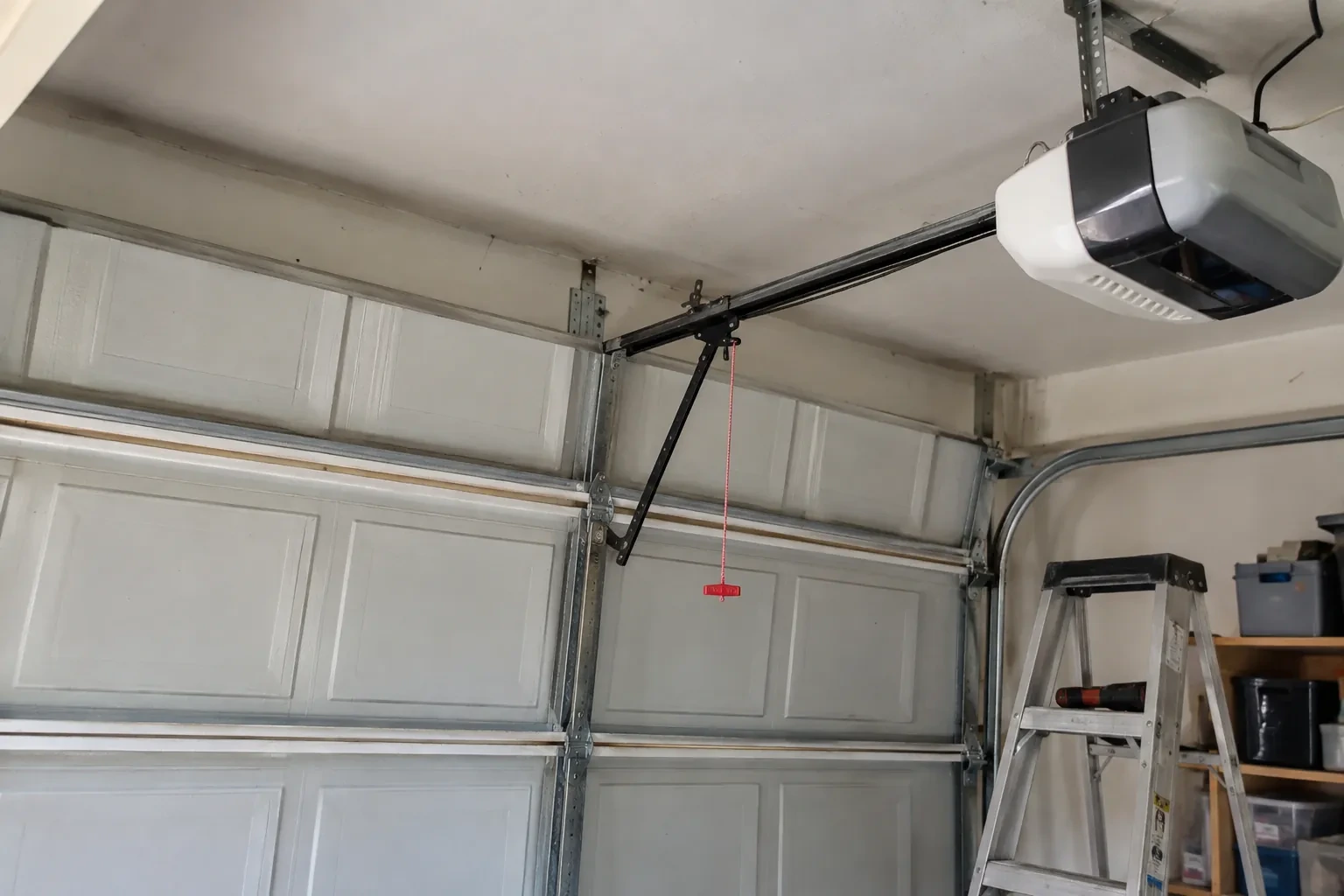
The operator standard for residential openers in this country asks for a manual release that is coloured red, easy to tell apart from the rest of the mechanism, and reachable from the floor, with the handle no more than about 1.8 metres up. The reason is plain: in an outage or emergency, someone who has never touched the opener must be able to find and use it. Emergency release repair brings an opener back to that standard when the handle has gone missing, been tied out of reach, or was left too high after a door change, and leaves the household knowing what the red handle is for.
How the visit goesHalfway up, the door lets go of the opener with a clunk and sinks back to the floor while the trolley carries on to the top alone. It has happened three times this month, and each time the release lever is found half-cocked.
Emergency Release Repair
How the visit goes
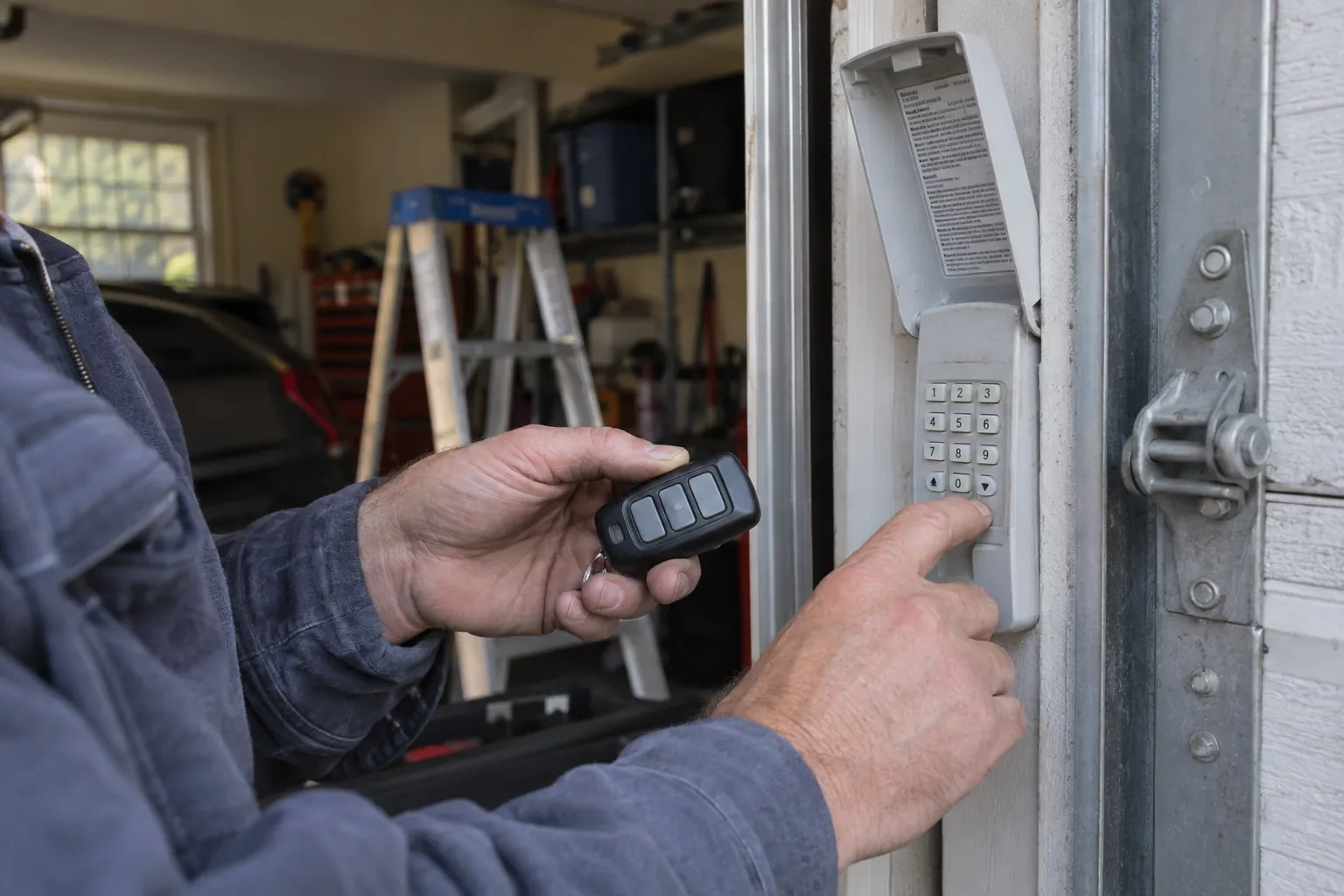
What kind of opener and rail
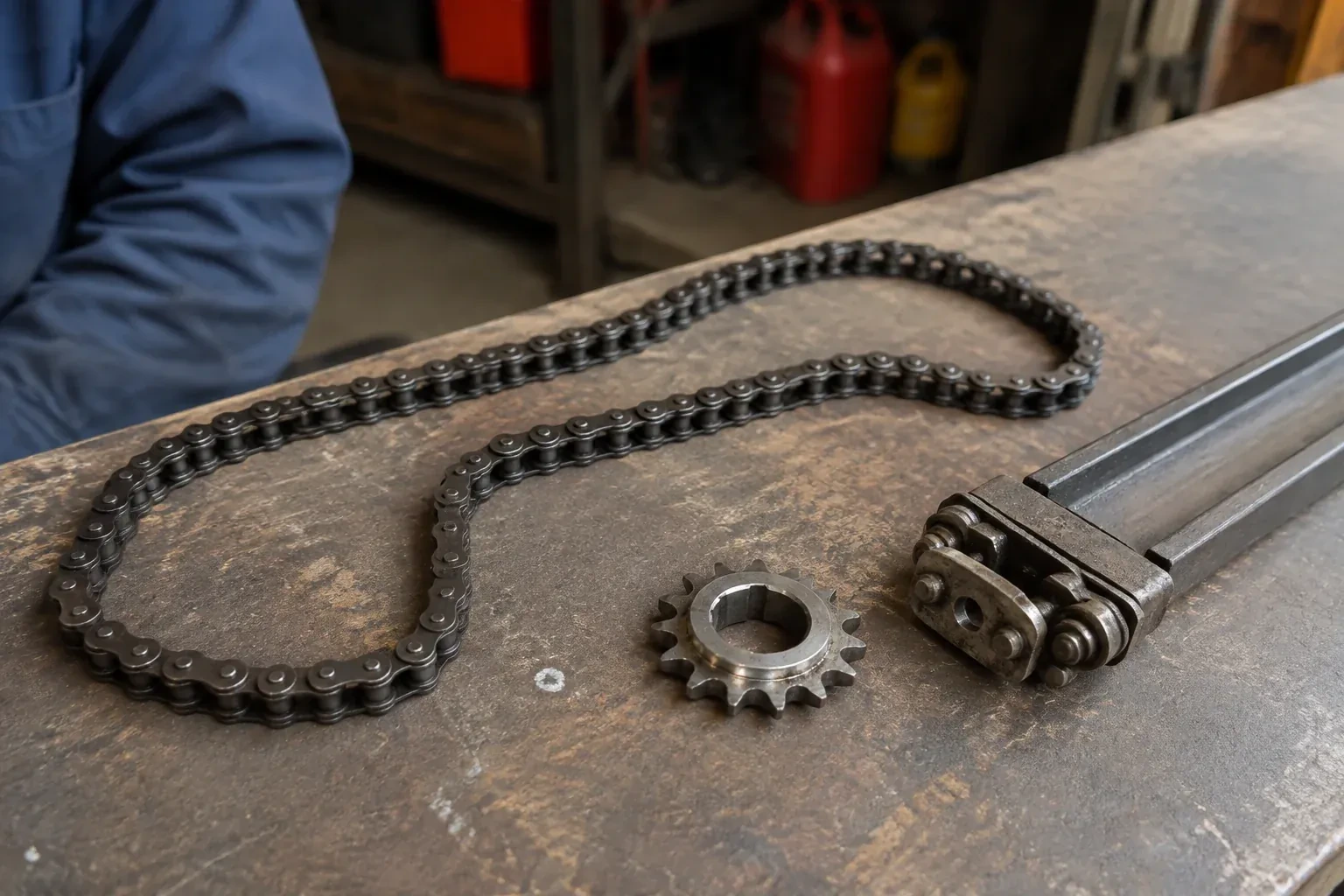
Release designs differ by opener, so the model is identified from its label before parts are chosen. A chain or belt unit on a one-piece rail pulls straight down; on a sectional square rail the cord is pulled down and then back to hold the lever; a screw-drive carriage has its own release; a wall-mounted unit beside the door uses a handle on a cable that clicks rather than a trolley on a rail. Age matters too: an older chain-drive head may take a different trolley from the current one. Knowing the exact unit means the replacement cord, lever, trolley or outside release cable is the one the maker specifies.
A new cord and handle at the right height
A cord that has frayed, rotted in the sun or snapped is replaced with a rope and red handle kit made for openers. The rope is tied to the release lever with a knot that will not slip under a hard pull, then cut so the handle hangs no higher than about 1.8 metres above the floor and clears the vehicle roof. The handle sits where it can be seen from the door into the house, and any storage that crowded it is pointed out to you. A red handle that is easy to tell apart from everything else on the ceiling is what the standard asks for, and it is what the technician leaves behind.
Keys for the outside release
Where an outside key release was fitted or repaired, you leave with two keys and the cylinder proven from the driveway. One key belongs on your ring; the other belongs somewhere outside the garage, with a neighbour or in a lockbox, since a spare inside the garage is behind the very door it opens. In winter, keep the cylinder face clear of slush and give it a puff of dry lock lubricant before the cold sets in. The release only disconnects the door; lifting still happens by hand, using the door's handle, so the balance check the technician did today is what makes that lift easy.
Emergency Release Repair
In the van
Garage door lubricant
Dry lock lubricant and de-icer
2x4 offcut for the reversal test
Chain or belt tension hardware
Door arm, clevis pins and clips
Emergency Release Repair
What affects the quote
Distance to your door
Every visit includes the drive. A property on the edge of the service area or down a long rural road takes more of the technician's day than one a few streets away, and the quote allows for it.
Freeing versus replacing the trolley
A trolley jammed on the stop bolt is freed, adjusted and reused when its latch is sound. One with worn teeth or a cracked body is replaced, which changes both parts and labour.
Ceiling height and access
A standard garage puts the trolley in easy reach from a step ladder. High ceilings, a storage loft, a high-lift track or a car that cannot be moved add setup time.
What to have ready
- Is there a small keyed lock near the top of the door outside, and do you have its key?
- Has the trolley ever been left disconnected for a stretch of manual use?
- Where was the door when the release was pulled, and where is it now?
Emergency Release Repair: questions
QuestionsThe door is stuck shut, the opener is dead and there is no other door. Can you still get in?
Usually. If the door has an outside key release, a small round lock near the top panel, that is what it is for: the key pulls a cable that frees the trolley from outside so the door can be lifted by hand. If there is no such release, the technician has other methods to reach the lever from outside, and once inside the fault is dealt with. Fitting an outside release afterwards is a sensible follow-up for a garage with a single door.
What should I tell you when I call?
What the release did: handle missing, cord snapped, trolley will not reconnect, door let go on its own. Where the door was at the time and where it is now. Whether the opener is a chain, belt or screw unit on a rail, or a wall-mounted one beside the door. Whether there is an outside key release and whether you have its key. And whether the garage has a side door or a door into the house. That shapes what comes on the truck.
What happens if someone pulled the release while the door was open?
Sometimes nothing, if the door is well balanced and stayed where it was. If the door came down on its own, the technician checks what took the impact: the door arm, the carriage, the bottom brackets, the rollers and the panel around the arm bracket. A bent arm or carriage is replaced, and the balance test shows whether the springs contributed. Then the release is reconnected with the door closed and the household is shown the right sequence.