Springs · Richvale
Garage Door Hinge Replacement in Richvale
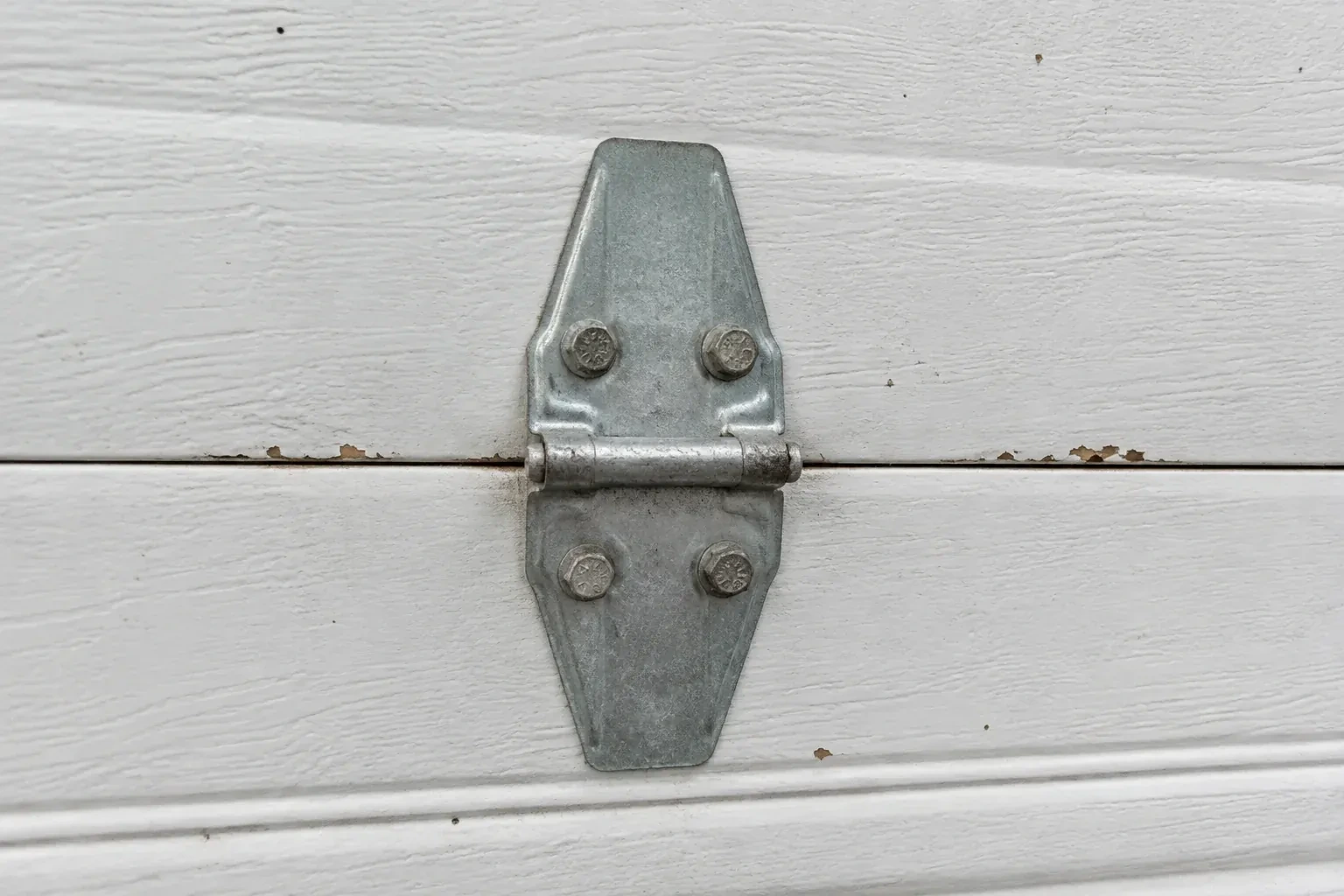
With the door closed and a flashlight on the inside face, one of the hinges near the edge has a crack running from the screw hole to the knuckle.
In plain words
The hinge is only as good as what it is screwed to. On a steel door the screws bite into the stile, a folded steel channel at the panel edge, sometimes with a support plate behind it; on a wood door they thread into timber. Years of vibration back screws out, and once a hole is stripped the hinge rocks and the joint loosens. Hinge replacement includes fresh fasteners, and where holes have opened up the technician shifts to sound metal, steps up to a larger self-drilling screw, or bolts through the panel with a nut and washer or a backer plate. The new hinge then stays put.
How the visit goesThe car nudged the door on the way in. There is a dent low on one end, and above it the hinge that carries the roller is bent so the panel edges rub together and squeal as the door lifts.
Garage Door Hinge Replacement
How the visit goes
Every joint, not just the loud one
A hinge that has cracked usually has siblings on the way. The technician walks each joint with a flashlight, from the bottom up, looking at every edge hinge and every centre hinge: cracks spreading from a screw hole, a pin hole worn oval so the barrel rocks, a leaf bent away from the panel, rust bloom where the knuckle meets the pin, and screws that have backed out. Both ends of the door are compared, since hinges on the side nearest the driveway or a damp wall often age sooner. The result is a list of what needs changing now and what can wait, so you decide with the whole picture in front of you.
Going over the rest of the hardware
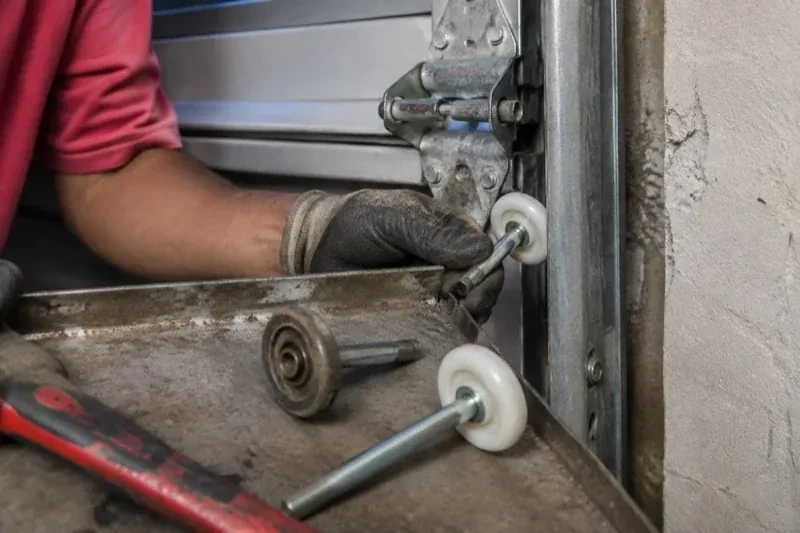
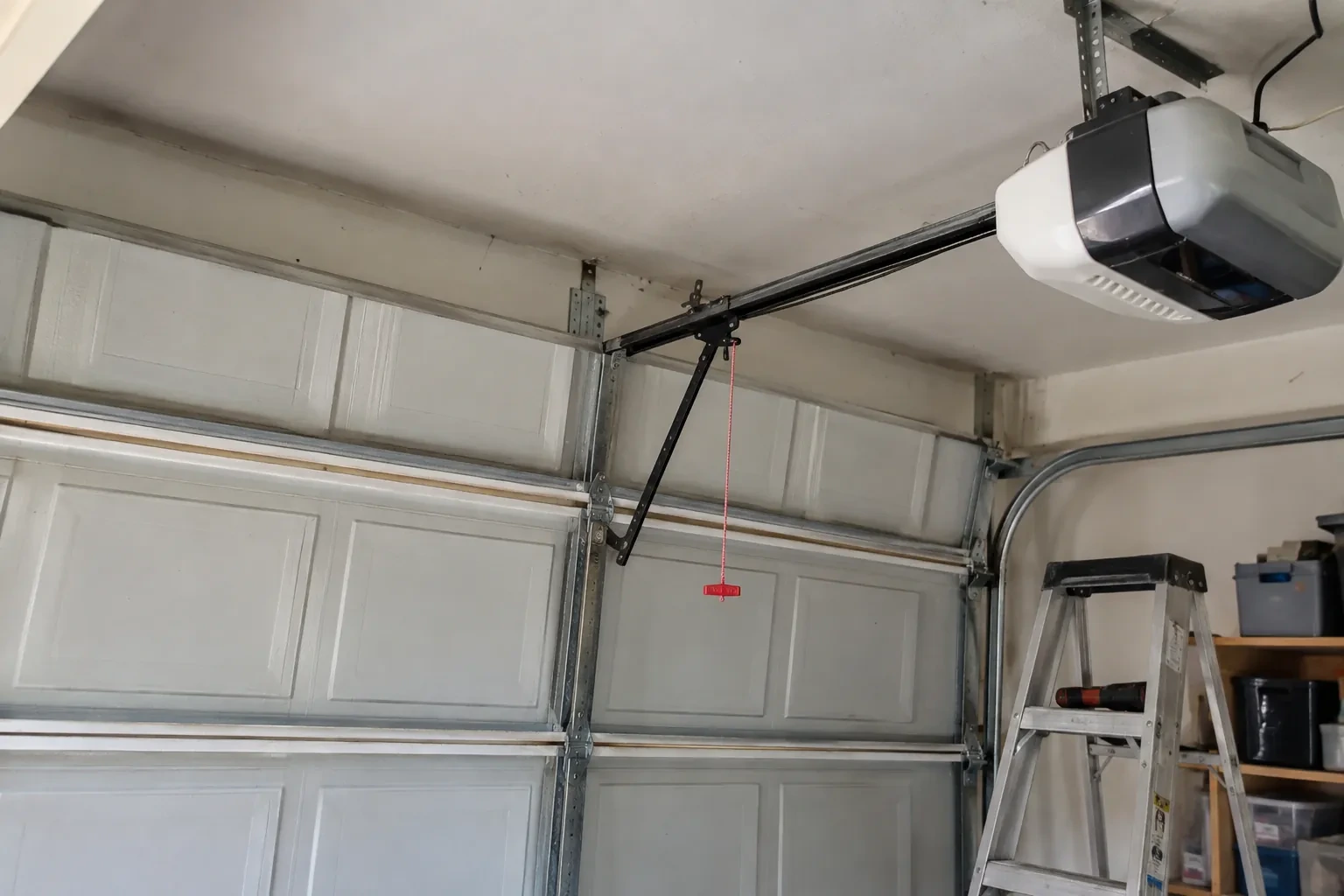
With tools out and the door still, the technician goes down the whole door: every hinge screw snugged, roller stems and hinge knuckles given a garage door lubricant, top fixtures checked for tight fasteners, and the track brackets on the jambs confirmed secure. The bottom brackets are looked at but left alone, because they anchor the lift cables and are under spring tension. Struts and their fasteners get the same pass. This sweep takes little time and usually catches the next loose screw before it becomes the next cracked hinge, so the door leaves in better shape than the single repair would suggest.
Panels that fold as one door again
The first thing you notice is quiet. The pop at the curve is gone, the panels turn into the horizontal track without a gap opening on one side, and the rollers ride flat in the track rather than leaning out. Closed, the door sits evenly against the jambs on both edges with no daylight showing. Opened by hand with the opener released, it moves with light effort and the joints stay tight. This is what a correctly hinged sectional door feels like, and it is worth running the door a few times yourself while the technician is still there so you know its new normal.
Garage Door Hinge Replacement
In the van
Panel strut
Hinge support plates
Replacement rollers
Hex-head self-drilling screws
Track clamps or locking pliers
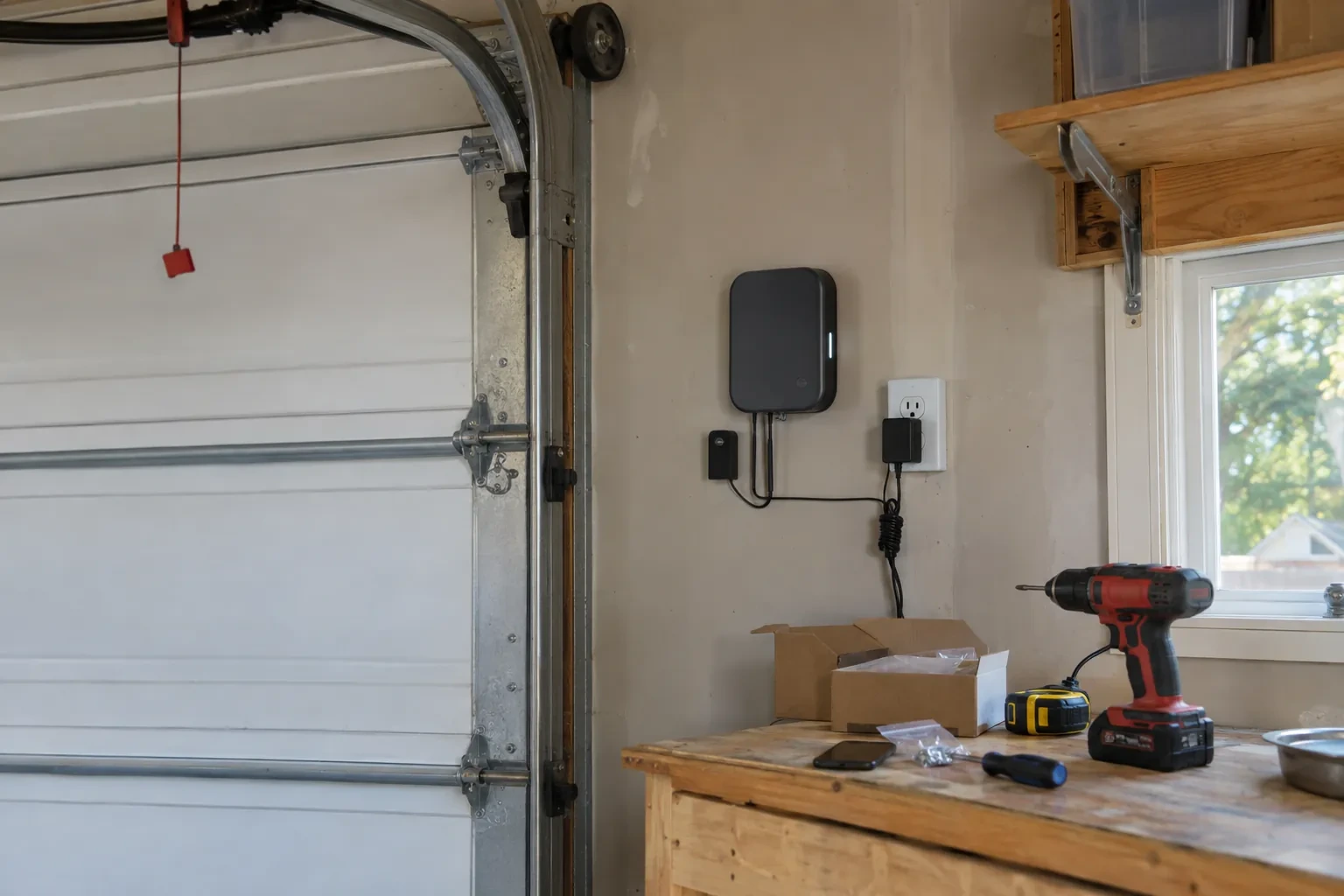
Garage Door Hinge Replacement
What affects the quote
Corrosion and seized fasteners
Screws rusted solid take time to drill out, and heavily corroded hinges on the lower joints are replaced rather than reused, which shows in the parts list.
Opener adjustment afterwards
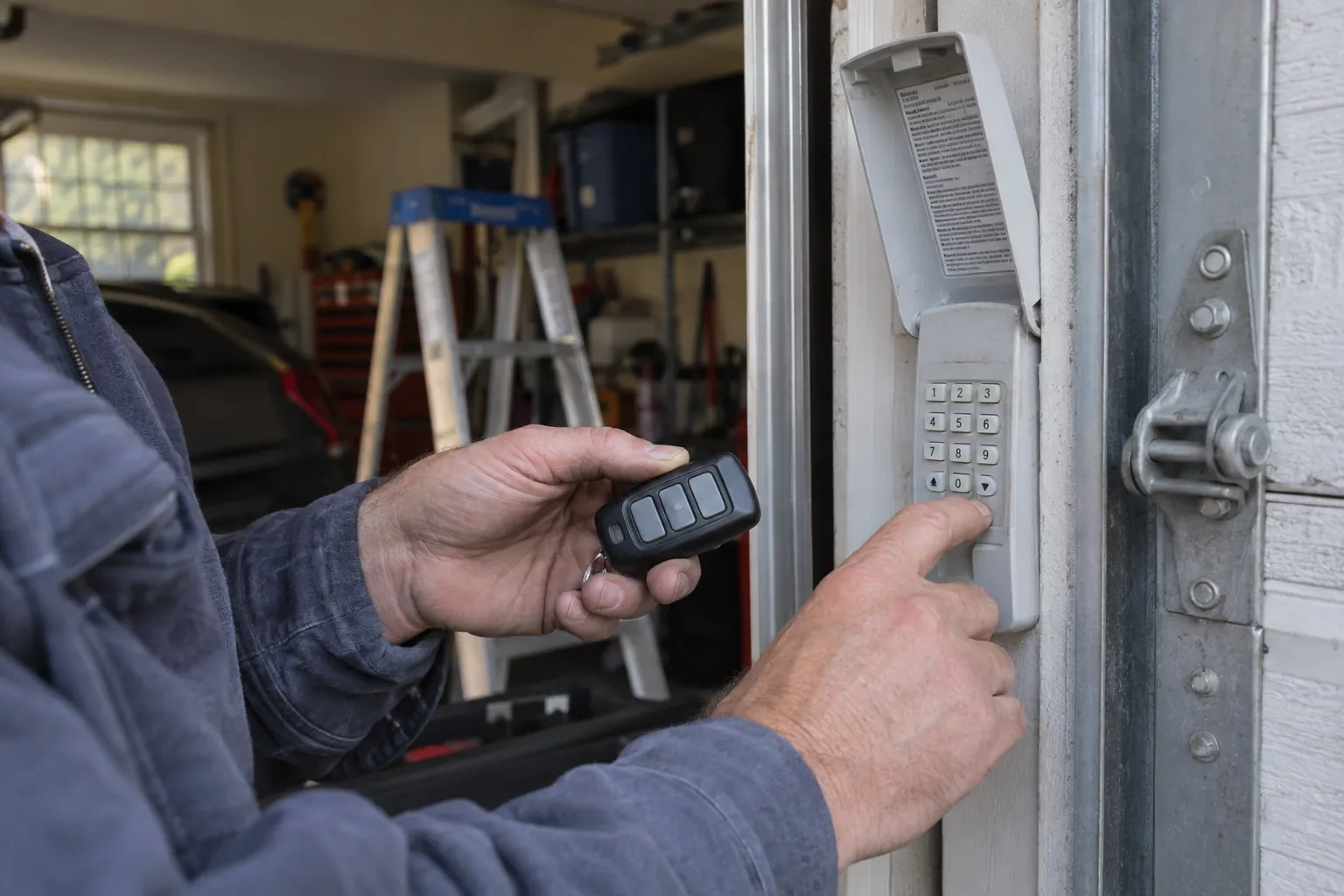
A door that folds freely again sometimes needs the opener's force and travel settings reset and its reversal retested. That adjustment is named when it is needed.
Condition of the mounting holes
Stripped or torn holes need a larger screw, a through-bolt with nut and washer, or a backer plate. That extra anchoring is small but is quoted separately from the hinge itself.
What to have ready
- Do any screws turn without tightening when you press a hinge?
- Is the loose or broken hinge at the edge of the door or in the middle?
- Is anything stored against the door or under the track we should know about?
Garage Door Hinge Replacement: questions
QuestionsWhat do the numbers stamped on garage door hinges mean?
They mark the joint the hinge belongs to, counted from the bottom. A 1 goes at the joint above the bottom panel, a 2 at the next one up, then 3, with 4 and 5 on taller doors. Each higher number stands the roller a little further off the door face, so the door leans into the jambs when closed and follows the track as it climbs. Centre hinges use the geometry of a 1.
Can any hinge go in any position?
Edge hinges belong to their own joint. Put a 3 where a 2 belongs and the roller sits at the wrong reach, so the door binds, gaps at the curve or fails to press against the jamb when closed. Centre hinges are the exception, since they all share the geometry of a 1. The technician reads the stamp on the old hinge or counts the joint from the floor before choosing the part.
What gauge of hinge does my door need?
Gauge runs backwards: a larger number means thinner steel. Light single doors often come with 18-gauge hinges, 14-gauge is the heavier standard for most residential doors, and 11-gauge is commercial stock. A heavy insulated double door, a door used many times a day, or a door whose hinges keep cracking benefits from the thicker option. The technician matches or improves on what was fitted, provided the width and hole pattern suit the stiles.
Related services
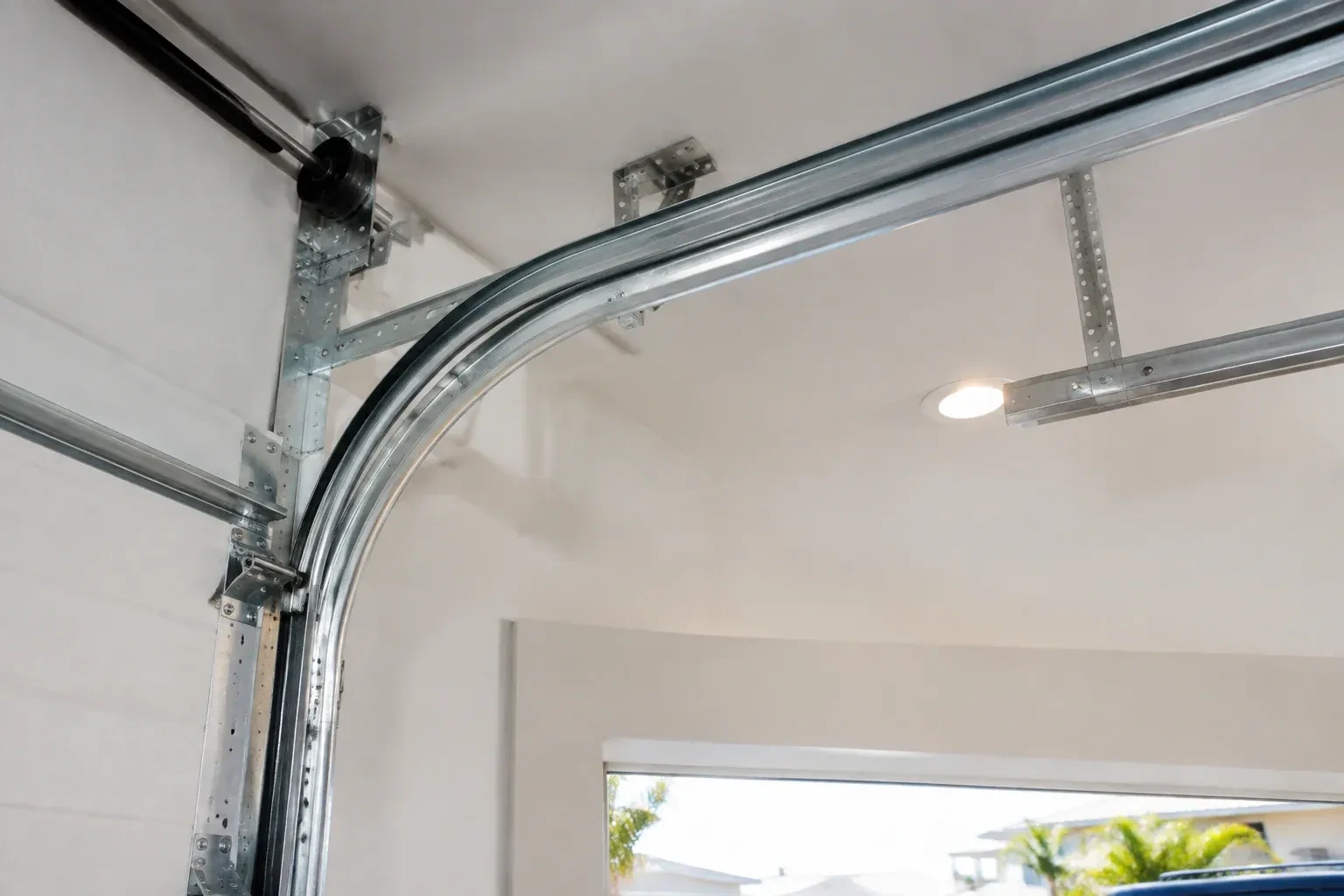
- Garage Door Track Repair or ReplacementThe door climbs crooked, one side clearly ahead of the other.
- Garage Door Cable ReplacementAfter years of slushy winters the cables look thinner near the bottom brackets, with rust streaks running down the door where they attach.
- Torsion Spring ReplacementOn a cold morning the remote does nothing useful: the light comes on, the motor turns briefly, the door stays shut.