New Doors · Richvale
Commercial Rolling Door Repair in Richvale
A lift truck clipped the lower curtain during unloading.
In plain words
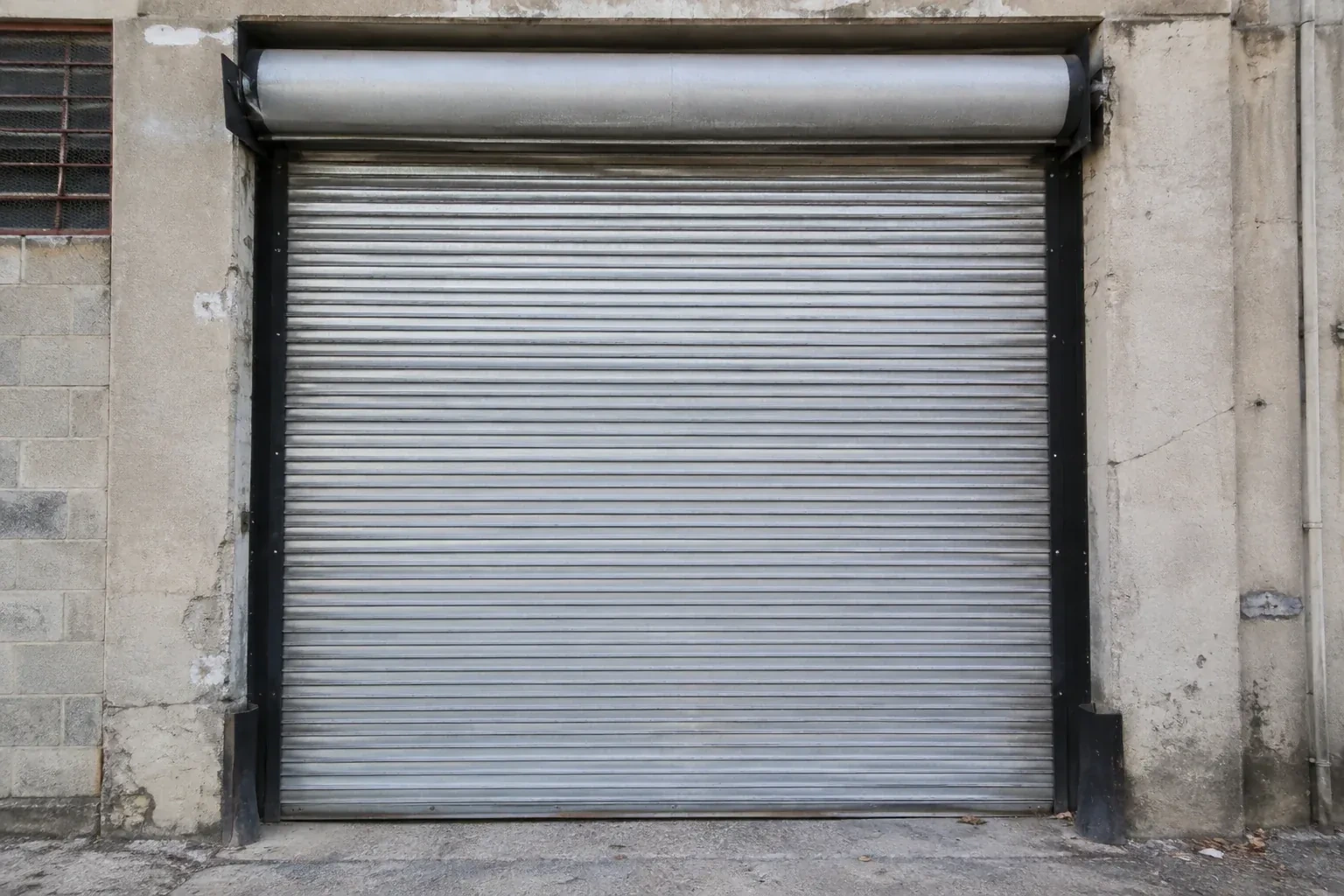
A rolling door that has become unusually heavy or starts to drift is asking for a counterbalance assessment. The barrel assembly commonly contains springs that offset curtain weight, and those parts hold substantial tension even while the door is stationary. The technician secures the curtain, examines brackets, bearings and drive components, then evaluates balance under controlled conditions. Adjustment uses purpose-made winding tools and the identified door instructions. Once the mechanical setting is correct, manual effort is checked across the full travel and any powered operator is tested without asking it to compensate for a poorly balanced door.
How the visit goesA metallic clatter now comes from inside the hood whenever the curtain coils. The sound follows each revolution, the travel has become jerky, and fine metal dust is visible near one bracket and bearing.
Commercial Rolling Door Repair
How the visit goes
Control both sides of the opening
A commercial doorway joins two active work areas, so assessment begins by making the space predictable. Vehicle routes, pedestrian paths, stacked goods and scheduled deliveries are identified on the inside and outside. The control station and electrical disconnect are located, and the curtain's current position is considered before anyone approaches the guides or hood. Barriers and a site contact keep movement coordinated while inspection is underway. With the traffic area settled, the technician can observe the door deliberately and secure it in the position needed for measurements instead of working around changing facility activity.
Set controls and protective response
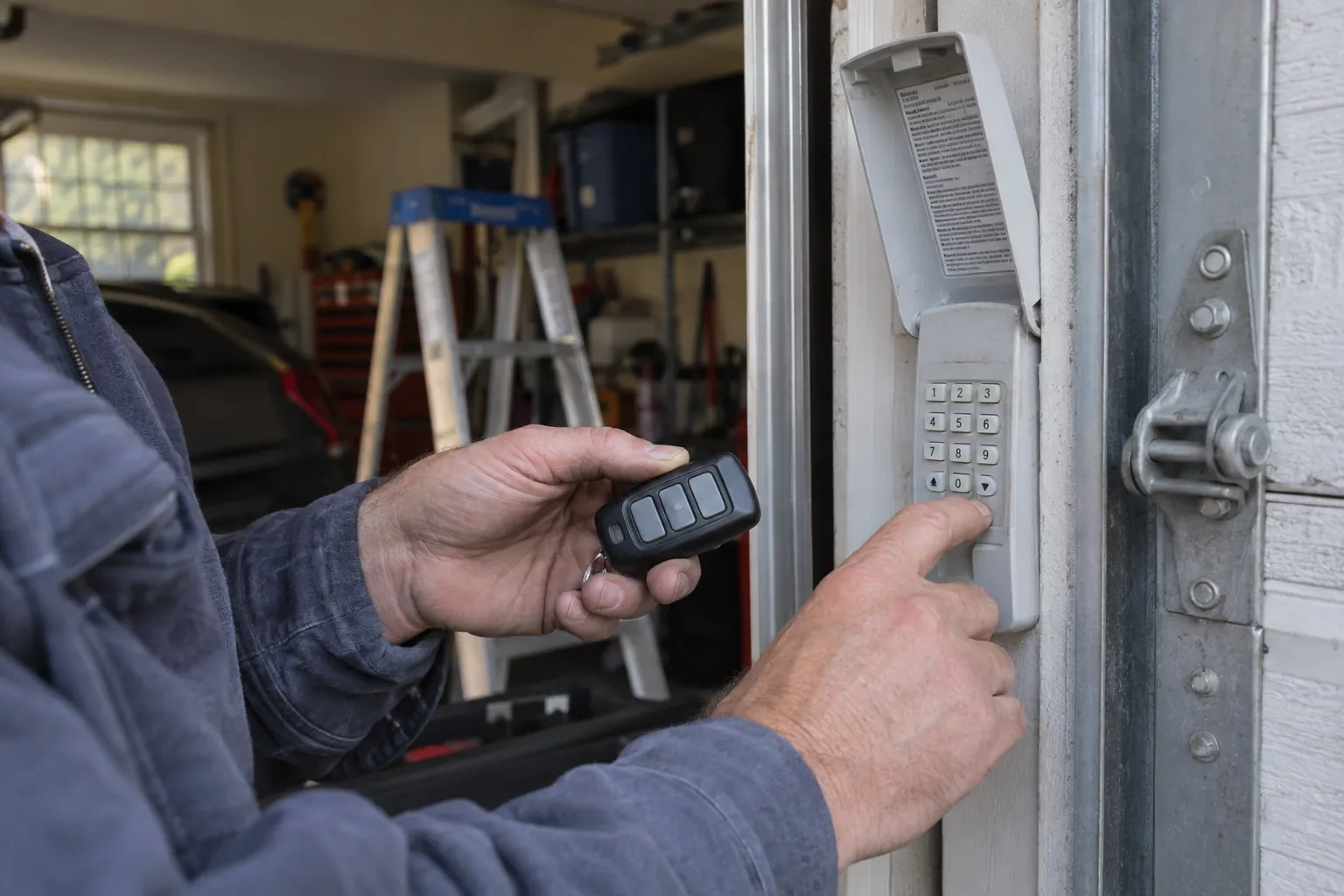
Control and protection devices are returned to their documented roles. Photoelectric sensors are aligned and secured at the required position for the operator system, sensing edges are inspected for full-length response, and damaged cables or connectors included in the scope are renewed. Key stations, three-button controls and access inputs are checked without retaining private codes. During testing, an intentional beam obstruction or edge activation is introduced in a controlled manner to observe the operator's response. Vehicle-detection accessories are tested separately from entrapment-protection devices so each function is understood and recorded accurately.
Better contact at the weather line
Where sealing work was included, the renewed astragal follows the sill with consistent contact and the curtain closes without pressing the seal flat. Staff can preserve it by clearing abrasive grit, packaging and frozen buildup before cycling the door. Drainage near the opening should direct meltwater away from the bottom bar, and sensor faces benefit from a gentle wipe after salt spray. The service notes identify the lubricant and cleaning approach suited to the installed product. These routines support smooth winter movement and help the lower curtain, guides and fasteners remain easy to inspect.
Commercial Rolling Door Repair
In the van
Roller chain and sprockets
Hand-chain hoist components
Operator brake and limits
Counterbalance spring assembly
Sensing edge and controls
Commercial Rolling Door Repair
What affects the quote
Powered operator repairs
Brake, motor, reduction, sprocket, roller chain, limits and internal controls are assessed separately. The operator's identity and compatibility with the balanced door guide part selection.
Traffic-control requirements
Loading schedules, pedestrian routes, lift-truck lanes and access to both faces determine how the work zone is maintained. Facility support and alternate routing form part of the service plan.
Cause of the failure
Impact, gradual wear, corrosion, freezing, building movement and a control fault can produce similar symptoms. The verified cause determines whether cleaning, adjustment, component renewal or wider coordination belongs in scope.
What to have ready
- Does winter moisture, ice or salt collect at the sill?
- Can both sides of the opening be cleared for work?
- Is the door push-up, hand-chain or motor operated?
Commercial Rolling Door Repair: questions
QuestionsWhat can facility staff check between service visits?
Staff can observe bottom-bar level, new dents or rub marks, guide debris, loose visible fasteners, torn seals, sensor cleanliness, unusual sounds and changes in operating effort. They can keep the sill and doorway clear and record impacts. Spring tension, bracket release and internal repairs remain controlled technician tasks because those areas involve curtain weight and stored energy.
Can individual bent slats be replaced?
Many interlocking steel curtains allow a damaged group of slats to be removed and renewed with compatible pieces. The technician also checks neighbouring joints, endlocks, guides and the coil because an impact can spread force beyond the visible dent. Curtain material, profile, gauge, finish and fire-rating status all influence whether sectional repair is suitable.
Will operations have to stop around the doorway?
The opening and its adjacent traffic area need to remain controlled during inspection, repair and test cycles. Facilities often route people, lift trucks and deliveries through another path while that work is active. Planning around shipping periods, stored goods and access to both faces of the door helps define a workable service window and equipment setup.
Related services
- Insulated Steel Garage Door InstallationYour garage is becoming a workshop, but the thin single-skin door rattles, sweats and lets outdoor temperatures shape the whole room.
- Wind-Rated Garage Door ReplacementYour building designer has supplied positive and negative pressure values for the garage opening.
- Carriage-House Garage Door InstallationCold air is noticeable around the current door, especially near the floor and section joints.