Richvale Garage Door Repair Co. · Richmond Hill
Sectional Garage Door Replacement: step by step
Garage Doors · Richmond Hill, Ontario
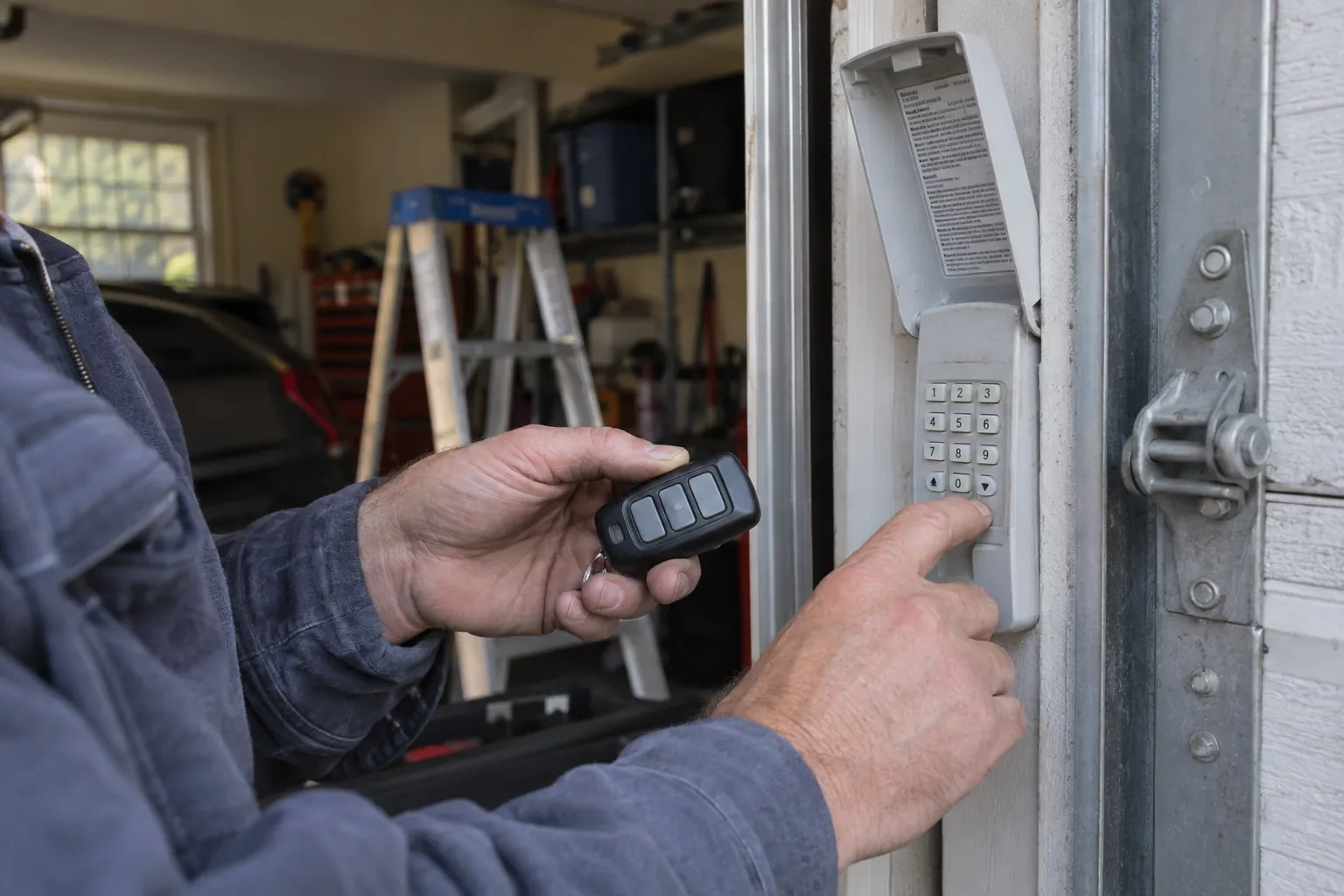
A warmer garage begins with more than an insulation label. Replacement planning considers section construction, joints between panels, glazing, the bottom astragal and seals around both jambs and the header. The technician also looks at floor variation and opening geometry, because even a well-insulated door benefits from consistent contact at its edges. Once installed, the new assembly is balanced and cycled before the opener settings are completed. This gives the customer a practical package of thermal choices, fit and smooth operation.
Reviewing attachment surfaces
Track and counterbalance hardware depend on solid fastening points, so the jambs, header and overhead framing receive their own review. The technician looks for loose cladding, deteriorated wood, hollow areas, previous holes and rear-track supports that lack suitable bracing. Masonry, steel and wood openings require different anchors and preparation. Any carpentry or structural decision outside the door installation is identified early, allowing the customer to arrange it before the site is ready for the new hardware.
Installing the counterbalance assembly
Lift cables are routed and seated on their drums or pulleys, with bottom fixtures kept under controlled handling. The torsion or extension spring system is mounted using the supplied brackets, shaft supports, containment parts and matched hardware. Trained technicians apply tension in the prescribed sequence, watching cable tracking on both sides. Because the counterbalance is selected for the completed door weight, its setup aims for stable, manageable manual movement throughout the travel range.
Simple observations between service visits
No special tools are needed for regular owner checks. From a safe distance, look for cables that have changed position, loose-looking hardware, rollers leaving their expected path or new gaps around the closed door. Listen for a new scrape and notice whether manual balance feels different during a scheduled test. Springs, cables and bottom fixtures remain technician-adjusted components; reporting a change gives the service visit a precise starting point.